


Indonesia is building the future of artificial intelligence (AI).
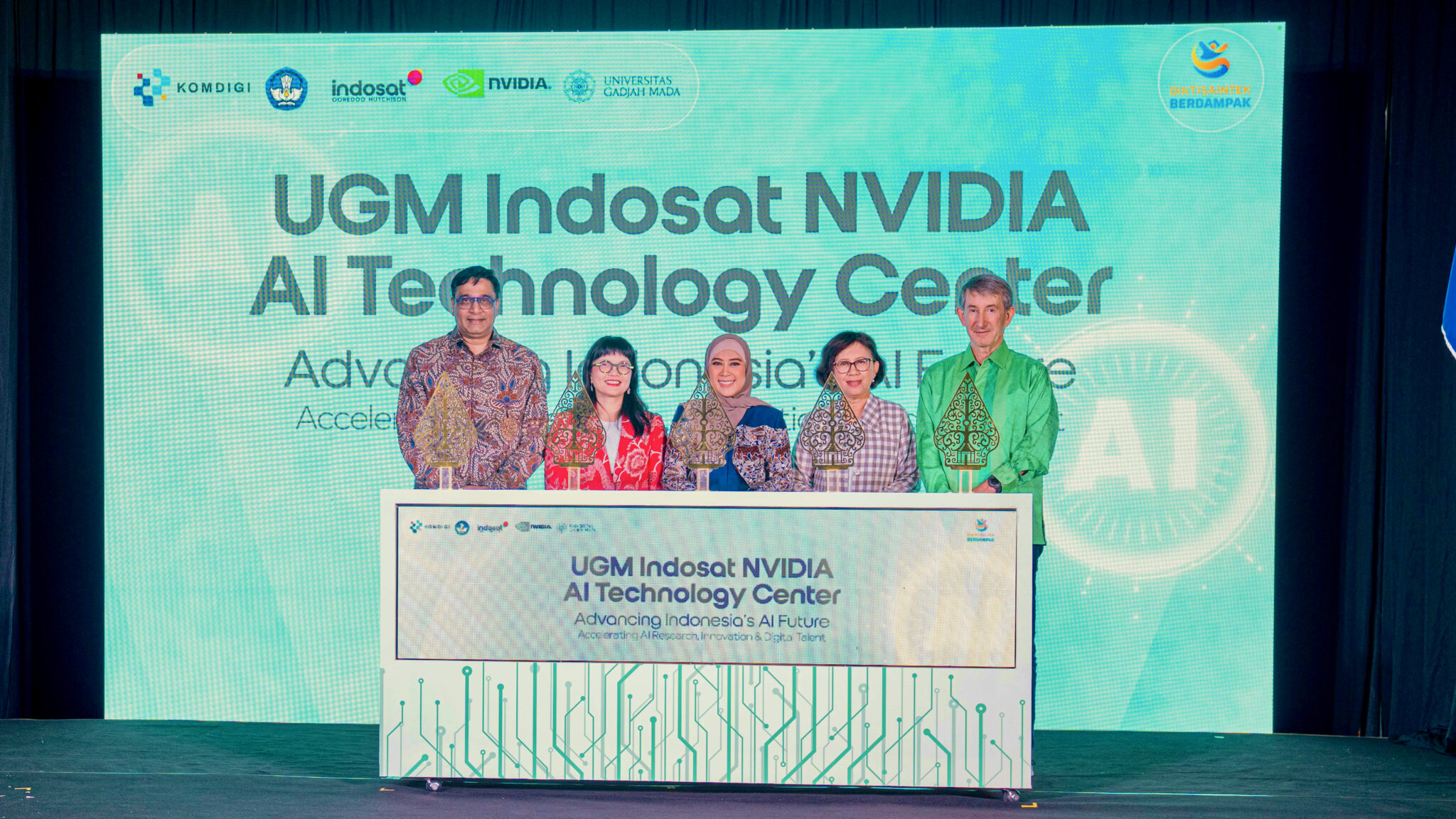
The Ministry of Communications and Digital (Komdigi), Indosat Ooredoo Hutchison (Indosat or IOH), NVIDIA and Universitas Gadjah Mada (UGM) have launched Indonesia’s first university-based AI technology center. Located in Yogyakarta, the UGM Indosat NVIDIA AI Technology Center (NVAITC) is part of the Indonesia AI Center of Excellence initiative.
The new AI technology center brings together government, industry and academia to develop practical artificial intelligence solutions for Indonesia’s most pressing challenges. It will also help expand access to advanced computing, AI research tools and technical expertise for Indonesian students, researchers and innovators.
“The Indonesian AI Center of Excellence reflects our long-term vision to position Indonesia as a country that not only adopts AI, but also develops AI innovation and contributes to the world,” said Muttiah Hafid, Indonesia’s Minister of Communications and Digital Affairs. “Through initiatives like this, we are laying the foundation for Indonesia’s AI sovereignty and ensuring that AI powers economic growth, national competitiveness and solutions to Indonesia’s most pressing challenges.”
UGM is committed to supporting Indonesia’s AI ambitions through education, research and innovation with meaningful social impact. Dr. Ova Emilia, Rector of Universitas Gadjah Mada, said the initiative will support national priorities in higher education, applied research and talent development while accelerating AI adoption and preparing Indonesia’s workforce for the future.
Expanding access to sovereign AI computing in Indonesia
Powered by NVIDIA’s full-stack AI platform and GPU Merdeka, Indosat’s sovereign GPU-as-a-service platform, the UGM Indosat NVAITC gives UGM researchers and students access to enterprise-grade accelerated computing. The center also provides AI software, open-source technologies, pretrained models, development frameworks and technical guidance.
The center connects Indonesian researchers with a global AI ecosystem, helping them move more quickly from research and ideas to real-world applications. This expanded access to AI infrastructure is designed to strengthen Indonesia’s digital capabilities and support the development of locally relevant AI solutions.
“At Indosat, we believe that Indonesians should not be left behind in the AI era,” said Vikram Sinha, President and CEO of Indosat Ooredoo Hutchison. “Through UGM Indosat NVAITC, we will bring the best of the world’s AI technology and expertise to Indonesia, while expanding access to an ecosystem of researchers, students, startups and innovators across the country.”
“By strengthening Indonesia’s AI readiness and empowering local talent, we support the government’s vision for AI and aim to position Indonesia not only as a user of AI technology, but also as a country that develops and contributes AI innovation to the world,” he added.
Indonesia, the world’s fourth-most populous country, has a large and growing community of researchers and developers working on challenges that require solutions at scale. Until now, limited access to advanced computing, AI models and development infrastructure has made it more difficult to turn promising research into practical impact.
“Indonesia has an extraordinary community of researchers, developers and innovators who have the potential to shape the future of AI,” said Mark Hamilton, vice president of solution architecture and engineering at NVIDIA. “From healthcare and agriculture to disaster preparedness, the opportunities for AI to drive real change are enormous.”
“Through the UGM Indosat NVIDIA AI Technology Center, NVIDIA is making NVIDIA Nemotron Open available to Indonesian talent. We are committed to providing the models and expertise needed to transform that potential into innovations with regional and global impact,” Hamilton added.
Applying AI to Indonesia’s most urgent challenges
The UGM Indosat NVAITC has launched with three initial projects focused on healthcare, agriculture and natural disaster response. Each project demonstrates how AI can help address critical needs across Indonesia.
Indonesia records more than 1 million new tuberculosis (TB) cases each year. Although TB is treatable, delayed diagnosis can be fatal. In rural and underserved communities, screening has often depended on medical equipment and specialist expertise that may not be available locally.
UGM’s School of Medicine and public health nursing team, led by Dr. Dian Kesumapramudya Nurputra, MSc, PhD, SpA, is developing eNose-TB, an AI-powered electronic screening technology that analyzes breath samples to identify potential tuberculosis cases. The project aims to deliver affordable, fast and accessible TB screening in remote clinics and villages without requiring specialists or expensive laboratory facilities.
“As researchers, we have always believed that technologies developed in Indonesia can solve Indonesia’s challenges,” Dian said. “Through this center, access to world-class AI infrastructure and expertise will help accelerate our research and bring us closer to our goal of developing affordable and accessible healthcare technologies that can improve lives across Indonesia.”
Agriculture employs nearly 30% of Indonesia’s workforce. SmartAgri uses multimodal AI, satellite imagery, sensor data, local agricultural knowledge and edge computing to support precision agriculture across Indonesia’s diverse farming regions.
The system is designed to provide farmers, including smallholder farmers, with practical recommendations on when and how to irrigate. Over time, these AI-powered insights can help improve resource efficiency, strengthen crop management and support more resilient agricultural communities.
Indonesia is also located on the Pacific Ring of Fire and faces a high risk of earthquakes, volcanic eruptions, floods and other natural disasters. Tech4Disaster is developing a geospatial AI platform that uses NVIDIA accelerated computing to process satellite and sensor data rapidly.
The platform is intended to support early warnings, improve situational awareness and help emergency responders coordinate more effectively during disasters. By combining AI with geospatial data, the project aims to provide communities and response teams with faster, more actionable information when it matters most.
For more information, visit the UGM Indosat NVIDIA AI Technology Center.
Source: blogs.nvidia.com