


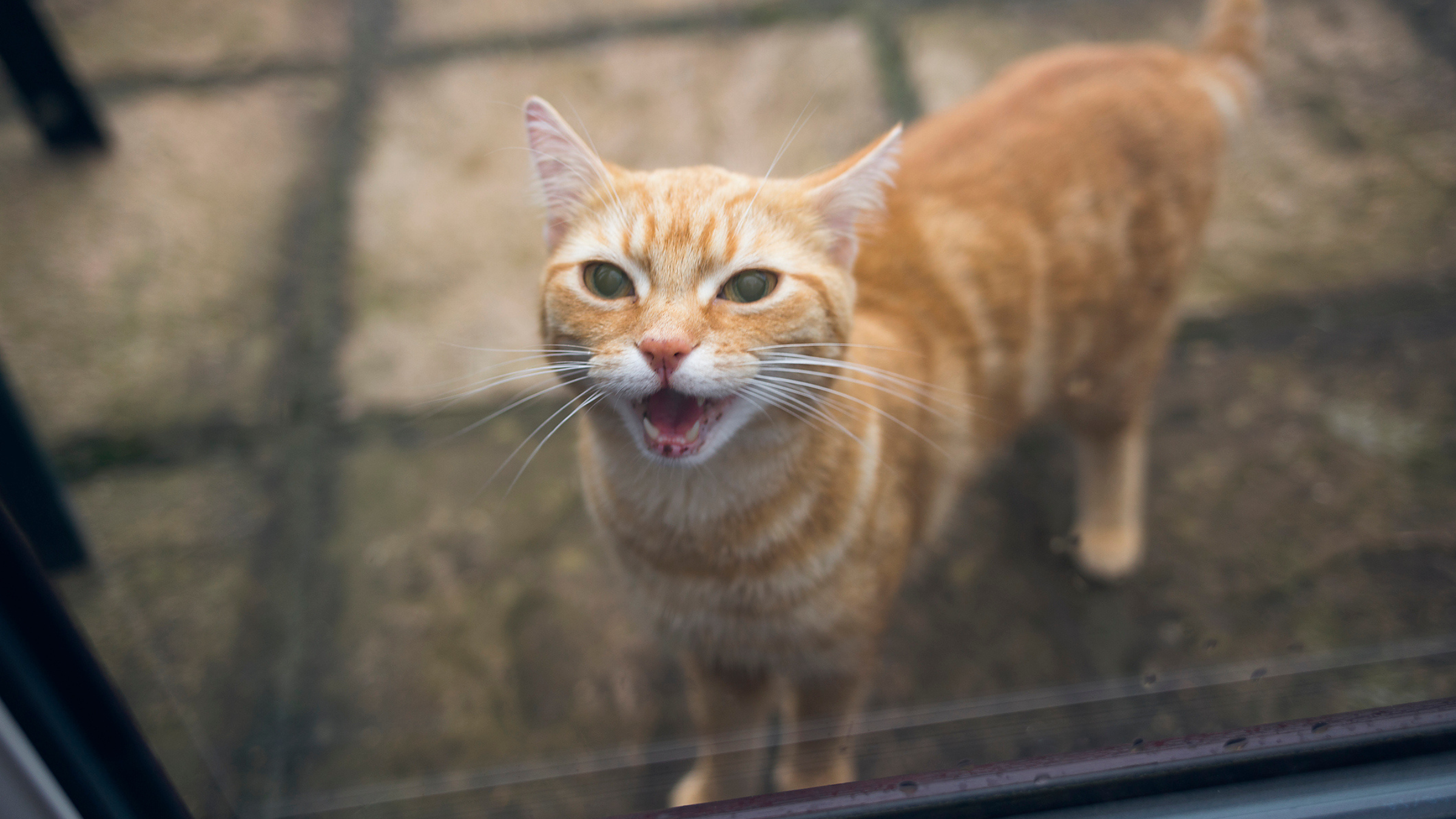
If your cat suddenly wakes you with a long, mournful cry, you may wonder why cats yowl at night. Although hunger is sometimes the reason, nighttime yowling can also signal stress, territorial behavior, mating instincts, learned communication or an underlying health problem.
Cat vocalizations are more complex than a simple request for food or attention. The meaning of a cat’s yowl depends heavily on the sound itself, the situation and your pet’s body language. Animal behavior experts also note that people use words such as “meow,” “yowl” and “scream” inconsistently, even when describing very different feline sounds.
In veterinary medicine, “yowling” often describes loud, harsh vocalizations associated with aggression, territorial disputes or mating. At home, however, owners may use the word to describe almost any unusually loud cat meow.
Latest videos fromLive Science
This distinction matters because the context surrounding a cat’s vocalization is often the best clue to its meaning.
“When we use the term yowling in the strict sense, it is usually associated with a strong negative emotional state,” said Charlotte de Mouzon, a cat behavior researcher and animal behaviorist at the University of Paris Nanterre in France. “It can express intense, negative emotion.”
In other words, a cat’s loudest cry may be an emotional warning rather than a casual attempt to start a conversation.
Cat yowling may be an ancient warning system
Some feline vocalizations are far older than domestic cats (Felis catus) and may predate domestication. The African wildcat (Felis lybica), the domestic cat’s closest living relative, also produces loud calls during conflicts with other cats.
According to Jay Schwartz, a professor of psychological science and director of the Emotional Communication Evolution Laboratory at Western Oregon University, these calls likely existed long before cats began living alongside humans.
Territorial vocalizations are common throughout the animal kingdom, from seabird alarm calls to the roars of howler monkeys. Because territory is linked to food, shelter and mating opportunities, animals have evolved loud signals that can warn rivals without requiring a physical fight.
When cats yowl at neighborhood rivals, they may be following an ancient evolutionary script: announce their presence, defend their territory and avoid direct combat when possible.
Cats may yowl during arguments or territorial disputes with other cats.
(Image credit: Turnip Towers, via Alamy)
Fear, conflict and distress can trigger loud cat cries
Cats may yowl when they feel frightened, trapped or threatened. A cat approached while cornered may be communicating, “Please do not come any closer,” said Katherine Anderson, a board-certified veterinary behaviorist at Cornell University.
Loud vocalizations can occur during stressful events, including veterinary appointments, restraint, travel and fights with other cats. Female cats in heat may also yowl persistently, while males may call loudly as they compete for access to a mate.
People often describe these sounds as screams. However, they may be better understood as expressions of severe emotional distress. The vocalization might be directed at another animal or person, or it may simply reflect the cat’s emotional state rather than a conscious request for help.
Sign up for our newsletter

(Image credit: Marilyn Perkins / Future)
Sign up for our weekly Life’s Little Mysteries newsletter to receive the latest mysteries before they are published online.
Cats have learned that humans respond to vocalizations
Not every loud cat sound signals fear or pain. Cats have a broad vocal repertoire, and many sounds heard by owners are part of a communication system shaped by thousands of years of living with humans.
Adult cats rarely meow to one another in their natural environment. Meowing is more commonly associated with kittens communicating with their mothers. Domestic cats appear to have carried this behavior into adulthood and adapted it for communication with people.
Some cat vocalizations may also resemble the sound of a human infant crying. Because people instinctively respond to infant-like cries, cats that produce similar sounds may be more successful at gaining attention.
“Cats learn that vocalizations help them communicate with humans because those sounds get our attention,” de Mouzon said.
Anderson added that cats can become remarkably skilled at shaping human behavior. If a cat cries at 5 a.m. and its owner immediately fills the food bowl, the cat quickly learns that nighttime vocalization produces results. The behavior may then become more frequent—not because the cat is being spiteful, but because the strategy works.
Why is “yowl” such a difficult sound to define?
Part of the confusion comes from the way humans classify animal sounds. In a 2025 study published in the journal Animal Behaviour, researchers asked participants to listen to cat vocalizations collected from online sources and sort them into categories such as meows, purrs, chirps and yowls.
Some categories were relatively easy to identify. Sounds labeled as chirps, for example, tended to be short and high-pitched. Yowls were much less consistent. The sounds varied widely in pitch, duration and intensity, and listeners showed less agreement about what qualified as a yowl.
Schwartz suggested that people may classify yowls according to the emotion they perceive rather than the sound’s measurable acoustic features. If a vocalization sounds painful, alarming or upsetting, listeners may call it a “yowl” regardless of its pitch or length.
This may explain why familiarity with an individual cat is so important. Research has found that owners can often identify the context behind their own cat’s vocalizations, but they are less accurate when interpreting unfamiliar cats.
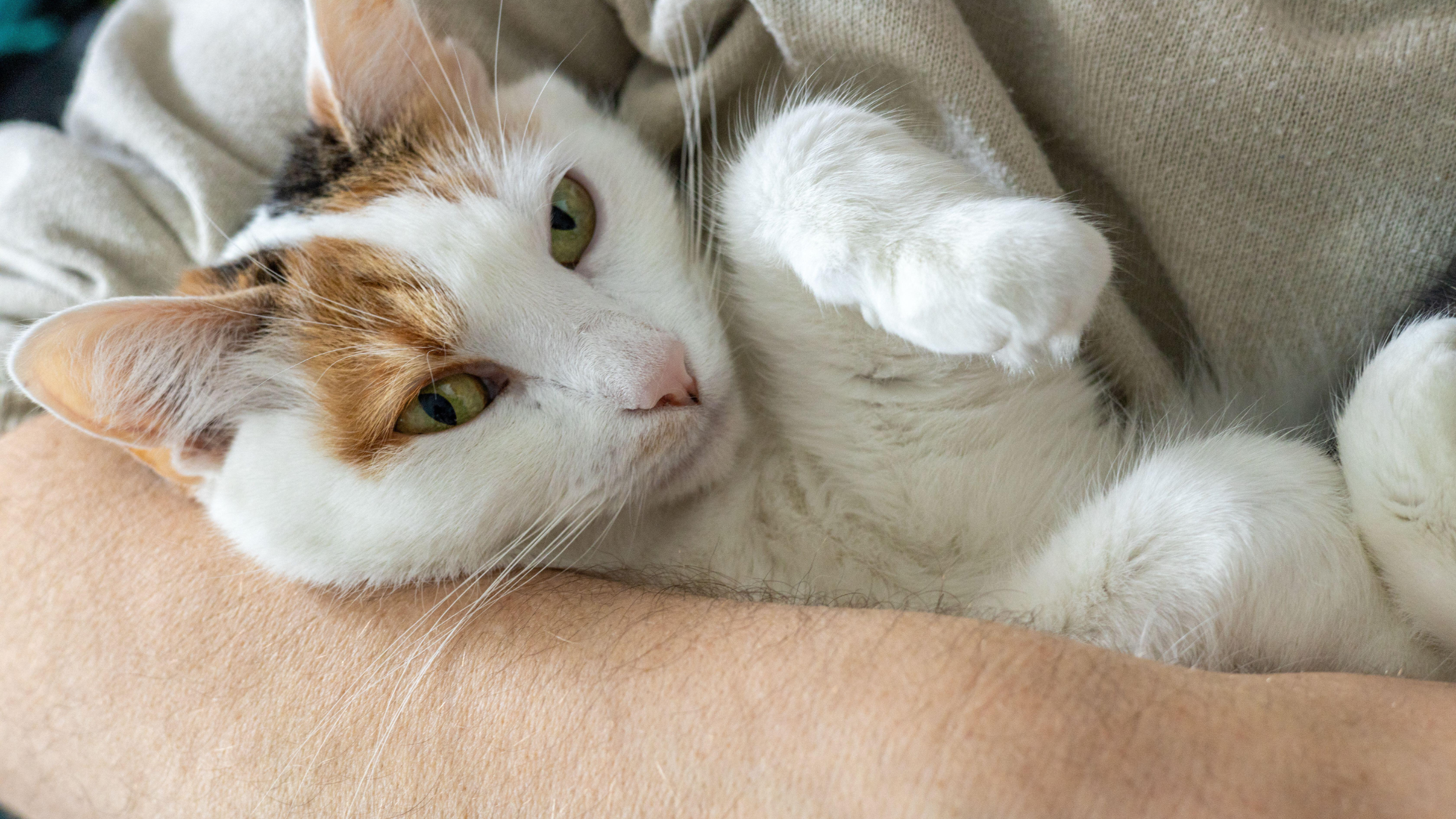
Cats may learn that vocalizations lead to attention, food or other rewards.
(Image credit: Andrzej Rostek, via Alamy)
When nighttime yowling may signal a health problem
Occasional yowling is usually normal, but a sudden increase in vocalization—particularly in an older cat—may point to an underlying medical condition.
Veterinarians may consider conditions such as hyperthyroidism, which causes excessive thyroid hormone production, and cognitive dysfunction syndrome, an age-related decline that can resemble dementia in humans. Both conditions may cause increased nighttime vocalization.
Cats may also yowl because of pain, anxiety, loneliness or changes in their surroundings. A move, a new pet, separation from an owner or disruption to a daily routine can all affect feline behavior.
If your cat begins yowling more often, do not focus only on the sound. Note when it happens, what occurs beforehand and whether your cat is eating, drinking, using the litter box and behaving normally. A veterinarian can use these details to determine whether the vocalization is behavioral or medical.
Your cat is probably not trying to annoy or punish you
One common misconception is that cats yowl or display unwanted behaviors to punish their owners. Animal behaviorists rarely find evidence of malicious intent.
Instead, frequent meowing usually has a straightforward explanation. Your cat may have learned that vocalizing brings food or attention, or it may be experiencing fear, anxiety, pain or illness.
Cats cannot communicate with words, but their vocalizations, body language and routines provide valuable clues. Understanding the context is the key to learning what your cat is trying to say—and knowing when a loud nighttime yowl deserves a call to the veterinarian.
How big of a cat fan are you? Test your knowledge with our cat quiz.
Topics
Source: www.livescience.com