


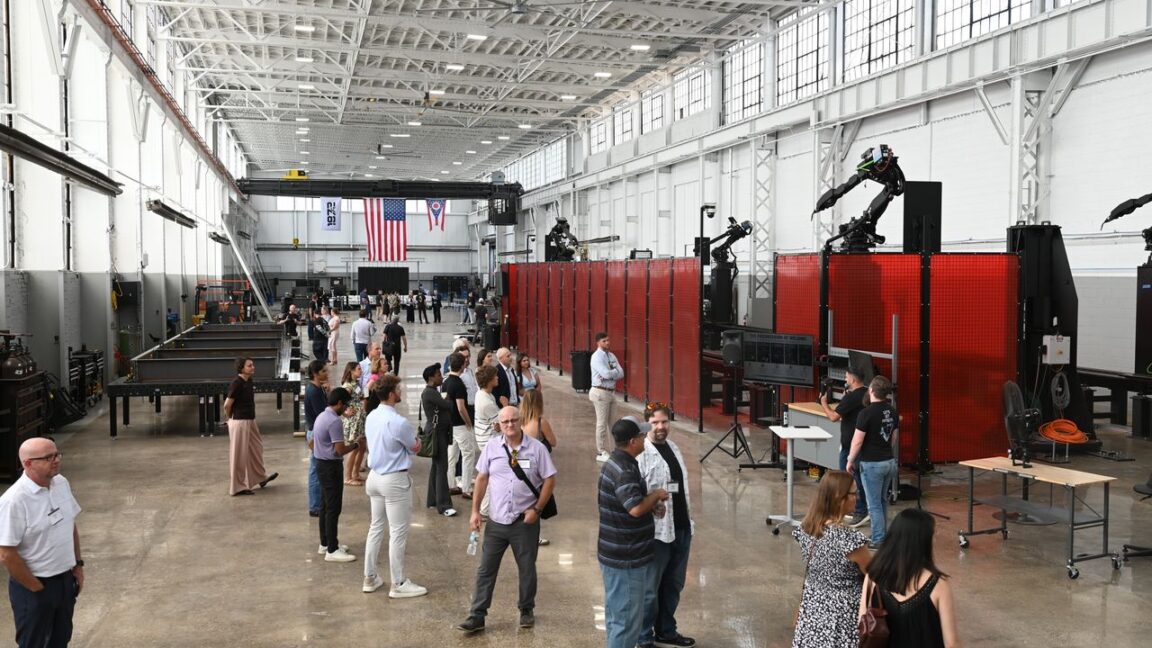
1872 Applies Rocket Manufacturing Expertise to Automated Steel Production
1872’s co-founders—including Summers, Brian Mongiglio, and Michael Grant—bring extensive manufacturing and engineering experience from SpaceX. Summers previously led the engineering team responsible for integrating and manufacturing the Raptor engines that power the Super Heavy booster for SpaceX’s Starship launch system.
According to Summers, the Raptor team’s use of intelligent software to track and manage physical manufacturing became a key advantage. The technology helped engineers implement production changes quickly, accurately, and at scale.
“We had software engineers who worked with hardware engineers to not only develop the engine, but also the systems to build the engine,” Summers told Ars. “Without that software, it would have been impossible to know what to build, what to actually build, and how to build it because all the engines were so different and we were driving so many changes throughout the system.”
This software-driven manufacturing approach helped the Raptor team progress from an initial full-scale engine concept to a production-ready version in about three years, Summers said. By comparison, the development cycle for a conventional jet engine can take more than 20 years.
At 1872, the co-founders are initially applying their automation technology to the production of square steel skids. Summers described these components as less precise than aerospace-grade rocket parts, making them a practical starting point for automated manufacturing while still supporting the production of large volumes of useful steel components.
“We’re starting with a lot of the less glamorous components on the critical infrastructure side that are very important to our ability to make things and consume a lot of skilled labor and resources,” Summers said.
Source: arstechnica.com