


HTC Vive Eagle Smart Glasses: Battery Life, AI Features and Privacy Explained
The HTC Vive Eagle smart glasses offer up to 4.5 hours of battery life with continuous music playback and up to 36 hours on standby. HTC also sells an optional clip-on power boost battery pack for $49. It clips securely to the frame and is noticeable, although it is not as uncomfortable as you might expect.
Vive AI uses ChatGPT or Gemini
The Vive Eagle glasses also include Vive AI, an AI assistant powered by OpenAI’s ChatGPT or Google’s Gemini. No login is required, so users are “anonymized” and the service does not retain personal information. However, this privacy-focused approach also means the glasses cannot use information from emails and messages to provide many of the personalization features offered by these chatbots.
Vive’s AI Plus service is free for the first two years. After that, users must pay a monthly subscription fee of $2.50.
Vive Eagle privacy features and camera controls
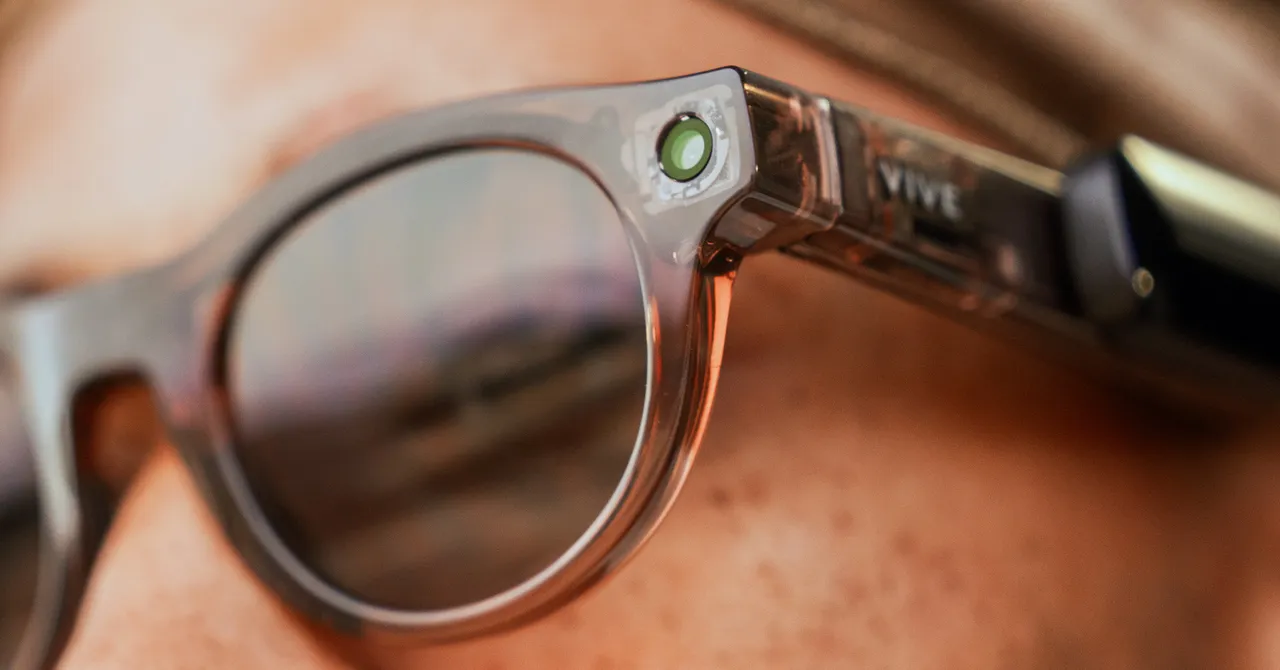
A bright indicator light sits next to the camera. If the light is blocked, the glasses cannot record. Recording also stops if someone nearby says, “Stop recording.” Captured video is encrypted and stored on the glasses rather than automatically uploaded to a phone or the cloud. To import photos or videos, users must transfer them manually through the app.
Meta has previously faced scrutiny over the indicator lights on its smart glasses, including reports of users covering the LEDs with stickers or attempting to disable them through hardware modifications. Meta said that privacy-focused software measures are in place, including disabling the camera if someone tampers with the indicator light, as described in its software updates.
Can smart glasses earn public trust?
I asked McDowell how HTC, and smart glasses manufacturers more broadly, can move beyond the “Trust Me”-style privacy promises that companies often make.
“We’re not a social media company,” McDowell said. “Knowing your information provides no benefit to me. We do not use the information used in the glasses to train our AI models or third-party AI models.”
The larger challenge is that smart glasses contain cameras in their frames, making it difficult for people to distinguish between brands. Vive Eagle glasses look very similar to Meta’s smart glasses, so people concerned about privacy may not realize that the Vive Eagle is different and is not tied to Mark Zuckerberg’s company. A friend once saw me wearing them and asked whether they were smart glasses. I said yes, but not the kind they thought. That did little to ease their suspicions.
More camera-free smart glasses are emerging
From HTC’s perspective, the hope is that broader adoption of stronger privacy practices will eventually change the public perception of smart glasses. Several companies are taking a camera-free approach, including Even Realities, Viture and Halliday. Other manufacturers are developing glasses with privacy shields or focusing on virtual displays instead of recording the world around the wearer. Even so, no company has captured the market quite like Meta.
“We want to make sure our technology adapts to society’s expectations, not the other way around,” McDowell said. “I hope everyone who makes products like this is moving in the right direction.”
Source: www.wired.com