


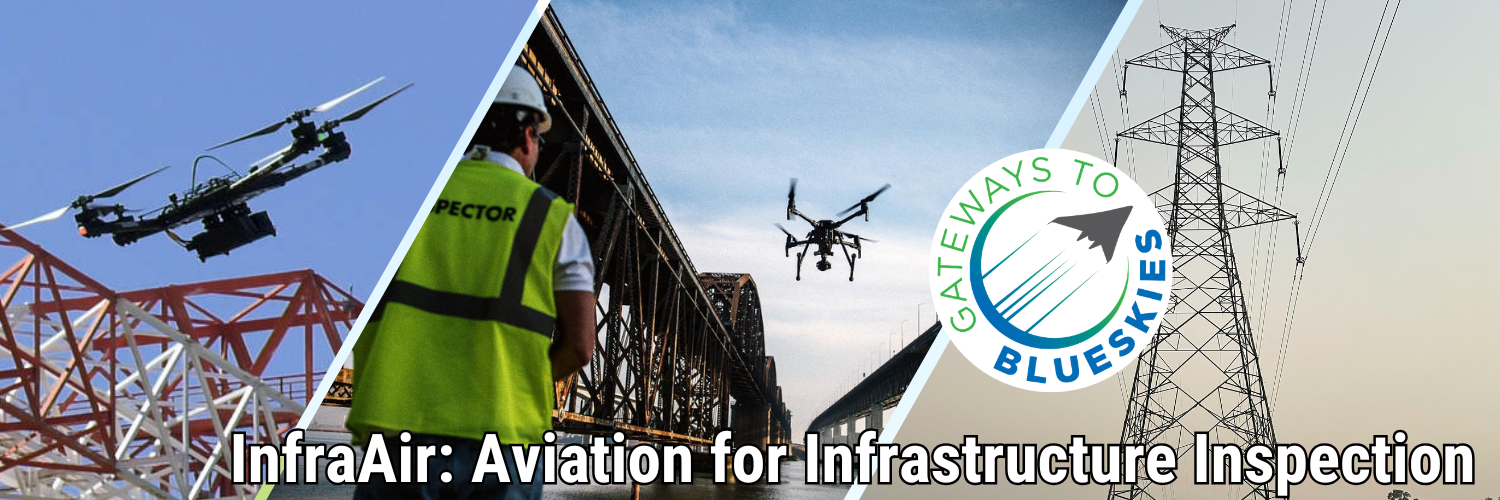
NASA’s 2027 Gateway to Blue Skies competition is challenging university students to design innovative aircraft and airborne technologies for inspecting critical land-based infrastructure, including bridges, tunnels, highways, railroads, and power grids. The goal is to improve infrastructure safety, reliability, accessibility, and inspection costs by 2035 or sooner.
Reliable infrastructure supports economic growth, global competitiveness, and everyday quality of life. When roads, bridges, tunnels, power systems, and other essential structures are damaged or deteriorating, the movement of people, goods, water, and energy can be disrupted. Regular inspection is essential throughout an infrastructure project’s lifecycle, but traditional methods can be costly, time-consuming, and potentially dangerous.
Many infrastructure systems are large, difficult to access, or located in hazardous environments. Inspecting them may require service interruptions, road or rail closures, or workers to operate at extreme heights, in confined spaces, or near other safety hazards. As infrastructure continues to age and expand, innovative airborne platforms could provide safer, faster, and more efficient inspection solutions.
“The time is ripe for innovative students to transform the way we use and maintain critical infrastructure,” said Steven Holz, director of the Gateway to Blue Skies competition at NASA’s Langley Research Center in Hampton, Virginia. “This competition gives talented students the opportunity to develop creative aviation concepts that can address important national challenges.”
Sponsored by NASA’s University Innovation Project, the 2027 Gateway to Blue Skies competition invites interdisciplinary university teams to explore new possibilities in aviation and aerospace technology. Each year, NASA selects a theme based on complex challenges facing the nation. The competition is open to students from all academic backgrounds, majors, and college levels.
Teams of two to six students will compete in two phases. During Phase 1, teams will submit a written proposal and a two-minute video for evaluation by NASA and industry experts. Up to eight finalist teams will receive a $9,000 prize and advance to Phase 2. Finalists will present their concepts and findings to a panel of NASA and industry experts at a forum in May 2027. The winning team will have the opportunity to intern with NASA Aeronautics during the academic year following the forum.
Students and university teams interested in developing the future of airborne infrastructure inspection can review the official guidelines and eligibility requirements on the Gateway to Blue Skies contest website. Teams are encouraged to submit a non-binding Notice of Intent through the website by Monday, October 12, to receive competition updates. The deadline for proposals and videos is February 22, 2027.
The Gateway to Blue Skies competition is administered by NASA’s Aeronautics Division within the Research and Technology Mission Directorate. NASA’s Center of Excellence for Collaborative Innovation, part of the Awards, Challenges, and Crowdsourcing Program, manages challenge contracts. The National Institute of Aerospace will manage this competition on behalf of NASA.
Source: www.nasa.gov