


Close Menu
HitechubHitechub
    What's Hot
    Science

    Can Your Brain Communicate While You Sleep? Discover Findings from This Fascinating Experiment

    Science

    New Scientist Recommends ‘Organ Speak’ by Julia Enders: An In-Depth Exploration of Our Body’s Organs

    Science

    Hubble Discovers Active Spiral Galaxy Messier 88: A Breathtaking Cosmic Insight

    Important Pages:
    • About Us
    • Privacy Policy
    • Terms & Conditions
    Facebook X (Twitter) Instagram Pinterest
    Facebook X (Twitter) Instagram
    HitechubHitechub
    Sunday, June 7
    • Technology
      1. AI
      2. Gadgets
      3. View All

      This is the most popular CEO in the world

      Sectors in which “Chat-GPT” is most often used

      AI Pioneer Expresses Concern About Potential for AI to Surpass Humanity

      Artificial intelligence has begun to “swallow” professions

      What’s new in Android 14

      Europeans have about 700 million old mobile phones in their drawers

      Here’s how you can tell if your phone is being tapped

      “Sneaker X” – computer case in the shape of a sneaker

      Russian Gamers Unite to Prevent Nuclear War: Join the Fight Online

      Challenges of Space Travel: Why Journeying to Space is So Difficult

      NASA Astronaut Casts Historic Vote from Space

      Discover the Future of Comfort: What If You Could Wear a Chair?

    • Science
      1. Space
      2. Wheels
      3. View All

      Galaxies in the universe are growing more slowly than they should

      “Espace” presented the new lander “Apex 1.0”

      The largest asteroid sample ever collected has arrived on Earth

      (VIDEO) Incredible flight of the Parker Solar Probe

      Toyota wants to make a new generation battery with a range of up to 1,200 km

      Meet Toyota’s lunar “baby” that could make exploring the Moon easier

      Microlino – Is this the perfect city car?

      Alfa Romeo 4C gets an electric successor

      Top New Science Fiction Novels to Read in June 2026: Featuring Adrian Tchaikovsky and M. John Harrison

      Vulture Discovered Hiding Medieval Treasure in Its Nest

      Can Geoengineering Thicken Arctic Sea Ice? Exploring Duration and Impacts

      Decades of Battle: The US Faces a Resurgence of Flesh-Eating Screwworms

    HitechubHitechub
    Home » The Shocking Truth: Why Giant Insects Might Be Here to Stay
    Science

    The Shocking Truth: Why Giant Insects Might Be Here to Stay

    Share Facebook Twitter Pinterest WhatsApp
    Share
    Facebook Twitter LinkedIn Pinterest WhatsApp

    300 million years ago, long before the era of dinosaurs, our planet vibrated with the sounds of colossal insects.

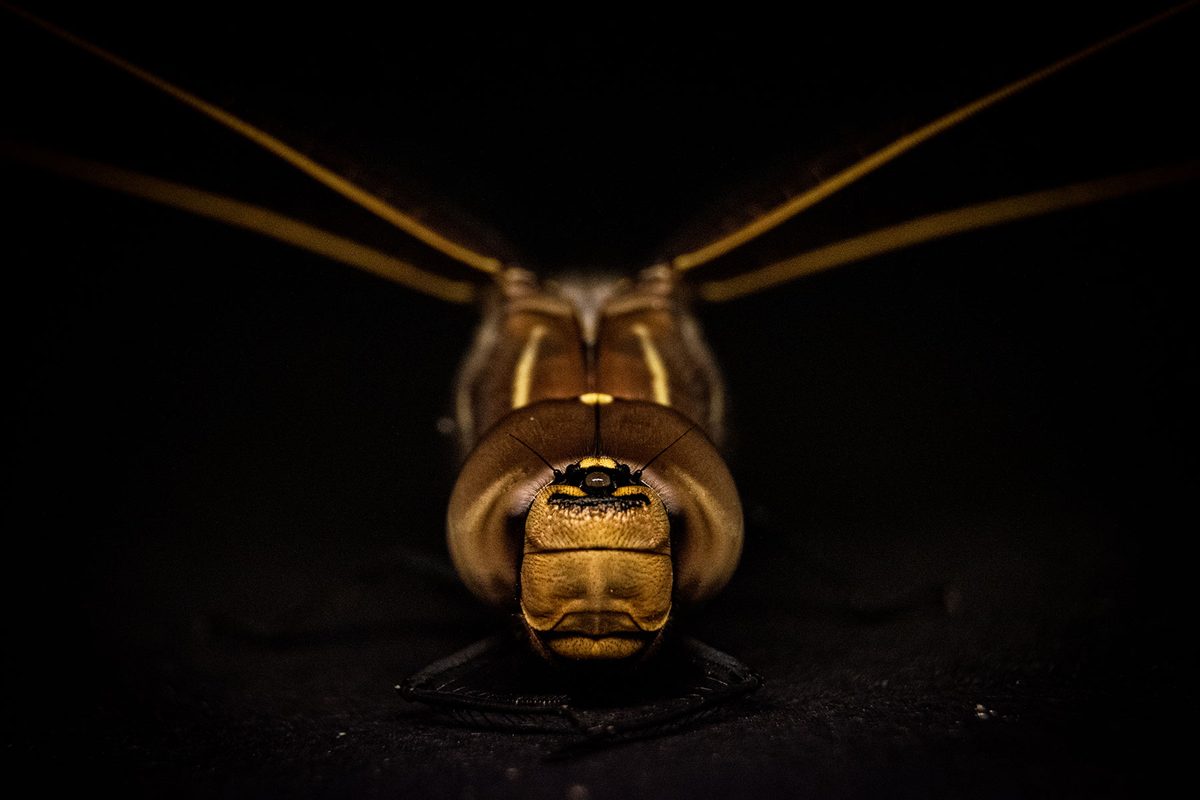
    One of the most remarkable among these species is the griffin fly, a dragonfly-like predator boasting a wingspan of up to 70 cm (28 inches). With its formidable jaws, even today’s creepiest insects pale in comparison.

    While many of us are relieved not to share the planet with these giants, a question lingers: where did these massive insects go, and could they return?

    For decades, scientists believed they had the answer. During their reign, the atmosphere contained about 35% oxygen, compared to today’s 21%. This abundance allowed larger flying insects to thrive. As atmospheric oxygen levels declined, these giants dwindled in size, as it became energetically prohibitive to sustain them in flight.

    However, a groundbreaking study published in Nature challenges this long-held view, suggesting that oxygen isn’t the primary limiting factor for insect size.

    With this barrier potentially lifted, what stands in the way of the resurgence of giant insects?

    How Insects Breathe

    Insects have a unique respiratory system that differs significantly from ours. Lacking lungs, they transport oxygen through a network of air-filled tubes.

    This system begins at spiracles (small openings on the body) and channels air through progressively smaller tubes. The tiniest of these tubes, known as ‘tracheae,’ penetrate deeply into tissues, delivering oxygen directly to cells.

    For many years, scientists believed this process relied mainly on diffusion—the passive movement of oxygen from areas of high to low concentration.

    However, diffusion alone becomes inefficient over long distances. The larger the insect, the greater the challenge of supplying adequate oxygen to its cells. Hence, if insects were solely dependent on diffusion, their size would be severely constrained.

    Ancient Earth’s rich oxygen levels may have lifted these size limitations. “Previously, giant insects roamed the Earth,” said Edward Snelling, a professor at South Africa’s University of Pretoria and lead author of the new Nature study.

    300 million years ago, lush swamps and greenery made the perfect habitat for griffin flies – Photo credit: Getty

    “The previous argument suggested that the tracheal system primarily relies on diffusion,” Snelling states. However, recent studies indicate that diffusion isn’t the sole driver of insect respiration.

    “In addition to tracheae, insects possess large air sacs functioning as bellows to ventilate their tracheal systems, similar to how we breathe into our lungs,” explains Professor Snelling. “This ventilation significantly enhances diffusion and compensates for its limitations.”

    This revelation sparked an idea in Snelling: If diffusion is no longer a constraint, oxygen might not be the reason we aren’t plagued by giant dragonflies today. But now, he and his colleagues had to validate this.

    Examining the Evidence

    To explore whether oxygen limits the size of modern insects, Snelling embarked on a quest to collect them.

    “I roamed the campus with a net, resembling a somewhat eccentric scientist,” he admits. “I captured insects of various sizes and analyzed samples of their flight muscles under a microscope to measure the density of their tracheae.”

    The hypothesis was straightforward: If flying insects were limited by oxygen, their flight muscles would require a higher density of tracheae. Given the energy demand of flight, more tracheae would be needed to transport sufficient oxygen.

    “If the oxygen limitation hypothesis held true, we’d expect tracheae to occupy more than 10% of the relative space,” Snelling notes.

    However, the research team discovered that tracheae typically occupy less than 1% of the space within an insect’s flight muscle. Despite an incredible size variation across 44 species—ranging over 10,000 times—the occupied space increased only by a factor of 1.8.

    This indicates that even at sizes akin to griffin flies, oxygen supply doesn’t demand a significant spatial allocation.

    “Even among the largest insects, the increase is minuscule, casting serious doubt on the notion that the tracheal system constrains insect body size,” Snelling concluded.

    A fossil of a giant dragonfly-like creature.
    Fossils show that the ancestors of these dragonflies shared nearly identical body plans on a grander scale – Photo credit: Alexandre Albore/Wikimedia Commons

    The Fate of Giant Insects: Expiration or Return?

    Dr. Snelling’s study provides strong evidence for the argument that oxygen may not be the constraining factor for size, yet it leaves other reasons for the diminishment of large insects unexplored.

    One compelling alternative, suggests Snelling, is environmental pressures.

    “300 million years ago, there were no birds or bats to hunt flying insects; those predators had yet to evolve. Nowadays, birds and bats excel at capturing airborne insects,” he notes.

    “The larger the insect, the more manageable it becomes for warm-blooded creatures.” This concept resonates; small flies challenge our ability to catch them, but larger beetles and moths are considerably easier targets.

    However, this remains a theory. The ultimate reasons for the extinction of giant insects—and the possibility of their return—are still enigmas.

    “Historically, gigantism tends to surface when environmental conditions are stable,” Snelling comments, implying that the resurgence of griffin flies is unlikely under current conditions.

    “Very large animals are typically unadaptable to rapidly changing environments. Given human-induced environmental shifts, it may take humanity’s extinction before giant insects can return,” he speculated.

    “However, if humans were to disappear and the environment stabilized, insects could potentially evolve back into the sizes they occupied 300 million years ago. Contrary to common belief, they don’t require a high-oxygen atmosphere for such a transformation.”

    Read More:

    Source: www.sciencefocus.com

    Share. Facebook Twitter Pinterest LinkedIn WhatsApp
    Previous ArticleHow Human Error Transformed into a Weapon Against Large-Scale Language Models
    Next Article Webb Discovers Most Distant Inactive Black Hole Ever Detected

    Related Posts

    Science

    Top New Science Fiction Novels to Read in June 2026: Featuring Adrian Tchaikovsky and M. John Harrison

    Science

    Vulture Discovered Hiding Medieval Treasure in Its Nest

    Science

    Can Geoengineering Thicken Arctic Sea Ice? Exploring Duration and Impacts

    Science

    Decades of Battle: The US Faces a Resurgence of Flesh-Eating Screwworms

    Science

    Alice Roberts: Embracing Our Animalistic Nature – Insights on Human Behavior

    Science

    490-Million-Year-Old Arthropod Fossil Reveals Missing Link in Fossil Record

    Science

    New Hyaenodont Species Discovered by Paleontologists in Pakistan

    Science

    How a Tiger and Goat Became Best Friends Instead of Foes

    Add A Comment
    Leave A Reply Cancel Reply

    Stay In Touch
    • Facebook
    • Twitter
    • Instagram
    • Pinterest
    Top Picks
    Science

    New Hyaenodont Species Discovered by Paleontologists in Pakistan

    Exciting Discoveries in Paleontology: Fossil Remains of Three Hyaenodont Species Found in Miocene Deposits of…

    Hubble Discovers Active Spiral Galaxy Messier 88: A Breathtaking Cosmic Insight

    An Afghan supercar made its global debut at the Doha Motor Show

    Artificial intelligence has begun to “swallow” professions

    What’s new in Android 14

    Most Popular
    Science

    Keto Diet: A Promising Approach for Anorexia Recovery

    Science

    Webb Discovers Most Distant Inactive Black Hole Ever Detected

    Categories
    • AI (13)
    • Gadgets (10)
    • Science (111)
    • Space (9)
    • Technology (37)
    • Wheels (9)
    Our Picks
    Science

    How Land Plants Transform River Ecosystems – Cyworthy

    Technology

    This is the future of processors!

    © 2026 Hitechub.
    • Home
    • About Us
    • Privacy Policy
    • Terms & Conditions

    Type above and press Enter to search. Press Esc to cancel.

    We are using cookies to give you the best experience on our website.

    You can find out more about which cookies we are using or switch them off in .

    Ad Blocker Enabled!
    Ad Blocker Enabled!
    Our website is made possible by displaying online advertisements to our visitors. Please support us by disabling your Ad Blocker.
    Go to mobile version
    Hitechub
    Powered by  GDPR Cookie Compliance
    Privacy Overview

    This website uses cookies so that we can provide you with the best user experience possible. Cookie information is stored in your browser and performs functions such as recognising you when you return to our website and helping our team to understand which sections of the website you find most interesting and useful.

    Strictly Necessary Cookies

    Strictly Necessary Cookie should be enabled at all times so that we can save your preferences for cookie settings.