


Since then, I’ve been searching for a serious Windows alternative to the MacBook Neo. The goal wasn’t to find a cheap imitation that cuts corners, but a premium laptop that delivers strong design, performance, and features at a lower price. For months, there were few convincing options. Then the Dell XPS 13 arrived, and the comparison finally became clear.
The Dell XPS 13 offers many of the qualities I had been waiting for: a lightweight design, high-quality materials, a sharp display, and a competitive starting price. But is it actually a better budget laptop than the MacBook Neo? After putting both models through our testing, the answer surprised us.
A premium laptop without the usual compromises
When Apple announced the MacBook Neo, its starting price was a surprise. The original $599 price was unprecedented for an Apple laptop, while the current $699 starting price remains highly competitive. That pricing puts the MacBook Neo directly into a market traditionally dominated by Windows laptops.
Photo: Luke Larsen
Although many Windows laptops are available at this price, budget models often make noticeable compromises. Cheap materials, dim displays, limited color accuracy, and disappointing touchpads are common. Even affordable laptops we like, including the Snapdragon X Plus-powered HP OmniBook 5, can fall short in areas such as touchpad quality.
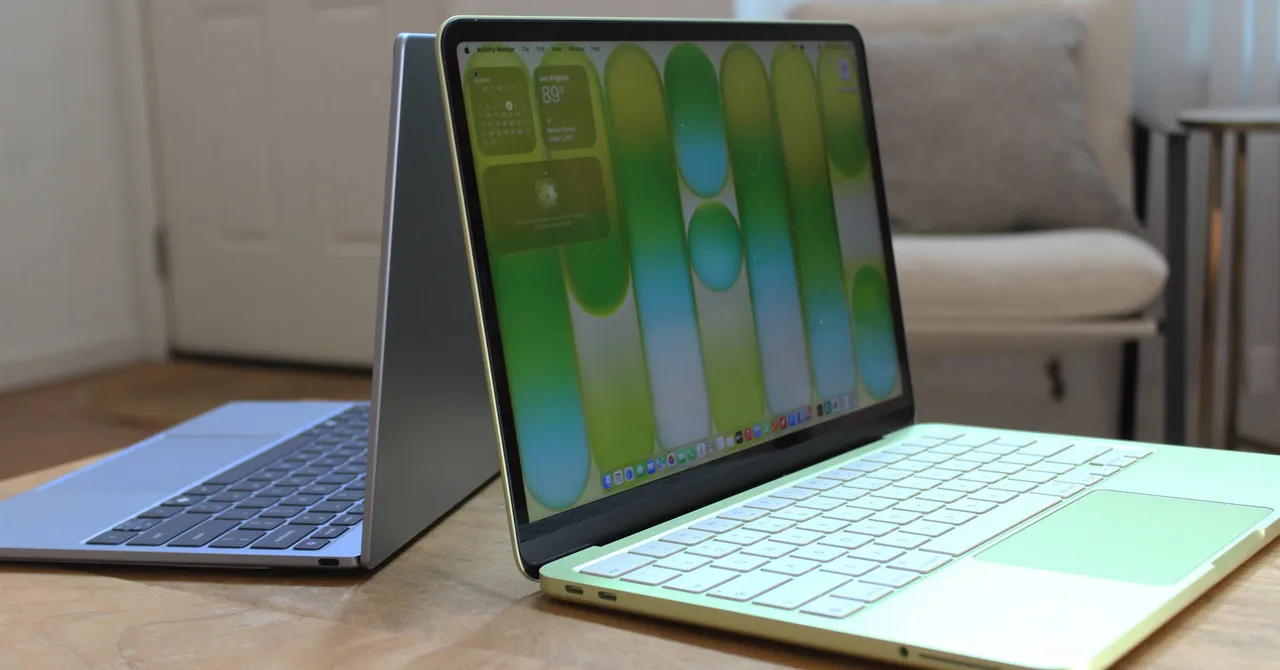
The Dell XPS 13 takes a different approach by matching the MacBook Neo’s premium feel in several important areas. Both laptops start at $699, or $599 for students, and have similarly compact dimensions. Each is approximately 0.5 inches thick, making them easy to carry. At 2.2 pounds, the XPS 13 is also 0.5 pounds lighter than the MacBook Neo. The difference may seem small on paper, but it is noticeable when carrying both laptops.
The MacBook Neo has a slightly smaller 13-inch screen, but the Dell XPS 13 features a taller chassis when its lid is open. Its 13.4-inch display has significantly slimmer bezels, particularly along the bottom edge, giving the XPS 13 a more modern appearance. Apple’s white keyboard and colorful finishes may appeal to some buyers, while the XPS 13 is limited to two silver color options. Still, the Dell laptop provides more screen space in a smaller-feeling package—an advantage when traveling or working in tight spaces.
The display is another area where the Dell XPS 13 stands out among budget laptops. Many $700 laptops have dim screens with weak color performance. The MacBook Neo avoids those problems, reaching up to 509 nits in our testing and offering respectable color accuracy. However, the XPS 13 adds several features that make it more versatile.
First, the Dell XPS 13 has a touchscreen, a feature Apple still does not offer on its MacBook lineup. It also supports a 120Hz refresh rate, producing smoother scrolling and more responsive motion than the MacBook Neo—and even some more expensive laptops, including the MacBook Air. Finally, the XPS 13 delivers excellent color saturation across the Adobe RGB and P3 color spaces. Its sharp IPS display is one of the best laptop screens I’ve tested in this price range.
These features do not make the MacBook Neo’s display a weakness, but they give the Dell XPS 13 a clear advantage in several categories. The same is true of the keyboard and trackpad. Both laptops are comfortable to use from the moment you start typing, and Dell has avoided the touchpad compromises found on many budget Windows laptops. In fact, Apple makes more noticeable compromises on the base MacBook Neo, including omitting Touch ID and backlighting from the keyboard—both of which are available on the XPS 13.
Ports, storage, and video conferencing
The Dell XPS 13 also wins in connectivity and storage. Both laptops include two USB-C ports, but Dell places one on each side of the chassis. That layout makes it easier to charge the laptop from either side, which is especially useful when working in an airplane seat or crowded workspace.
The XPS 13 also has faster, more capable USB-C ports. Both ports use USB 3.2 Gen 2, support 4K external displays, and offer data-transfer speeds of up to 10 Gbps. By comparison, one of the MacBook Neo’s USB-C ports uses the slower USB 2 standard and cannot natively output to an external display.
The MacBook Neo does have one connectivity advantage: it includes a headphone jack. The Dell XPS 13 omits a built-in headphone port, which may be inconvenient for anyone who prefers wired headphones or wants to avoid carrying a USB-C adapter.
Storage is another important advantage for the Dell XPS 13. Every configuration includes 512GB of storage, while the base MacBook Neo comes with only 256GB. Upgrading the MacBook Neo to 512GB requires choosing the more expensive Touch ID model. Dell also uses faster storage, making the XPS 13’s larger capacity and improved speed a compelling combination for buyers looking for the best budget premium laptop.
Source: www.wired.com