


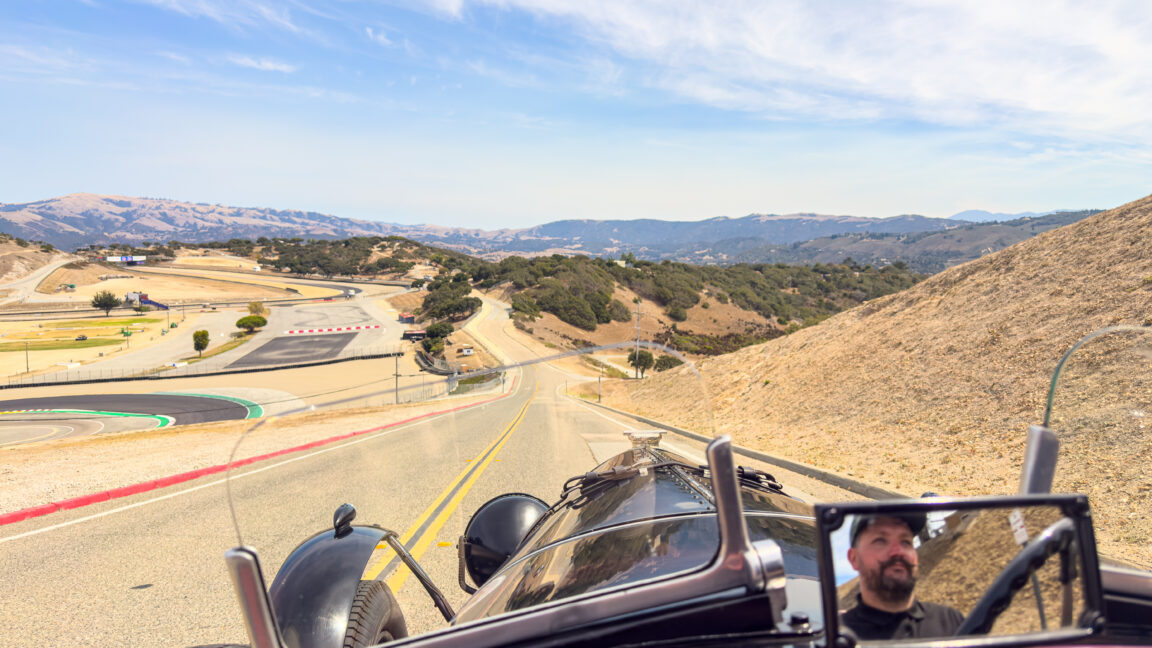
MONTEREY, Calif. — The new Bentley Supersport recently completed its first track drive, delivering a sharper and more focused driving experience than almost any modern Bentley. With its hybrid system removed and power sent exclusively to the rear wheels, the car is expected to be one of the lightest Bentleys built in the company’s 85-year history.
However, Bentley’s first car to wear the Supersport badge dates back nearly a century. Bentley produced just 18 examples of the original Super Sports between 1925 and 1927. Based on the standard 3-liter model, the Super Sports featured a wheelbase shortened by 9.5 inches (241 mm), helping reduce weight and improve agility.
Performance was equally important. The car received a more tapered radiator to reduce aerodynamic drag, while its lightweight bodywork was supplied by the coachbuilder selected by each owner. To experience this remarkable piece of Bentley history, I joined the owner of a 1926 example for a drive at WeatherTech Raceway Laguna Seca.
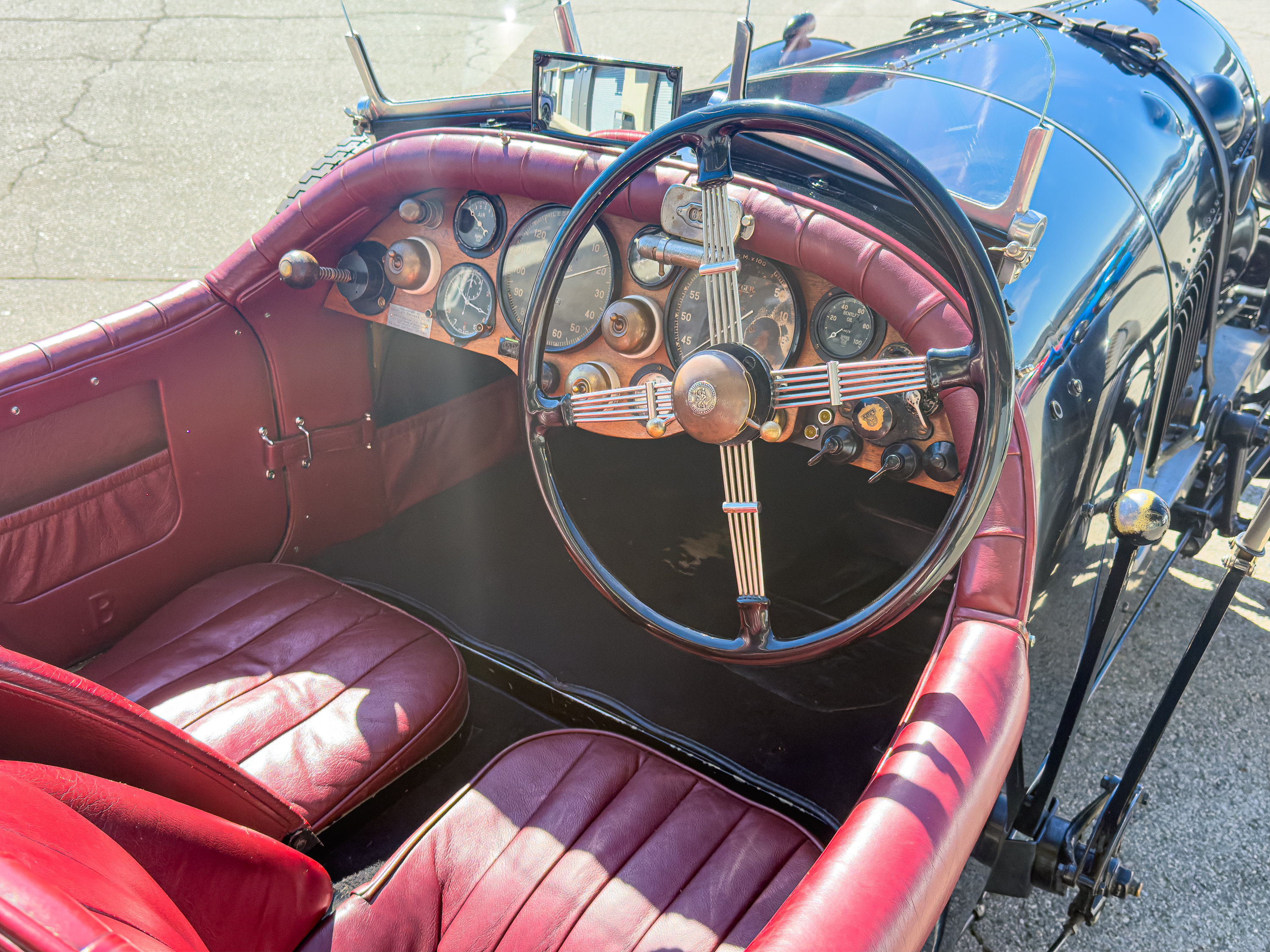
The Wimbledon Jarvis two-seat body was remarkably compact for its era.
Jonathan Gitlin
The three-speed transmission’s shift lever sits outside the cockpit—a setup that would be difficult to approve under modern FIA or NHTSA regulations.
Jonathan Gitlin
The Wimbledon Jarvis two-seat body was remarkably compact for its era.
The three-speed transmission’s shift lever sits outside the cockpit—a setup that would be difficult to approve under modern FIA or NHTSA regulations.
Jonathan Gitlin
Like the modern Continental GT and the latest Bentley Supersport, the original Bentley Super Sports used a more highly tuned engine than the standard model. Its 3.0-liter engine featured upgraded pistons, a lighter flywheel, a higher compression ratio, and revised carburetors.
Combined with unique gearing, those upgrades enabled Bentley to promise a top speed of more than 100 mph (160 km/h). For comparison, the millions of Ford Model Ts on the road at the time struggled to reach 40 mph (64 km/h).
Chassis YM 4037, nicknamed “Smokey,” was the 12th of the 18 Bentley Super Sports cars built. Completed in 1926, it wears distinctive Wimbledon Jarvis two-seater coachwork. Although the car later spent time in New Zealand and South Africa, its early racing career took place in England.
In 1932, Bentley’s second owner, racing driver Kit Baker-Kerr, upgraded Smokey with a 4.5-liter engine sourced from the 1928 Le Mans-winning Bentley. The additional power made the vintage Bentley highly competitive at Brooklands between 1935 and 1937, when Baker-Kerr used it to win seven races and set a fastest lap of nearly 117 mph (188 km/h).
Source: arstechnica.com