


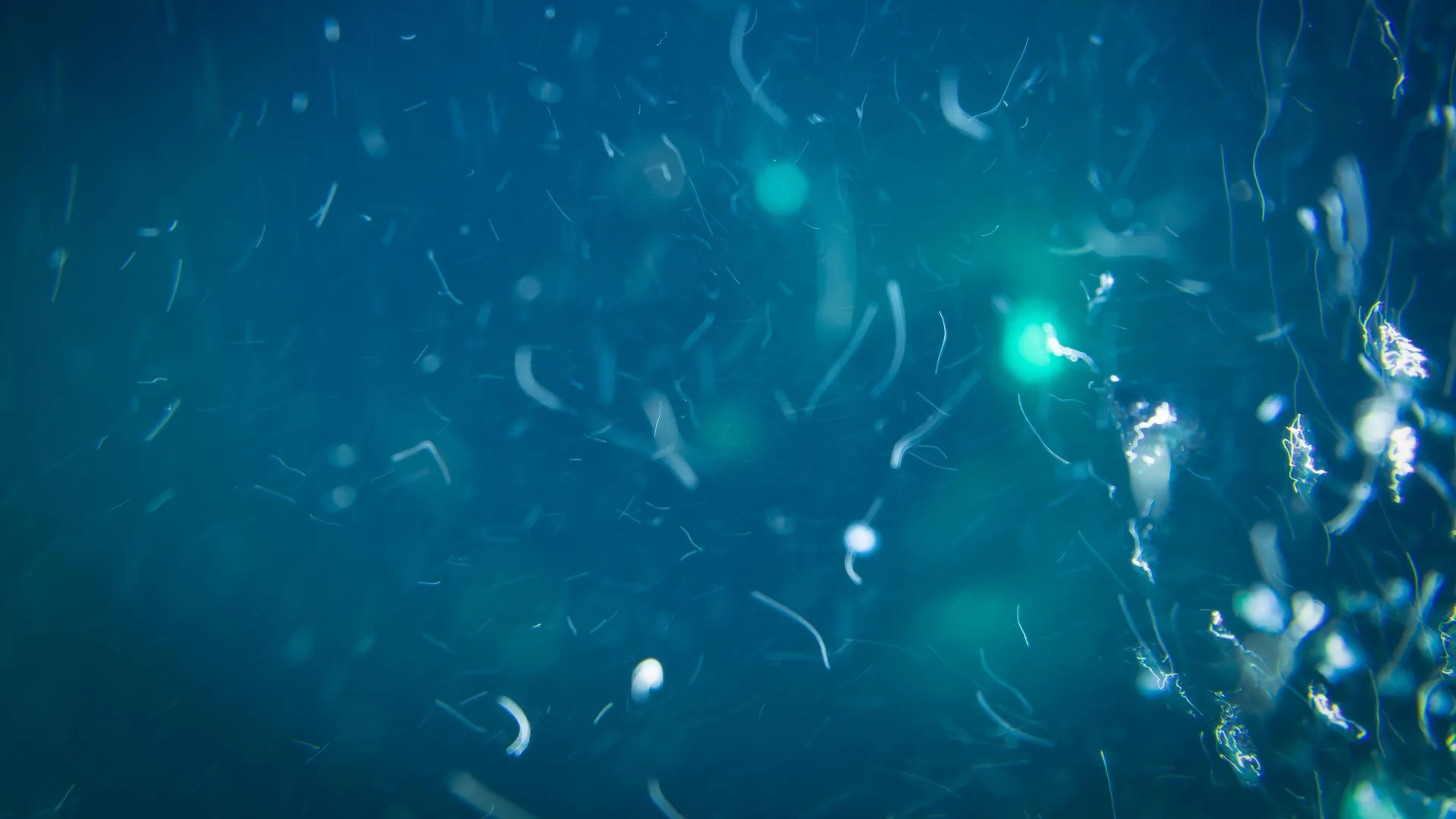
Recent research reveals an astonishing food source in the deep sea that could revolutionize our understanding of marine ecosystems and the Earth’s carbon cycle. A groundbreaking study from the University of Southern Denmark (SDU) indicates that deep-sea microbes thrive in nutrient-rich environments contrary to previous beliefs.
The findings show that small sedimentary particles, referred to as marine snow, release dissolved carbon and nitrogen as they descend into the depths of the ocean. This nutrient leakage serves as an immediate nourishment source for the surrounding microorganisms.
Deep Ocean Pressure Unveils Hidden Nutrients
Marine snow consists of tiny aggregates of dead algae, microorganisms, and other organic materials floating in the ocean. Research indicates that when these particles sink to depths of approximately 2 to 6 kilometers, the immense hydrostatic pressure exerts force on them, effectively pushing out dissolved organic matter.
“Pressure acts like a giant juicer,” says lead author Peter Stief, a biologist and associate professor at the Norsee and Hadar Research Center in Denmark. “It extracts dissolved organic compounds from the particles, making them immediately available to microorganisms.”
The study concludes that “Hydrostatic pressure causes significant leakage of dissolved organic matter from marine snow particles.”
Researchers estimate that sinking marine snow can lose around 50% of its original carbon and 58% to 63% of its original nitrogen during descent through the ocean.
This Discovery Could Transform Our Understanding of the Carbon Cycle
This revelation also bears crucial implications for the Earth’s carbon cycle.
Scientists have traditionally believed that much of the carbon transported by marine snow eventually gets buried in deep-sea sediments. However, if significant amounts of carbon leak before reaching the ocean floor, the total carbon permanently stored in sediments might be less than previously estimated.
Instead, this dissolved carbon may remain suspended in deep ocean waters for hundreds or even thousands of years before gradually cycling back to the surface ocean and eventually the atmosphere. In contrast, carbon sequestered in seafloor sediments can remain trapped for millions of years, contributing to the formation of oil and natural gas we extract today.
“This process influences the ocean’s carbon storage capacity and duration, which is vital for understanding climate dynamics and refining future models,” states Peter Stief.
Simulation of Marine Snow Under High Pressure
To explore this phenomenon, researchers simulated marine snow in the laboratory using diatoms, which are microscopic algae that naturally solidify as they sink into the ocean.
The research team placed these artificial particles in a specially designed rotating pressure tank to keep the marine snow suspended instead of settling. This setup allowed them to measure the extent of carbon and nitrogen leakage under conditions akin to those found in the deep ocean.
The experiments revealed that up to half of the particles’ carbon content could leak out during settling. Most of the released material comprised proteins and carbohydrates that are readily consumed by free-living deep-sea microorganisms.
Microorganisms Respond Rapidly
The released nutrients swiftly stimulated microbial growth.
Within just two days, bacterial abundance surged 30-fold, accompanied by significant increases in respiration rates. These results highlight that dissolved organic matter from marine snow serves as a quick and valuable energy source for deep-sea microorganisms.
The researchers also noted similar leakage patterns across various species of diatoms, suggesting that this mechanism is likely widespread in the world’s oceans.
Next Destination: Arctic Ocean
The next phase of research will transition from the lab to the open ocean.
The research team plans to investigate this process’s molecular fingerprints in both surface waters and the deep ocean during upcoming Arctic expeditions aboard German research vessels. Detecting these signatures in natural environments would validate the laboratory findings regarding pressure-induced nutrient leaks throughout the deep ocean.
The study, titled “Hydrostatic Pressure Causes Strong Leakage of Dissolved Organic Matter from Marine Snow Particles,” was co-authored by Peter Stief, Jutta Niggemann, Margot Bligh, Hagen Buck-Wiese, Urban Wünsch, Michael Steinke, Jan-Hendrik Hehemann, and Ronnie N. Glud.
This groundbreaking research was funded by the Danish National Research Foundation, the European Union’s Horizon 2020 research and innovation program, and the Danish Independent Research Fund.
Source: www.sciencedaily.com