


Fresh Magma Is Recharging Japan’s Kikai Supervolcano Thousands of Years After Its Largest Eruption
One of Earth’s most powerful supervolcanoes is slowly rebuilding its vast underground magma chamber thousands of years after producing the largest known volcanic eruption of the Holocene. Scientists at Kobe University have found evidence of fresh magma accumulating beneath Japan’s Kikai Caldera, which erupted catastrophically about 7,300 years ago.
The discovery offers a rare look at how massive volcanic systems restore their magma supplies after enormous eruptions. It could also provide clues about other supervolcanoes, including Yellowstone in the United States and Toba in Indonesia, while helping scientists identify potential warning signs of future eruptions.
How Do Supervolcanoes Store So Much Magma?
Some volcanic eruptions are so powerful that they dramatically reshape the landscape. The volume of magma released during these events can be so immense that it could bury New York City’s Central Park beneath a layer approximately 12 kilometers (7.5 miles) thick.
When huge quantities of magma escape from underground, the rock above the emptied reservoir can collapse. This creates a broad, relatively shallow depression called a caldera.
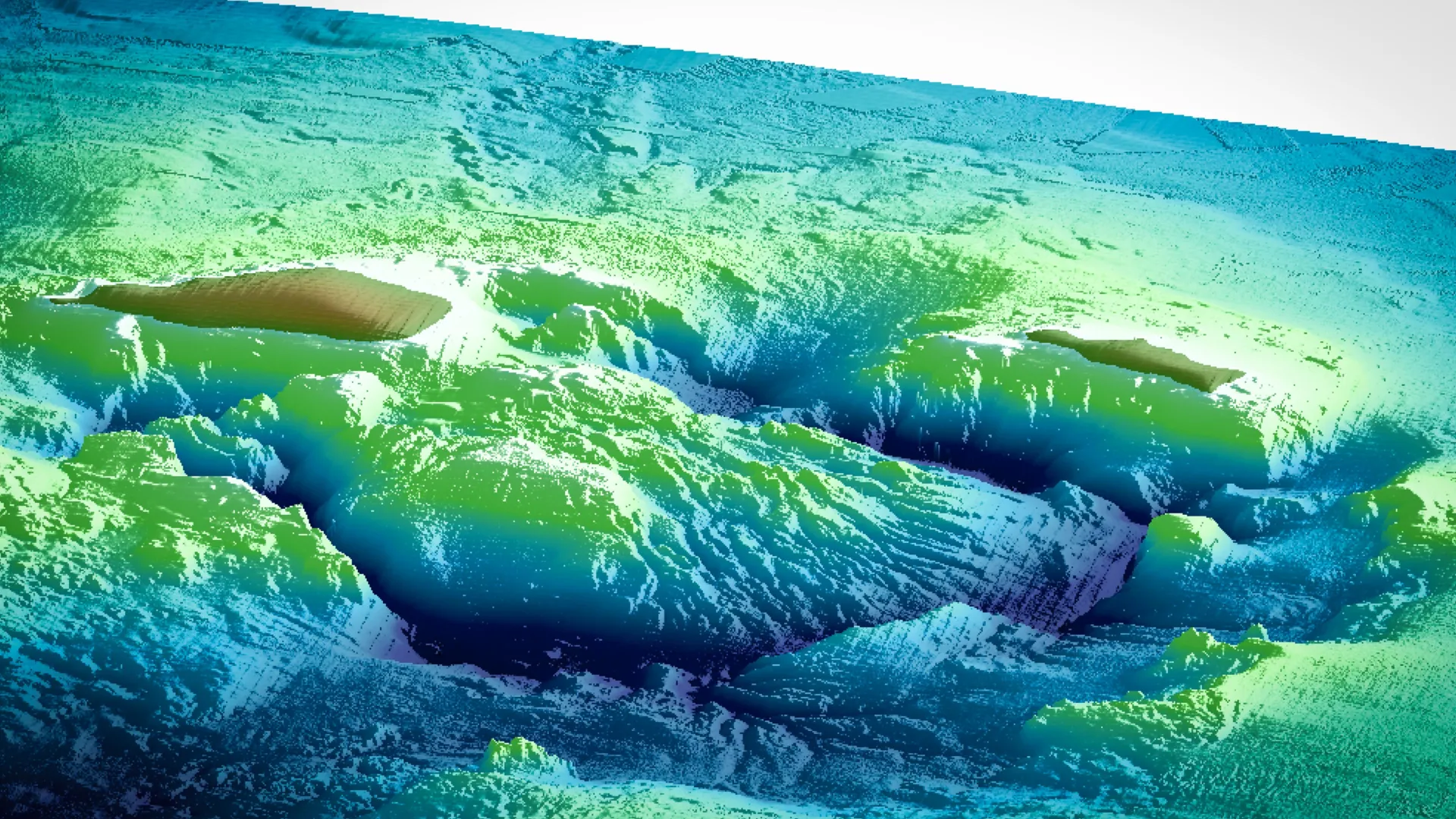
Calderas are associated with some of the most powerful eruptions in Earth’s history. Famous examples include Yellowstone, Toba, and Japan’s Kikai Caldera, much of which lies beneath the ocean.
The last major eruption at Kikai occurred approximately 7,300 years ago. It was the largest known volcanic eruption of the Holocene, a geological epoch that began about 11,700 years ago and continues today.
Scientists know that giant caldera volcanoes can erupt more than once, but they do not yet fully understand how the vast amounts of magma needed for these eruptions accumulate underground. This makes it extremely difficult to predict when another large-scale eruption could occur.
“To understand how giant caldera eruptions occur, we need to understand how such large amounts of magma accumulate,” says Nobukazu Sema, a geophysicist at Kobe University.
Scientists Detect a Large Magma Reservoir Beneath Kikai
Kikai’s underwater location may appear to make the volcano difficult to study, but the surrounding ocean floor gives researchers important advantages. Scientists can conduct extensive geological surveys across the volcanic structure.
“Being underwater, we can conduct systematic and large-scale investigations,” Sema explains.
To investigate the structure beneath Kikai, researchers from Kobe University collaborated with the Japan Agency for Marine-Earth Science and Technology (JAMSTEC). They used powerful air-gun arrays to generate seismic pulses that traveled through the Earth’s crust beneath the seafloor.
Submarine seismometers recorded how the waves moved through the underground rock. Because seismic waves travel differently through solid rock and regions containing molten material, researchers can analyze their behavior to map structures that cannot be observed directly.
The findings, published in Communications Earth & Environment, reveal a substantial region containing a high percentage of magma directly beneath the site of Kikai’s great eruption 7,300 years ago.
By examining the seismic data, the research team determined the approximate size and shape of the underground reservoir. Its location and extent indicate that it occupies the same magma storage system involved in the ancient eruption.
“It’s clear from its extent and location that this is indeed the same magma chamber from the previous eruption,” Sema said.
Fresh Magma Is Recharging an Ancient Supervolcano
The most significant finding is that the magma beneath Kikai appears to be more than leftover material from the eruption thousands of years ago.
Previous research found that a new lava dome has formed near the center of the caldera over approximately the past 3,900 years. Lava domes develop when relatively thick, viscous lava accumulates around a volcanic crater instead of flowing freely across the surrounding landscape.
Chemical analysis also showed that the material from this lava dome and other recent volcanic activity differs in composition from the material ejected during Kikai’s massive eruption.
This difference provides an important clue. It suggests that the magma currently stored beneath the volcano has not simply remained unchanged since the previous eruption. Instead, it has been supplied by new injections of magma from deep within the Earth’s crust and mantle.
“This means that the magma currently present in the magma chamber beneath the lava dome is likely newly injected magma,” Sema summarizes.
By combining seismic observations with chemical evidence, researchers can develop a clearer picture of how giant volcanic systems gradually rebuild their underground magma supplies after major eruptions.
However, the replenishment process does not mean that another catastrophic eruption is imminent. Instead, the study reveals how magma chambers recharge over thousands of years—an important process scientists must understand before they can reliably assess the long-term behavior of supervolcanoes.
What Kikai Could Reveal About Yellowstone and Toba
The findings may have implications far beyond Japan. Researchers believe the processes identified beneath Kikai could help explain why other large caldera systems, including Yellowstone and Toba, also contain large magma chambers relatively close to the surface.
“This magma reinjection model is consistent with the existence of large, shallow magma chambers beneath other large calderas, such as Yellowstone and Toba,” Sema said.
The proposed model suggests that after a massive eruption, new magma may gradually intrude into and replenish an existing underground reservoir. Understanding this process could reveal important patterns in the long-term cycles of magma accumulation, volcanic activity, and large eruptions.
Researchers Aim to Improve Supervolcano Monitoring
Researchers now hope to improve the seismic techniques used at Kikai so they can study magma movement and storage in greater detail.
“We hope to improve on the techniques that proved so useful in this study to better understand the reinjection process. Our ultimate goal is to be able to better monitor key indicators of future mega-eruptions.”
By showing how fresh magma accumulates beneath the volcano responsible for one of Earth’s most remarkable eruptions, the study brings scientists closer to understanding the processes that make enormous volcanic events possible.
This research was supported by the Ministry of Education, Culture, Sports, Science and Technology through the 3rd Earthquake and Volcanic Disaster Observation Research Project, focused on earthquake and volcanic disaster mitigation research, and by the Japan Society for the Promotion of Science through Grant-in-Aid for Scientific Research 20H00199. The study was conducted in collaboration with researchers from JAMSTEC.
Source: www.sciencedaily.com