


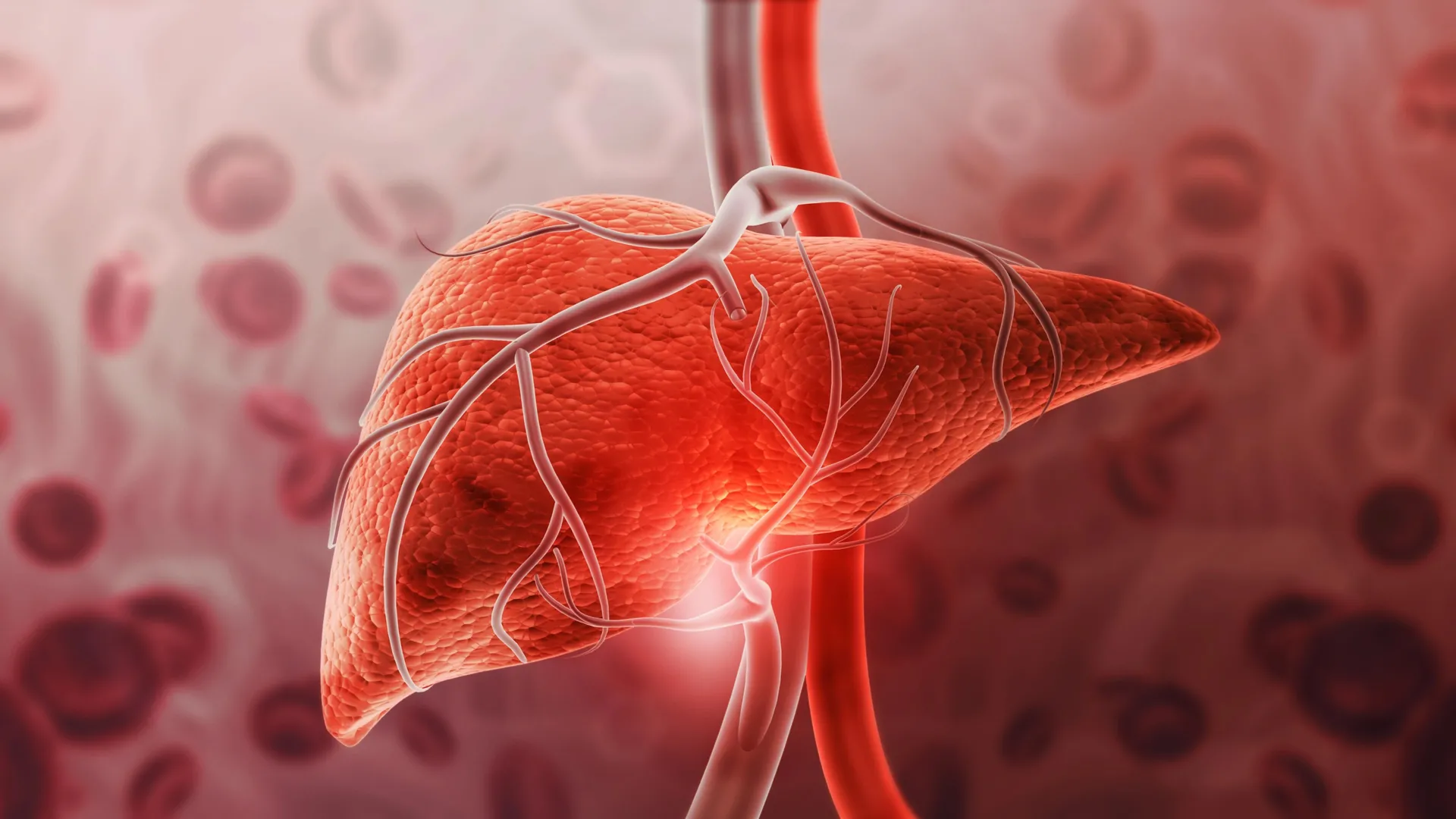
The liver may play an unexpected role in reducing two major age-related health risks: Alzheimer’s disease and heart disease. In a study of aging rats, researchers at the Keck School of Medicine of the University of Southern California found that two weeks of treatment with the experimental drug siniciguat restored important functions in aging liver cells. The treatment reduced blood levels of amyloid beta, a protein associated with Alzheimer’s disease, by about half and returned low-density lipoprotein (LDL) cholesterol to levels seen in young animals.
The findings also revealed a previously unknown communication pathway between two types of liver cells. By restoring signals that help the liver remove potentially harmful substances from the bloodstream, treatments based on this mechanism could eventually offer a way to address diseases affecting organs beyond the liver. However, the results have so far been demonstrated only in rats, and further research is needed to determine whether the same effects occur in humans.
Why the liver may matter in Alzheimer’s disease
Although Alzheimer’s disease primarily affects the brain, scientists are increasingly studying how other organs may contribute to its development. The liver filters the blood and removes unwanted compounds, including substances that could cause harm if they accumulate.
The USC findings suggest that restoring this natural cleaning process could provide a different approach to preventing or treating some age-related diseases. The researchers cautioned that lowering amyloid beta in the bloodstream does not necessarily mean that amyloid plaques in the brain will be reduced or that Alzheimer’s disease can be prevented.
“Further translational work needs to be done to see if our findings suggest potential new treatments,” said corresponding author Laurie Dreve, MD, professor of science and vice chair for scientific affairs at the University of Southern California School of Medicine. “However, we are hopeful because the results of this study are consistent with a number of epidemiological findings showing that age is a major risk factor for Alzheimer’s disease and atherosclerosis, and that liver damage is a risk factor for Alzheimer’s disease.”
Targeting the liver could be especially useful in Alzheimer’s research. Treatments designed to act directly on the brain face an estimated 98% failure rate in clinical trials, while the blood-brain barrier limits the movement of many substances from the bloodstream into the brain. Although this barrier protects the brain from potentially harmful compounds, it can also make some drugs difficult to deliver.
“If the idea that the liver is affected is correct, what should we do about it?” said lead author Sam de Reve of Massachusetts, a laboratory technician at the University of Southern California and the son of Laurie De Reve. “Rather than trying to get the drug across the tedious and difficult blood-brain barrier, we can direct the drug to the liver, an organ that is more therapeutic and certainly easier to deliver.”
Repairing an aging liver filter
To study how liver aging affects the blood, the researchers focused on liver sinusoidal endothelial cells, or LSECs. These relatively understudied cells line the small blood vessels within the liver.
Unlike most blood vessel walls, LSECs contain numerous microscopic openings. The openings act like holes in a sieve, allowing larger molecules in the blood to reach neighboring cells called hepatocytes. Hepatocytes perform much of the liver’s work, including removing substances from the body.
As the liver ages, the openings in LSECs gradually become smaller or disappear. This can prevent certain large molecules from reaching the cells responsible for removing them, leaving more of those substances in the bloodstream.
Amyloid beta is one of the substances affected by this change. The protein is important in Alzheimer’s research because it can accumulate in the brain and form plaques, one of the disease’s characteristic features.
Previous observations showed that the aging liver becomes less effective at removing amyloid beta. The researchers investigated whether the gradual closure of the openings in LSECs could help explain why older animals have higher levels of the protein in their blood.
For the study, the team gave siniciguat to older rats for two weeks. The treated animals were compared with two untreated groups: one made up of older rats and another made up of younger rats.
The treatment restored the structure and function of aged LSECs, reopening their microscopic pores and improving their ability to remove substances from the blood. Amyloid beta concentrations fell by about 50%, reaching levels similar to those seen in young rats. The same improvements were not observed in untreated older animals.
An unexpected reduction in LDL cholesterol
The researchers also measured low-density lipoprotein, or LDL. Often called “bad” cholesterol, elevated LDL levels can contribute to fatty deposits in the arteries. Over time, these deposits can restrict blood flow and increase the risk of heart disease.
Initially, the researchers included LDL as a comparison rather than as a substance they expected the treatment to affect. LDL particles are small enough to leave the bloodstream without passing through the microscopic openings in LSECs. The scientists therefore expected siniciguat to have little or no effect on LDL levels.
Instead, LDL levels in the treated older rats fell to levels observed in younger rats.
“We said, ‘Wait, why did that fail? Obviously, there’s more to this story,’” Sam de Reve said.
The unexpected result suggested that the drug did more than reopen the aging liver’s physical filter. It appeared to restore another aspect of liver function.
Previous research had shown that liver cells work more effectively when LSECs are present. The team therefore began investigating how the two cell types communicate. That work revealed a previously unknown group of biochemical signals that helps regulate the liver’s ability to remove substances from the bloodstream.
How liver cells communicate
The researchers found that siniciguat activates an enzyme called soluble guanylyl cyclase in LSECs. This causes the cells to release a growth factor known as HB-EGF, which sends a signal to nearby liver cells.
In response, the liver cells alter their surfaces so they can capture more LDL and amyloid beta from the blood. This helps explain why the treatment reduced both substances, even though they do not depend on exactly the same filtration mechanism.
Aging normally interferes with the ability of LSECs to release HB-EGF. Siniciguat restores this signaling process, allowing the liver cells to communicate more effectively and supporting the removal of substances that tend to accumulate with age.
The discovery identifies a potential target for future drugs. Instead of focusing only on reopening the physical pores in LSECs, researchers may be able to develop treatments that restore the chemical signals needed for the liver to function efficiently.
Could liver rejuvenation prevent Alzheimer’s and heart disease?
According to the researchers, this is the first study to show that the drug can fully restore the structure and function of aged LSECs, including their ability to support the removal of substances from the bloodstream.
It is also the first to show that a liver-targeted treatment can reverse age-related increases in circulating amyloid beta and LDL, returning both to levels seen in younger animals.
The findings raise the possibility that siniciguat, similar drugs or treatments targeting HB-EGF could eventually be used to counter some effects of liver aging. If those changes provide meaningful protection against disease, they could lead to new strategies for preventing Alzheimer’s disease and cardiovascular problems.
For now, however, the research remains at an early stage. The researchers plan to continue studying cinaciguat in rats to determine whether its effects on amyloid beta translate into measurable protection against Alzheimer’s disease.
They also hope the findings will encourage scientists studying other diseases, particularly atherosclerosis, to investigate how restoring liver function affects disease development.
“We hope that people working in fields such as atherosclerosis research will read this and want to grab some ideas for themselves,” Sam de Reve said. “There are six ways we can go about this, but we can’t do them all. So please scoop us up. We’d love to.”
Study authors and funding
Additional researchers involved in the study included Xiangdong Wang, Helia Alavifard and Lily Dara, all affiliated with the Keck School of Medicine at the University of Southern California.
The research received federal funding from the National Institutes of Health through grants R56AG071480 and 5R01DK100580.
Source: www.sciencedaily.com