


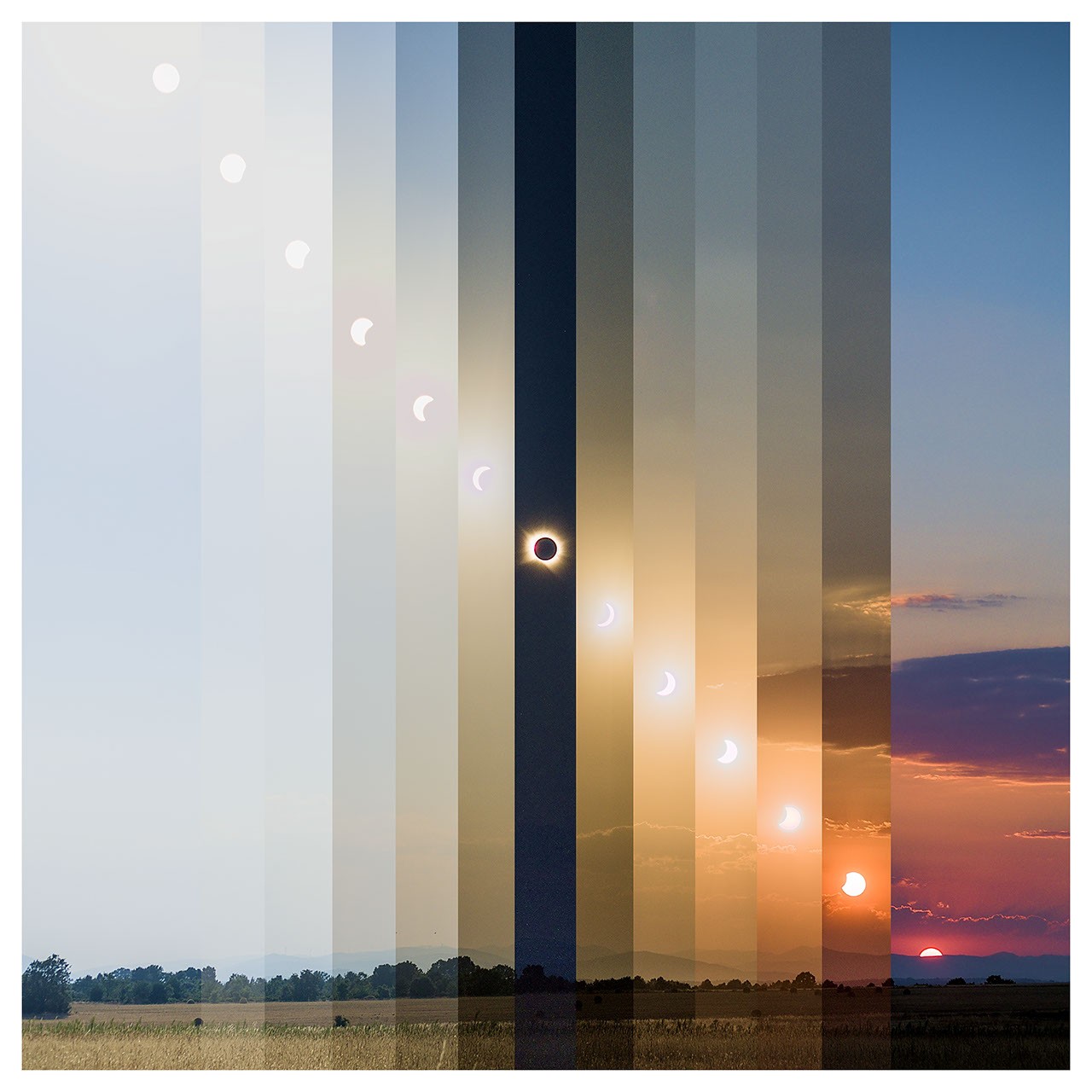
Explanation: Imagine living your entire life with a predictable Sun—until one day, the daytime sky suddenly darkens. On August 12, 2026, a total solar eclipse will cross parts of the world, creating a remarkable celestial event that will last approximately two hours from beginning to end. During totality, the Moon will completely cover the Sun, revealing the Sun’s glowing outer atmosphere, known as the corona. View today’s eclipse image
Throughout history, people have interpreted solar eclipses in many different ways, associating them with cultural traditions, spiritual renewal, rebirth, or danger. Explore solar eclipse beliefs from around the world The word “eclipse” comes from the ancient Greek word ékleipsis, meaning an abandonment or failure to appear. In ancient Greece, solar eclipses were sometimes seen as signs of the gods’ anger or the Sun’s temporary abandonment of humanity.
For the Diné people, a solar eclipse represents a celestial alignment and a time for renewal. Out of respect for the event and to avoid the dangers of direct sunlight, many Diné remain indoors until the Sun and Moon separate. Among the Batammariba people of Benin and Togo, a solar eclipse is traditionally understood as a time when the Sun and Moon are fighting, encouraging the community to make peace with one another. Solar eclipses demonstrate the long-standing connection between astronomy, culture, and society.
Gallery: See photos of the August 12, 2026 solar eclipse
Tomorrow’s photos: Bird’s-eye view
Source: science.nasa.gov