


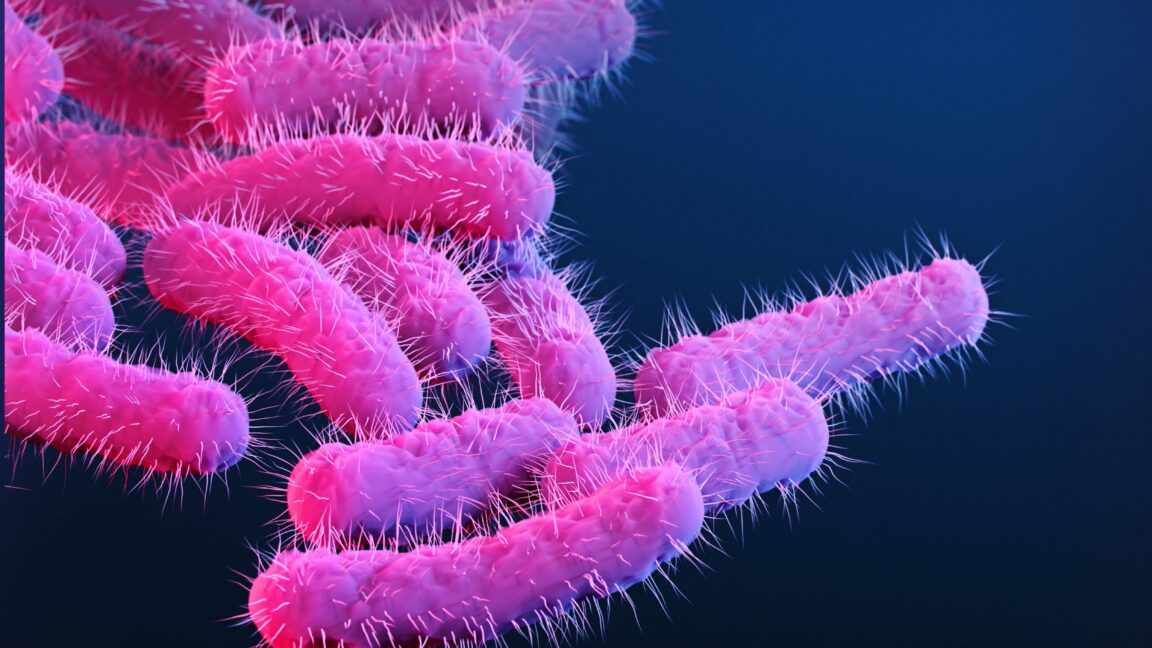
Large Shigella outbreak reveals extensive antimicrobial resistance
An unusually large and persistent outbreak of Shigella infection began in December 2022 at the Wisconsin National Primate Research Center in Madison. Non-human primates are natural hosts for Shigella, and sporadic outbreaks can occur in research and breeding facilities. However, the scale and duration of this outbreak were unusual. Several people who worked at the facility also became ill.
Researchers identified 169 microbiologically confirmed cases of shigellosis among non-human primates. They collected 151 bacterial isolates for serotyping and performed whole-genome sequencing on 95 representative samples. Genetic analysis indicated that the outbreak involved two closely related clusters of Shigella flexneri, a species that frequently causes infections in captive non-human primates. Human outbreaks are more commonly associated with Shigella sonnei.
Antimicrobial-resistance testing of 90 isolates found that 63 percent were resistant to multiple antibiotics. Most infected animals developed mild symptoms, although some showed no symptoms and others became seriously ill. Young animals appeared to be among the most vulnerable, a pattern also observed in some human Shigella outbreaks.
To better understand the infection, researchers collected serum, plasma, and specialized immune cells from 41 infected animals at several stages of illness. Samples were taken approximately one, two, and four to six weeks after the infection was detected. The team then analyzed how the animals’ immune systems responded over time.
The researchers first searched for antibodies targeting the Shigella O antigen. This structure forms the outermost portion of lipopolysaccharide, or LPS, a molecule found in the outer membranes of Gram-negative bacteria such as Escherichia coli, Salmonella, and Shigella. LPS helps maintain the bacterial outer membrane and is a common target of the immune system because it is exposed on the cell surface.
However, the O antigen varies between Shigella serotypes. As a result, antibodies that recognize the O antigen of one serotype may provide limited protection against other strains. This variability could help explain why the outbreak persisted and why developing broadly protective vaccines or antibody-based treatments remains challenging.
Source: arstechnica.com