


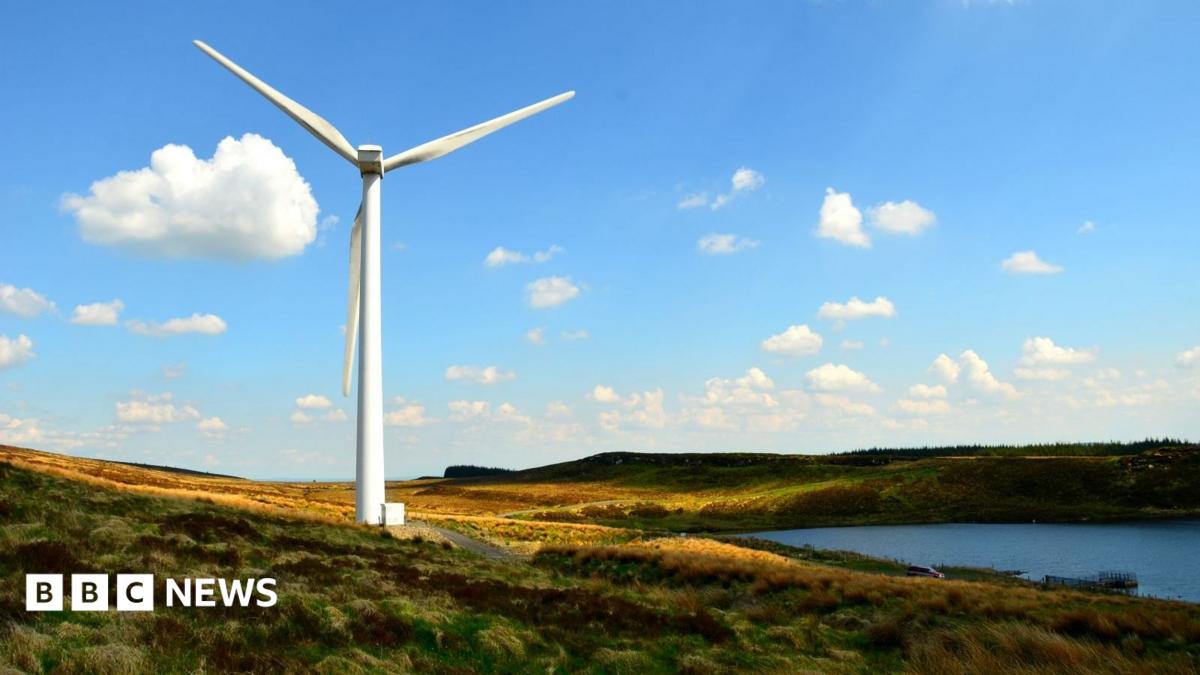
Renewable electricity supplied 53% of Northern Ireland’s power in the year to June, exceeding the previous 51% level and marking continued progress towards the region’s clean energy targets.
For the first time since January, renewable electricity generation consistently exceeded generation from non-renewable sources.
When imported electricity is included, renewable energy accounted for a similar share to the record 50% recorded during 2022/23.
Economy Minister Caoimhe Archibald said higher levels of renewable energy would help Northern Ireland “move away from price volatility and towards more stable and fairer prices”.
Wind power generated almost three-quarters (74%) of Northern Ireland’s renewable electricity. Bioenergy, including anaerobic digestion, incineration and fermentation, contributed just under a fifth (18%).
Solar power accounted for 6% of renewable generation, while landfill gas provided 1% and hydro and tidal power contributed a further 1%.
Northern Ireland aims to generate 80% of its electricity from renewable sources by 2030.
The proportion of renewable electricity is expected to reach 53% by June 2026, following several years of decline in renewable energy generation.
However, the level of renewable electricity generation may vary depending on weather conditions.
Northern Ireland also experiences a high rate of power outages, as wind turbines are sometimes switched off when demand is too low for the electricity being produced.
This process helps protect the electricity grid, but it can limit the amount of renewable energy supplied because of fluctuations in generation and demand.
Increasing renewable energy generation remains a key part of Northern Ireland’s net zero journey and its transition away from fossil fuels.
The minister said rising global fossil fuel prices were having a “negative impact” on businesses and households, particularly people on lower incomes.
She added that expanding renewable electricity generation would “move us away from price fluctuations and make the price of the electricity we use more stable and fairer”.
Source: www.bbc.co.uk