


3 months ago Nvidia has revealed its RTX Spark “superchip” and teased a limited selection of laptops powered by the new technology. The announcement could mark a major turning point for Windows PCs, although several important questions about performance, pricing, and battery life remain unanswered.
We now have our first detailed look at one of these RTX Spark laptops, unveiled at IFA 2026 in Berlin. Nvidia and its partners also announced a compact mini desktop PC featuring the same platform. As demand grows for running local AI agents and workflows such as OpenClaw, these new computers appear designed to deliver powerful on-device AI performance.
Nvidia’s MacBook Pro Alternative
Photo: Le Shu

Photo: Le Shu
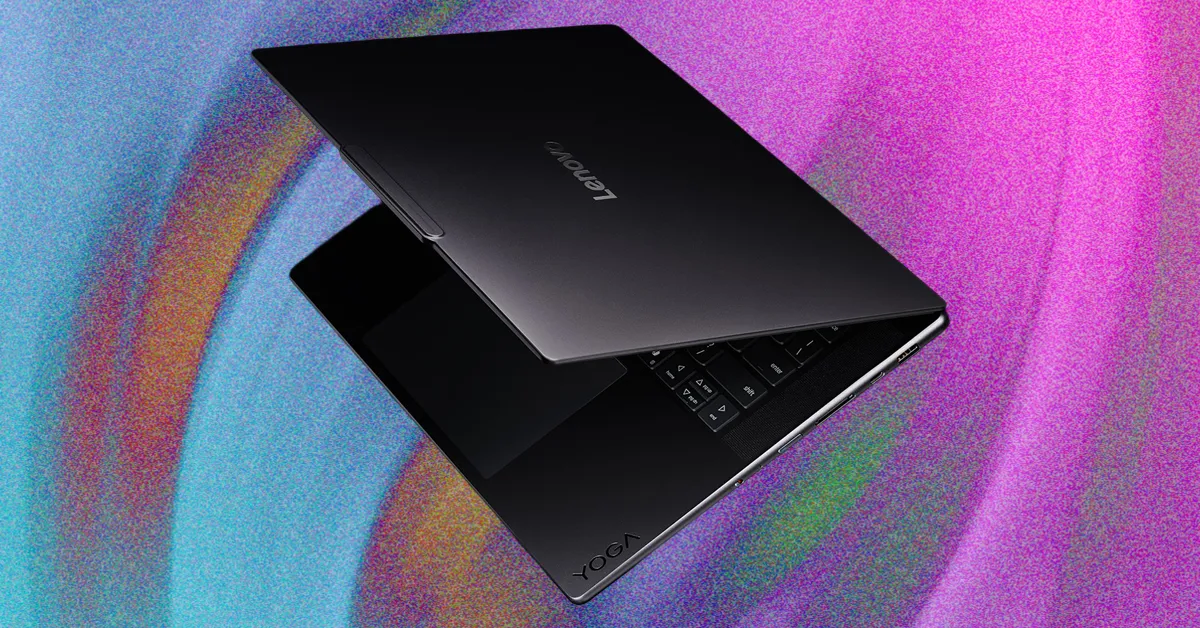
The first laptop is Lenovo’s Yoga 9n 2-in-1, a 16-inch convertible laptop with a 360-degree hinge. With its premium materials and slim profile, the device is positioned as a direct MacBook Pro competitor. It features a sharp 2880 x 1800 OLED touchscreen with a 120Hz refresh rate, rounded metal edges, and extremely thin display bezels. Other high-end features include a six-speaker audio system and a 9.2-megapixel webcam.
The most significant detail is its compact design. At just 0.69 inches thick, the Lenovo Yoga 9n is only 0.03 inches thinner than Apple’s 16-inch MacBook Pro. That slim profile is enabled by Nvidia’s Arm-based RTX Spark platform, which combines a Grace CPU with up to 20 cores and a Blackwell RTX GPU with up to 6,144 cores. The processor, graphics engine, and memory are integrated into a single system-on-chip, making the design more similar to Apple silicon than to a conventional Windows laptop.
Based on core counts alone, the integrated RTX graphics could theoretically deliver performance between the laptop versions of Nvidia’s RTX 5070 Ti and RTX 5080. Nvidia’s specifications also suggest that multiple lower-power configurations may be available, although the company has not yet revealed how much performance will vary between models. Battery-life details are still unavailable, but the Arm-based SoC and integrated GPU could improve efficiency compared with laptops that use a separate discrete graphics card.

Photo: Le Shu
Source: www.wired.com