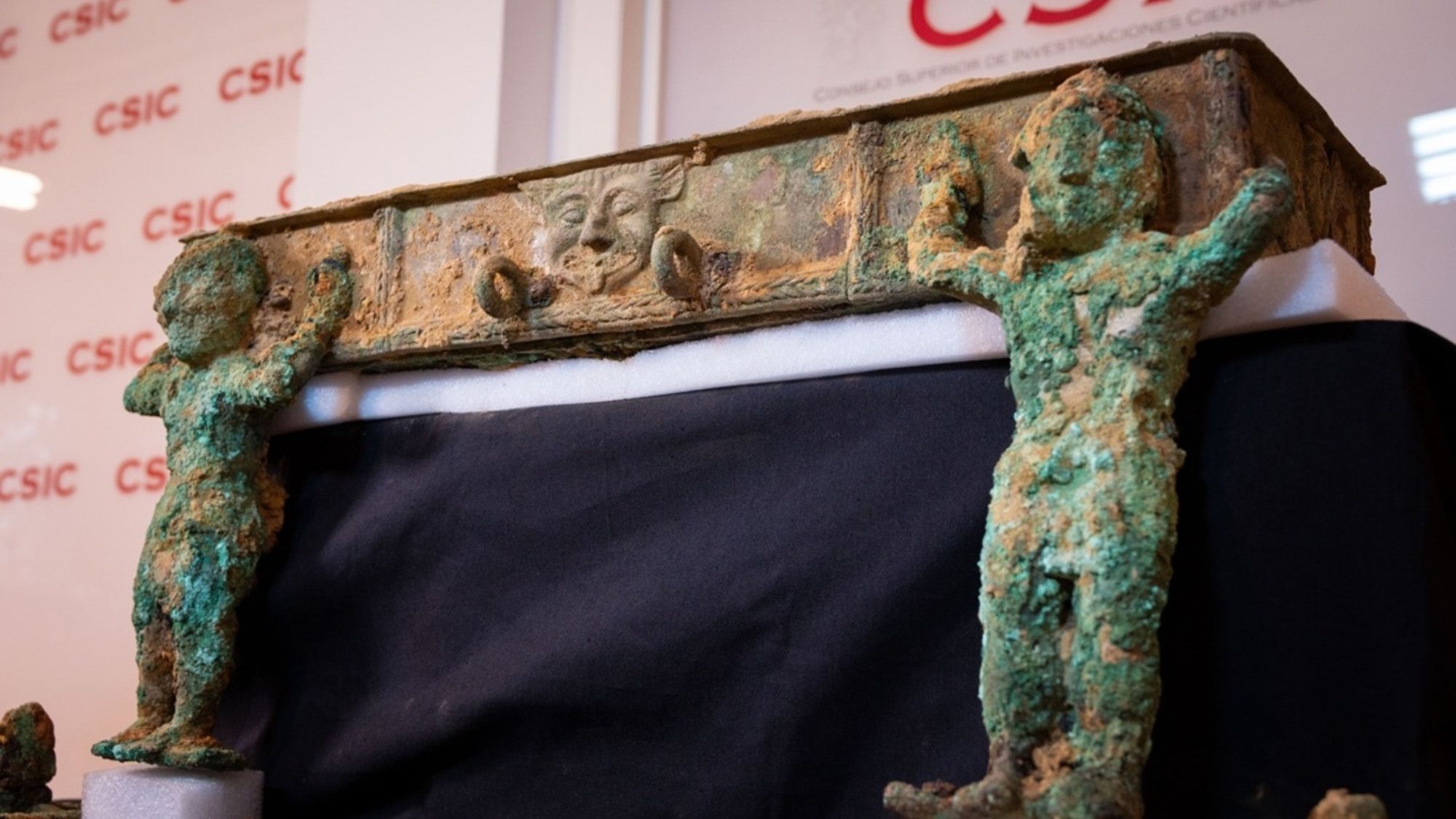
In an exciting archaeological breakthrough, researchers in Spain have unearthed a remarkable 2,400-year-old bronze chariot, believed to have been used for venerating the gods. This artifact may reveal connections to the ancient Etruscans of Italy, making it a unique find in the Iberian Peninsula.
As reported, the chariot measures approximately 60 centimeters in length and features a flat, table-like surface, likely utilized for burning incense as a sacred offering. For more details, check out the official statement.
Adorning the chariot’s side is a face with its tongue protruding, embodying a gorgon, a potent symbol of protection linked to Medusa and Achelous, a significant river deity in Greek culture with the ability to transform into a bull. Archaeologist Guiomar Pulido González from the Institute of Archeology of Mérida played a pivotal role in this groundbreaking discovery.
Latest videos from
The excavation site, known as Casas del Turnuelo in Badajoz province, Spain, revealed parts of the chariot, including two legs and two wheels, designed to represent two people supporting the chariot’s table-like surface.
The chariot’s face represents a fusion of a gorgon and the Greek river god Achelos, who is known for his ability to turn into a bull.
(Image courtesy of Construyendo Tarteso Project)
Intriguingly, both short sides of the chariot exhibit mythical creatures associated with security: a lion with wings and an griffin. According to Pulido, “All metaphorical elements of the chariot signify guardianship, though their exact purpose remains a mystery. Perhaps they protect the interior of the chariot or the observer.”
Archaeological findings have unveiled similar chariots crafted by the ancient Romans. The Etruscans, a pre-Roman civilization that flourished from 900 BC to 100 BC in Italy, are considered probable creators of this newly found chariot. Pulido notes that it represents the first recorded combo of Gorgon and Achelous faces and stands as a groundbreaking discovery for the Iberian Peninsula.
The chariot’s shorter sides showcase a griffin, a mythical guardian creature.
(Image credit: Construyendo Tarteso Project)
A noteworthy detail from the excavation is that the figures holding the chariot were depicted wearing skirts — an uncommon depiction for Etruscan artifacts, which are usually portrayed as nude. Pulido suggests this could indicate that the chariot was crafted by the Etruscans and traded to Spain through ancient commercial routes.
Stay updated with the world’s most fascinating discoveries.
The bronze chariot was found in a geological layer that indicates it was abandoned towards the late 5th century BC. However, the unique design elements suggest it may date back as early as the 6th century BC.
According to findings, the figures depicted on the chariot are clothed, contrasting the usual representation of Etruscan bronze statues.
(Image courtesy of Construyendo Tarteso Project)
Mysterious Communities
The bronze chariot was discovered along the Middle Guadiana River, an area comprising 14 known ruins left by a mysterious civilization that vanished from the archaeological record around 400 BC. This culture might have been influenced by local populations, linked to the ancient Tartessian civilization that emerged around the 8th century BC, renowned for their elaborate writing system.
Each of the 14 sites contains remnants of burned buildings that were later buried under soil. The chariot, found among the debris, was intentionally broken but remained largely intact aside from being cut in half.
Image 1 of 2
Excavators discovered the chariot at the Casas del Turnuelo archaeological site, located in southwestern Spain.
The established hypothesis suggests that these settlements were subject to a deliberate burning strategy followed by abandonment around the same era. According to Pulido, this appeared too systematic to be the result of enemy attacks, hinting at a well-planned closure ceremony, possibly a symbolic farewell to the intentionally decommissioned buildings.
Following this, the civilization seemingly vanished from the archaeological record. Yet, tangible evidence like imported pottery and Etruscan bronzes indicate that, regardless of their identity, these people were interlinked within a vast trade network spanning the Mediterranean, granting their leaders access to imported luxury items.
Test your knowledge about these enigmatic artifacts. Take the Archaeology Fragment Quiz!