


Supreme Court Blocks Trump Administration Mail-In Voting Rules Ahead of 2026 Midterms
SUPREME COURT The Supreme Court rejected the Trump administration’s proposal to impose severe restrictions on mail-in voting just weeks before the midterm elections.
Justices uphold injunction blocking new USPS ballot rules
The court ruled 7-2, with conservative Justices Samuel Alito and Clarence Thomas dissenting, to uphold a lower-court injunction blocking the U.S. Postal Service from implementing new rules governing who could receive mail-in ballots ahead of the November election.
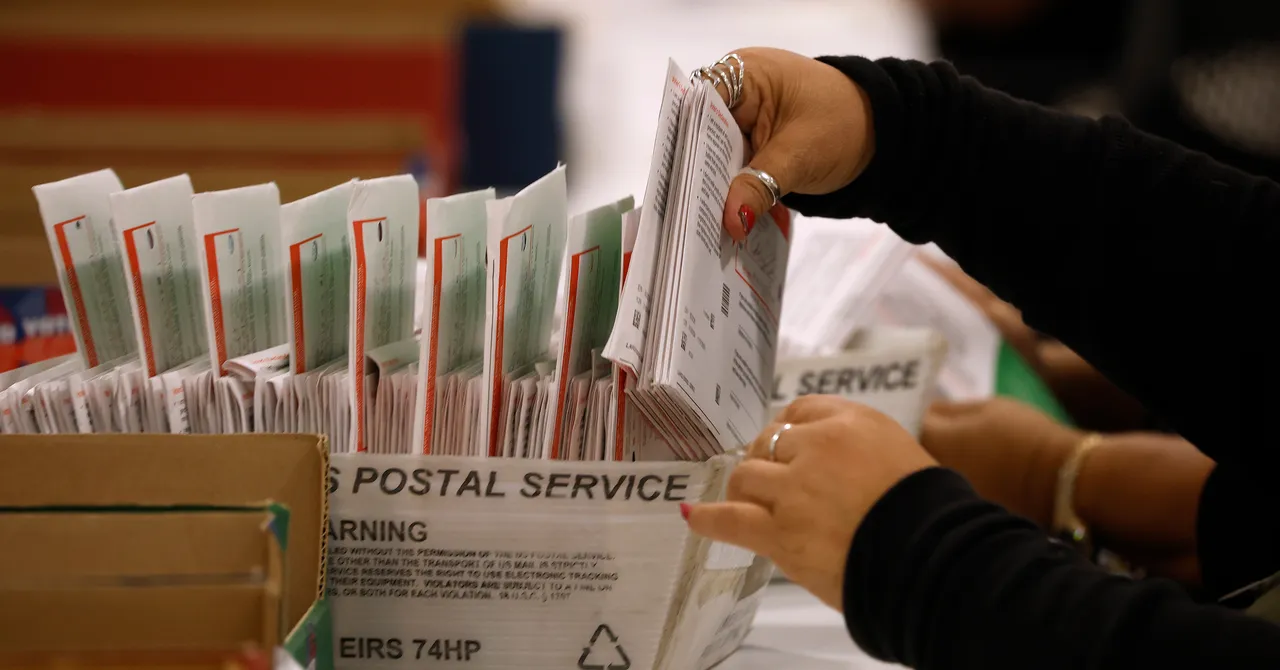
Under the proposed rules, states would have been required to submit a list of voters to the Postal Service. USPS would then ensure that only people on those lists received mail-in ballots. The Postal Service typically does not play such a role in elections.
“The government is unlikely to be successful in challenging the district court’s preliminary injunction,” Justice Brett Kavanaugh wrote in a concurring opinion joined by Justice Ketanji Brown Jackson.
Kavanaugh added, “There is at least a good chance that the final rule will fall within the Postal Service’s statutory authority. However, applying this rule in the 2026 election would be arbitrary and capricious … because state and local election officials will not have sufficient time to reasonably implement the rule before the election.”
Voting by mail had already begun in some states ahead of the November election, making the plan even more difficult for voters across the country to implement.
Ruling is a setback for Trump’s mail-in voting policy
The decision is a major loss for President Donald Trump, who has long opposed mail-in voting without evidence that it leads to election fraud. The ruling follows recent legal defeats for the president and his administration in a multipronged effort to undermine confidence in U.S. elections.
The White House and USPS did not respond to requests for comment on the ruling.
“Today, Donald Trump lost yet another unconstitutional battle to choose his own voters. The American people are the winners,” Nevada Secretary of State Cisco Aguilar said in an emailed statement. “This ruling confirms what our Constitution has always held: Elections belong to the American people, not to desperate men in Washington. Democratic secretaries of state applaud the court’s upholding of this fundamental principle, and we stand ready to fight any attempt to cause chaos, fear, or intimidation in our elections.”
How the mail-in ballot dispute began
The battle over voting by mail began in the spring, when the president signed an executive order in March titled “Verifying Citizenship and Ensuring Integrity in Federal Elections”.
The order required states to send the Postal Service a list of voters who would receive mail-in ballots. USPS could then refuse to deliver ballots to voters who were not on the list or who failed to comply with new requirements involving barcodes and envelopes.
Most provisions of the executive order were implemented quickly. However, a federal court blocked the rules before the Trump administration appealed to the Supreme Court in July.
A conservative majority ruled last month that the new rule could proceed, holding that states seeking to block it were not entitled to relief because the rule had not yet been implemented.
Whistleblower raised concerns about USPS system
Following that ruling, a USPS whistleblower argued that the online portal created for the new regulations had been assembled hastily without the care and attention required for critical software.
“The whistleblower complaint reveals that the USPS lacks the technical or operational capabilities necessary to effectively implement” the executive order, Sen. Richard Blumenthal wrote in a letter to the postmaster general after disclosing the warning.
Blumenthal said USPS had put provisions in place to protect the right to vote in the upcoming midterm elections. Nevertheless, he wrote, the Trump administration appeared intent on allowing the Postal Service to move forward with its flawed plan, even if it caused disruption and confusion.
Source: www.wired.com