


NASA’s Roman Space Telescope Could Operate for 22 Years After Major Fuel Savings
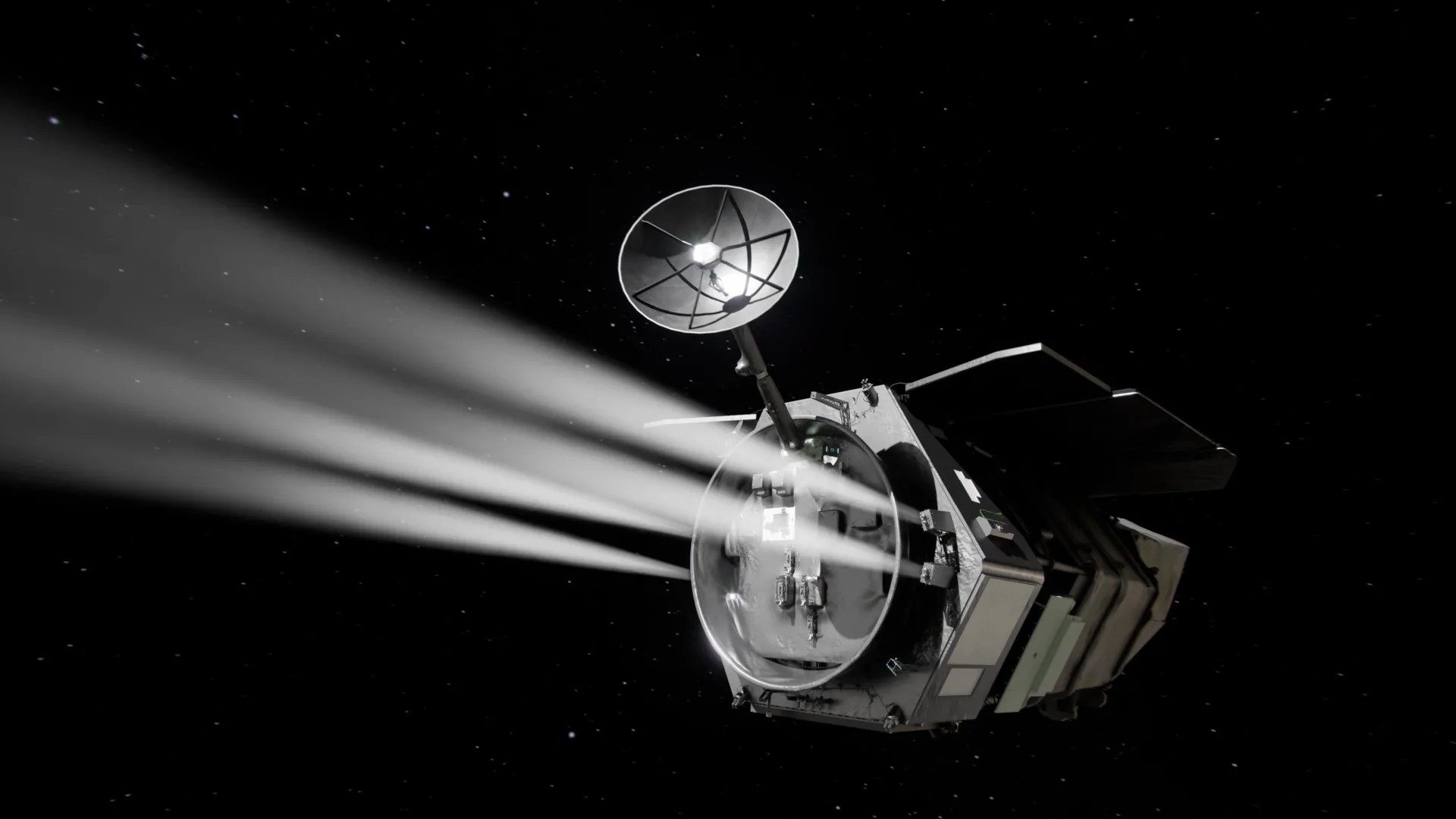
NASA’s Nancy Grace Roman Space Telescope may last far longer than originally planned. A highly precise initial orbit correction, additional propellant at launch, and expected fuel savings during future maneuvers could more than double Roman’s potential science mission from 10 years to at least 22 years.
Roman’s planned 10-year mission could more than double
Roman was designed for a five-year primary mission and a five-year extended mission, giving it a total planned operating life of 10 years. Because propellant is one of a spacecraft’s main consumable resources, every kilogram saved during flight can help extend the time available for scientific observations.
“As a result of careful planning by the orbital mechanics team, masterful execution by the operations team, and precise launch by SpaceX, Roman has enough fuel reserves for at least 22 years of potential science operations,” said Jamie Dunn, center director at NASA’s Goddard Space Flight Center in Greenbelt, Maryland.
Roman’s first course correction used less than 10% of its fuel allocation
Roman conducted its first burn on August 31, setting the observatory on course for its final orbit. Since then, the mission team has analyzed the maneuver and its impact on the spacecraft’s long-term fuel outlook.
The results were better than expected. The maneuver was completed with more than 99% accuracy and consumed less than 10% of the fuel reserved for it. Roman used approximately 40 pounds (18 kilograms) of the 441 pounds (200 kilograms) originally allocated for the correction.
Those fuel savings alone could provide approximately four additional years of potential scientific activity.
Lower launch weight allowed Roman to carry more propellant
Roman also began its journey with more propellant available than mission planners had originally expected to need.
Engineers calculated the spacecraft’s fuel requirements using a conservative maximum launch weight of 21,605 pounds (9,800 kilograms). Ultimately, Roman weighed 17,760 pounds (8,056 kilograms) at launch.
Because the spacecraft was lighter, it needed less fuel to correct its trajectory. Its lower mass also allowed engineers to fill Roman’s propellant tanks to capacity instead of carrying only the amount required for the original 10-year mission.
This additional fuel could support approximately four more years of operations.
“The mass of the spacecraft changes throughout the design and manufacturing process, so the propellant budget is based on a set maximum to avoid running out,” said Alison Rao, director of Roman propulsion at NASA Goddard. “Through integration and testing, we track the required propellant based on the actual mass and make sure we have room to spare. Roman’s propellant was lower than budget, so we were able to fill the propellant tanks to capacity instead of filling as much as needed for the 10-year requirement.”
More fuel savings may come from future orbit maneuvers
Roman’s first mid-course correction was so accurate that mission controllers were able to wait longer before making follow-up adjustments. The second correction and final orbit insertion are currently scheduled for later this month.
The upcoming burn will provide the final amount of energy needed for Roman to reach its target location before entering a permanent orbit around the Sun-Earth L2 point, or L2.
Roman is expected to arrive at L2 around early December, approximately 100 days after launch. Current estimates indicate that both the second course correction and orbit insertion should require less fuel than originally budgeted.
These projected savings could provide approximately four additional years of potential mission life, making more propellant available for future scientific research.
Roman will use periodic fuel-saving maneuvers at L2
Once Roman settles into its orbit around L2, the observatory will require only periodic station-keeping burns, approximately once every 28 days, to maintain its position.
Source: www.sciencedaily.com