


2,000-Year-Old Javanese Golden Funeral Mask May Have Protected the Living From the Dead
This human-like gold mask from Java may have been placed over a corpse’s face to honor the dead—or confuse spirits believed to threaten the living.
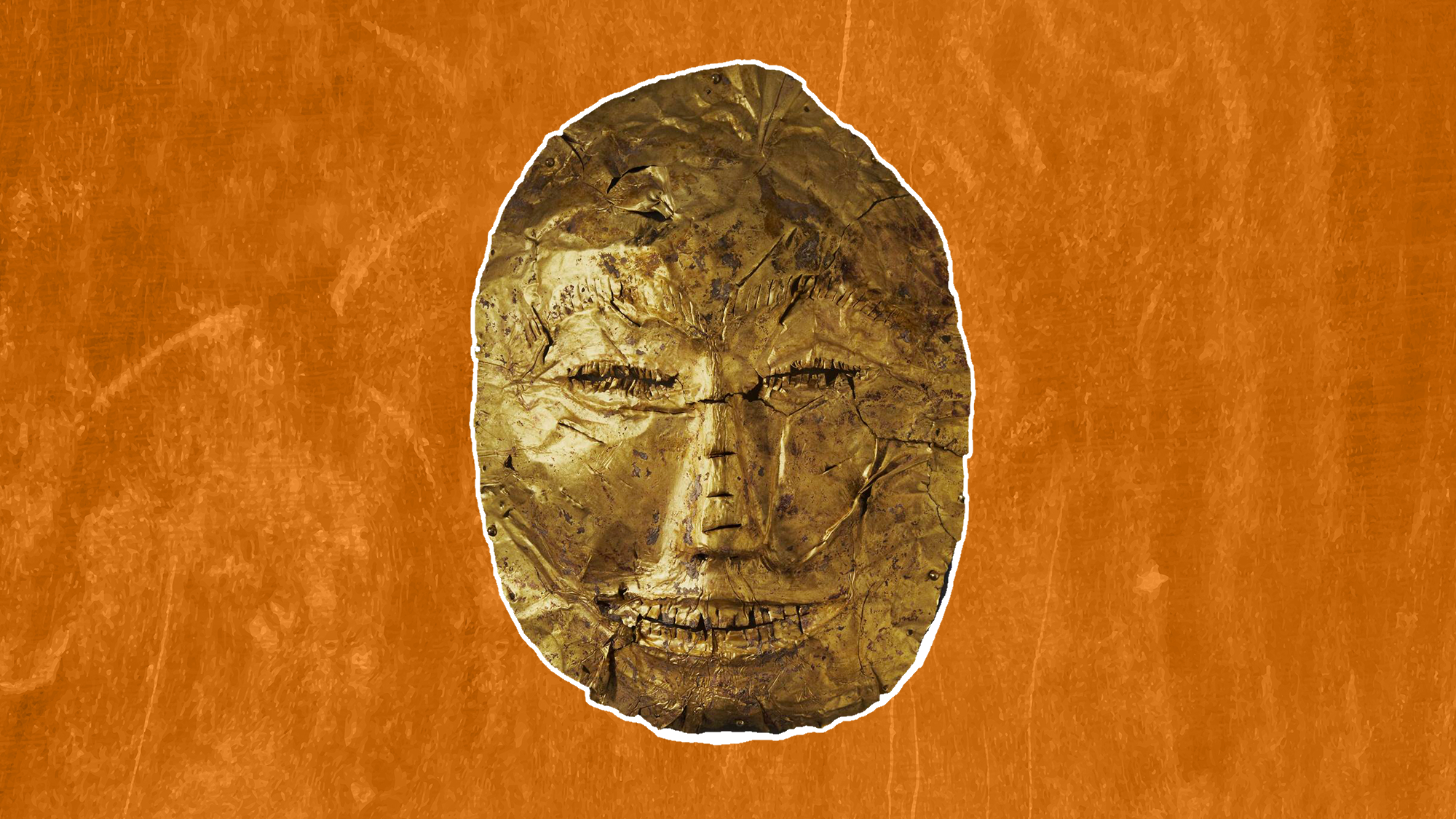
Javanese prehistoric golden funeral mask.
This golden funeral mask was created on the Indonesian island of Java about 2,000 years ago. It was probably used to cover the face of a corpse, possibly to confuse the spirits of the dead and prevent them from tormenting the living.
A carefully crafted gold face
According to the Yale University Art Gallery, the mask measures approximately 8.9 by 6.7 inches (22.6 by 17 centimeters) and weighs about 2.1 ounces (60.9 grams).
The thin gold sheet has openings for the eyes, mouth and nostrils. Incised lines represent features including the eyebrows, eyelashes and teeth. A series of holes drilled around the mask’s edges suggests that it was once attached to a corpse or a funerary statue.
Archaeologist John Miksic discussed the artifact in Old Java Gold, published by Yale University Press in 2011.
How was the ancient Javanese mask made?
Ancient craftsmen likely used high-purity gold collected from the neighboring islands of Sumatra and Borneo. The metal was hammered into a thin sheet roughly the size and shape of a human face before the facial details were incised with a chisel, Miksic wrote.
This relatively simple manufacturing technique helped Miksic date the mask to Java’s Preclassic period, between 500 B.C. and A.D. 200. During this era, prehistoric Javanese communities buried their dead before later switching to cremation. Gold face coverings may therefore have formed part of an earlier burial tradition.
Why cover a corpse with gold?
The purpose of the Javanese golden death mask remains uncertain. Miksic noted that the practice of covering part or all of a deceased person’s face with gold also appeared in prehistoric India, China and other parts of Southeast Asia. These examples are associated with burials that took place shortly before the widespread adoption of cremation.
It is unclear whether these cultures learned the custom from one another or developed it independently. Other golden death masks are older than the Asian examples, including the famous 3,500-year-old mask traditionally known as Agamemnon’s mask from Bronze Age Greece.
Did the mask resemble the dead person?
Scholars also debate whether the Javanese mask was intended to be a realistic portrait or an idealized image of the deceased.
A 1990 book about traditional Indonesian masks quoted archaeologist Wahyono Martwikrid, who observed that Javanese masks were unusually naturalistic and may have been made to resemble the dead. If so, the mask could have preserved or transformed the person’s identity for the afterlife.
Three theories about the golden funeral mask
According to Miksic, experts have proposed three main explanations for the mask’s use.
- Honoring ancestors: Ancient Javanese communities placed great importance on ancestral spirits, and gold may have been considered the ideal material for honoring the dead.
- Displaying social status: The mask may have been reserved for people of high rank, distinguishing elites from ordinary people in the next world.
- Confusing hostile spirits: The mask may have helped prevent dangerous spirits from recognizing or following the deceased back to the living.
Miksic cited ethnographic accounts from islands in eastern Indonesia in which people believed the spirits of the dead could be hostile. During funeral processions, mourners might turn the corpse around or place the head inside a pot to confuse the spirit and prevent it from returning.
That belief may help explain why a gold covering was placed over the face: by concealing or altering the dead person’s features, the mask could have made it more difficult for a spirit to identify its former body or return to the living.
Part of Yale’s Java gold collection
The burial mask is among the oldest artifacts in Yale’s collection of gold objects from Java. The Yale University Art Gallery says the collection contains approximately 500 pieces, donated to the museum in 2007 by collectors Hunter and Valerie Thompson.
The mask offers a rare glimpse into prehistoric Javanese burial practices—and into the ways ancient communities used precious materials to honor the dead, express social status and protect the living from the unknown.
Topics: ancient artifacts, archaeology, funeral masks, gold, Java, Indonesia
Source: www.livescience.com