


Close Menu
HitechubHitechub
    What's Hot
    Science

    The 6 Most Common Poop Problems and Expert Solutions from a Harvard Doctor

    Science

    Atlantic’s Mysterious Cold Mass: Implications for AMOC Weakening

    Science

    Matt Freeze: Harvard Graduate from a Renowned Scientific Family Poised to Lead the U.S. to FIFA World Cup Glory

    Important Pages:
    • About Us
    • Privacy Policy
    • Terms & Conditions
    Facebook X (Twitter) Instagram Pinterest
    Facebook X (Twitter) Instagram
    HitechubHitechub
    Wednesday, June 10
    • Technology
      1. AI
      2. Gadgets
      3. View All

      This is the most popular CEO in the world

      Sectors in which “Chat-GPT” is most often used

      AI Pioneer Expresses Concern About Potential for AI to Surpass Humanity

      Artificial intelligence has begun to “swallow” professions

      What’s new in Android 14

      Europeans have about 700 million old mobile phones in their drawers

      Here’s how you can tell if your phone is being tapped

      “Sneaker X” – computer case in the shape of a sneaker

      Russian Gamers Unite to Prevent Nuclear War: Join the Fight Online

      Challenges of Space Travel: Why Journeying to Space is So Difficult

      NASA Astronaut Casts Historic Vote from Space

      Discover the Future of Comfort: What If You Could Wear a Chair?

    • Science
      1. Space
      2. Wheels
      3. View All

      Galaxies in the universe are growing more slowly than they should

      “Espace” presented the new lander “Apex 1.0”

      The largest asteroid sample ever collected has arrived on Earth

      (VIDEO) Incredible flight of the Parker Solar Probe

      Toyota wants to make a new generation battery with a range of up to 1,200 km

      Meet Toyota’s lunar “baby” that could make exploring the Moon easier

      Microlino – Is this the perfect city car?

      Alfa Romeo 4C gets an electric successor

      Discover How Millions of Planets Could Form Around Supermassive Black Holes

      Unlocking Sloth’s Slow Lifestyle: The Ancient ‘Jumping Gene’ Explained

      Rapid Melting of Glaciers on the Roof of the World: Causes and Impacts

      Near Miss with Waymo: Why I’m Still Optimistic About Self-Driving Cars

    HitechubHitechub
    Home » Unlocking Sloth’s Slow Lifestyle: The Ancient ‘Jumping Gene’ Explained
    Science

    Unlocking Sloth’s Slow Lifestyle: The Ancient ‘Jumping Gene’ Explained

    Share Facebook Twitter Pinterest WhatsApp
    Share
    Facebook Twitter LinkedIn Pinterest WhatsApp

    Sloths, along with armadillos and anteaters, are classified under the genus Xenarthra, the sole group of placental mammals native to South America. In a groundbreaking study, researchers sequenced and analyzed the chromosomal-level genome of Linnaeus’s three-toed sloth (Choloepus didactylus) and the Southern anteater (Tamandua tetradactyla). They discovered unique genetic elements linked to energy production in sloths, shedding light on why these creatures possess the slowest metabolism of any mammal.
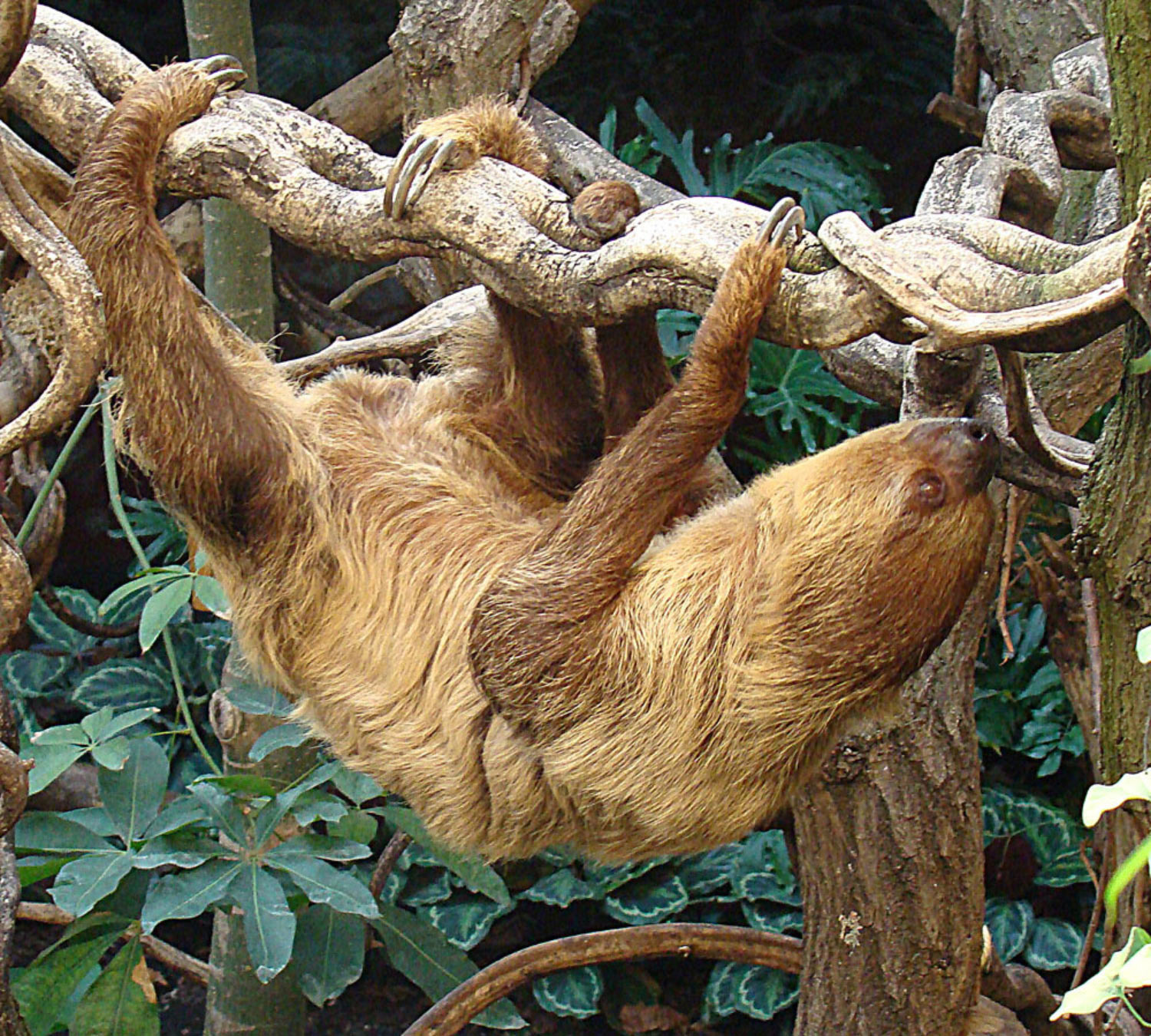

    Linnaeus's three-toed sloth (Choloepus Didactylus) at London Zoo. Image credit: Dick Culbert / CC BY 2.0.

    Linnaeus’s three-toed sloth (Choloepus didactylus) at London Zoo. Image credit: Dick Culbert / CC BY 2.0.

    Xenarthrans have existed for approximately 65.5 million years, with ancestors that include giant, elephant-sized sloths.

    All contemporary sloths reside in trees and are categorized into two main groups: the three-toed sloths and the two-toed sloths.

    These creatures spend the majority of their time in trees, utilizing their camouflage by hanging still. When they forage for leaves and fruits, their movements are slow and deliberate.

    Remarkably, sloths have the lowest metabolism of any mammal, often generating less than half of what their body size would suggest.

    To conserve energy, sloths can choose between maintaining a stable body temperature or allowing it to vary with their surroundings.

    Despite their slow pace, sloths are surprisingly proficient swimmers, capable of covering significant distances underwater when seeking a mate.

    To better comprehend the unique ecology of sloths, Marcela Uliano Silva and her team at the Wellcome Sanger Institute utilized genomic analysis.

    “There are already billions of experiments in evolution,” stated Dr. Uliano Silva.

    “By investigating unique species like sloths, we occasionally uncover biological solutions that humans may not have developed.”

    “Our genomic studies revealed a ‘jump gene’ that sloths have preserved for millions of years.”

    These sloth-specific genes are linked to mitochondria and metabolic pathways, indicating their potential role in the evolution of the sloth’s extremely slow metabolism.

    In this research, the authors sequenced and analyzed the genomes of both Linnaeus’s three-toed sloth and the southern anteater.

    The findings indicated that the sloth genome contains numerous copies of active transposable elements known as “transposons” or “jumping genes.” These are DNA sequences capable of replicating and relocating within the genome.

    By employing genomic analysis to trace back sloth evolution, researchers determined that these “jump genes” originated from the last common ancestor of all extant sloth species around 30 million years ago.

    This gene has been conserved through time, eventually becoming part of sloth-specific genetic sequences.

    Researchers were intrigued to discover that many of these genes are associated with mitochondria, which are the energy-producing “powerhouses” of cells, as well as metabolic pathways.

    Given that sloths exhibit the most unique metabolism among mammals, these sloth-specific genes may play a pivotal role in their distinctive adaptation to their environment and the evolution of their slow metabolism.

    “Even though sloths boast the slowest metabolism of all mammals, they maintain good health,” says Dr. Camila Mazzoni, a researcher at the Leibniz Zoo and Wildlife Institute and the Berlin Center for Biodiversity Research and Genomics.

    “Understanding how their cells achieve this could yield new insights into energy management at the cellular level.”

    “Our findings imply that sloths may have developed a genetic ‘backup system’ to offset their ‘relaxed mitochondria’ and sustain their unique lifestyle.”

    “Many human conditions, including diabetes, age-related diseases, neurodegeneration, and muscle atrophy, stem from issues with energy production and mitochondrial function,” notes Dr. Pedro Galante from Sirio Libanes Hospital.

    “While further research is essential, sloth cell lines may serve as a valuable model for exploring how organisms adapt to low-energy conditions and the complications arising from diseases.”

    “In the long run, this knowledge could enhance research in areas such as tissue preservation, emergency medicine, aging, metabolic disorders, and even long-duration space travel.”

    This study was published in the journal BMC Biology.

    _____

    M. Uliano Silva et al. Increased retrocopy load and sloth-specific expansions reveal mammalian genome evolution. BMC Biol published online on May 19, 2026. doi: 10.1186/s12915-026-02632-5

    Source: www.sci.news

    Share. Facebook Twitter Pinterest LinkedIn WhatsApp
    Previous ArticleRapid Melting of Glaciers on the Roof of the World: Causes and Impacts
    Next Article Discover How Millions of Planets Could Form Around Supermassive Black Holes

    Related Posts

    Science

    Discover How Millions of Planets Could Form Around Supermassive Black Holes

    Science

    Rapid Melting of Glaciers on the Roof of the World: Causes and Impacts

    Science

    Near Miss with Waymo: Why I’m Still Optimistic About Self-Driving Cars

    Science

    NASA’s Stunning New Image Reveals the Incredible Power of a Supermassive Black Hole

    Science

    Join The New Scientist Book Club: Exclusive Excerpt from Richard Dawkins’ “The Selfish Gene”

    Science

    How Robots Are Set to Replace Armed Soldiers as Decision Makers in Warfare

    Science

    How Aliens Make First Contact with Humans: Unraveling the Truth

    Science

    Viral Injections Show Promising Results in Halting Pancreatic Cancer Progression in Three Patients

    Add A Comment
    Leave A Reply Cancel Reply

    Stay In Touch
    • Facebook
    • Twitter
    • Instagram
    • Pinterest
    Top Picks
    Science

    New Hyaenodont Species Discovered by Paleontologists in Pakistan

    Exciting Discoveries in Paleontology: Fossil Remains of Three Hyaenodont Species Found in Miocene Deposits of…

    Ancient DNA Uncovered: How Frozen Squirrel Feces Is Preserving Genetic Material from Hundreds of Species

    Step-by-Step Guide to Artemis II Earth Reentry: Process and Insights

    How a Tiger and Goat Became Best Friends Instead of Foes

    Microlino – Is this the perfect city car?

    Most Popular
    Science

    Rapid Melting of Glaciers on the Roof of the World: Causes and Impacts

    Science

    Ötzi’s Frozen Remains: Potential Home to Active Microorganisms

    Categories
    • AI (13)
    • Gadgets (10)
    • Science (172)
    • Space (9)
    • Technology (37)
    • Wheels (9)
    Our Picks
    Technology

    The most powerful X-ray laser in the world has been activated

    Science

    Flourishing Wildlife on Solar Farm Developed from Restored Peatland

    © 2026 Hitechub.
    • Home
    • About Us
    • Privacy Policy
    • Terms & Conditions

    Type above and press Enter to search. Press Esc to cancel.

    We are using cookies to give you the best experience on our website.

    You can find out more about which cookies we are using or switch them off in .

    Ad Blocker Enabled!
    Ad Blocker Enabled!
    Our website is made possible by displaying online advertisements to our visitors. Please support us by disabling your Ad Blocker.
    Go to mobile version
    Hitechub
    Powered by  GDPR Cookie Compliance
    Privacy Overview

    This website uses cookies so that we can provide you with the best user experience possible. Cookie information is stored in your browser and performs functions such as recognising you when you return to our website and helping our team to understand which sections of the website you find most interesting and useful.

    Strictly Necessary Cookies

    Strictly Necessary Cookie should be enabled at all times so that we can save your preferences for cookie settings.