


NASA’s Perseverance Rover Explores Ancient Rocks on Mars’ Western Frontier
By Dr. Athanasios (Thanos) Kridalas, Candidate at Purdue University
After a long hiatus, updates on NASA’s Perseverance rover have resumed—and there is plenty to catch up on. The Mars rover has been exploring the “Lake Sharm” area, a landscape of valleys and ridges west of Jezero Crater’s rim that represents the mission’s unexplored western frontier.
The rocks in this region are among the oldest Perseverance has encountered. They formed when Mars was still a young planet and was affected by a major asteroid impact—long before rivers and lakes created the sedimentary rocks found in Jezero Crater. Studying these ancient rocks could reveal more about the earliest history of Mars and how rocky planets developed during the solar system’s turbulent beginnings.
Perseverance Investigates Ancient Martian Rocks
Before selecting rocks for sampling, Perseverance’s science team decided to thoroughly investigate this ancient landscape. A map of the rover’s route shows it following a winding, looped path between scientifically interesting outcrops, helping researchers understand how the Lake Sharm area formed.
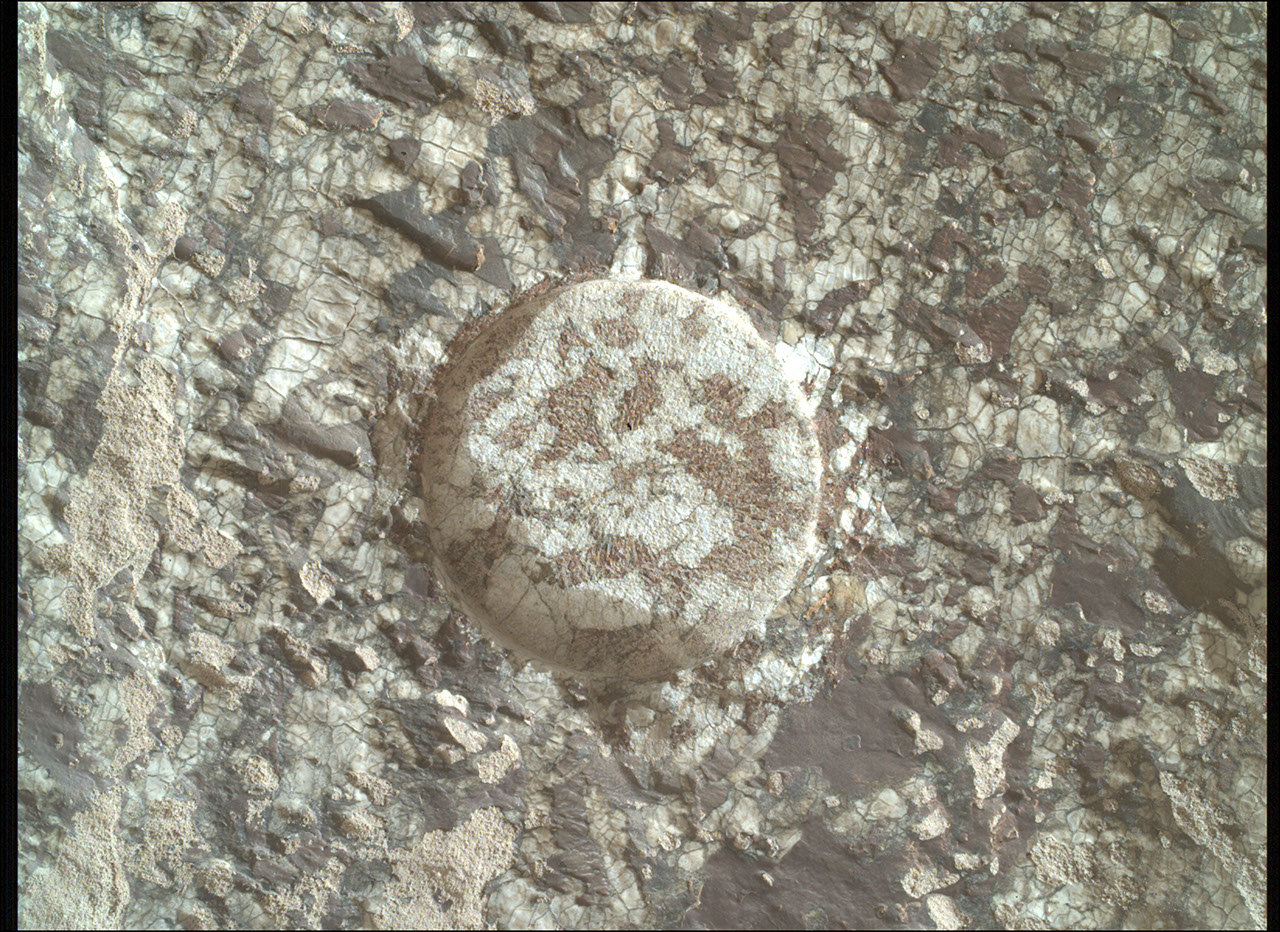
During this exploration, Perseverance created 13 wear patches on rocks that attracted the team’s attention. These close-up examinations produced valuable scientific data. Research indicates that many of the rocks formed from cooled lava or magma and are classified as igneous rocks. Others appear to have formed after violent collisions, making them impact rocks, while some show evidence of both processes.
The rover’s exploration has also been accelerated by a new navigation algorithm. The system uses the processor originally used to communicate with the Ingenuity helicopter, allowing Perseverance to complete longer and more precise drives across the Martian surface.
Brightly Colored Rocks Reveal New Scientific Clues
Perseverance’s exploration of the Lake Sharm region is now coming to an end, but the rover’s discoveries continue. The science team recently directed Perseverance to an area called Idubi, where hundreds of brightly colored rocks had been spotted from a distance.
Idubi has proven to be a scientific treasure trove, containing rocks with a wide range of textures and compositions. When Perseverance examined one light-toned rock, a wear patch named “Badger Peak” revealed a striking light-and-dark texture unlike anything the rover had previously observed.
Attempts to collect a sample from the rock failed because it was too hard. Researchers are now searching for similar rocks that Perseverance may be able to sample. Nearby, the rover also paused to investigate an outcrop called “Gardenia.” The formation may be a breccia—a rock made from fragments of many older rocks.
This week, Perseverance will attempt another wear operation at Gardenia to give scientists a more detailed look at its composition. After months of exploring Lake Sharm, the rover continues to uncover unexpected clues about Mars’ ancient geological history as it prepares to move onward.
Source: science.nasa.gov