


Rare Triassic Fish Fossil Solves Nearly 200-Year-Old Mystery
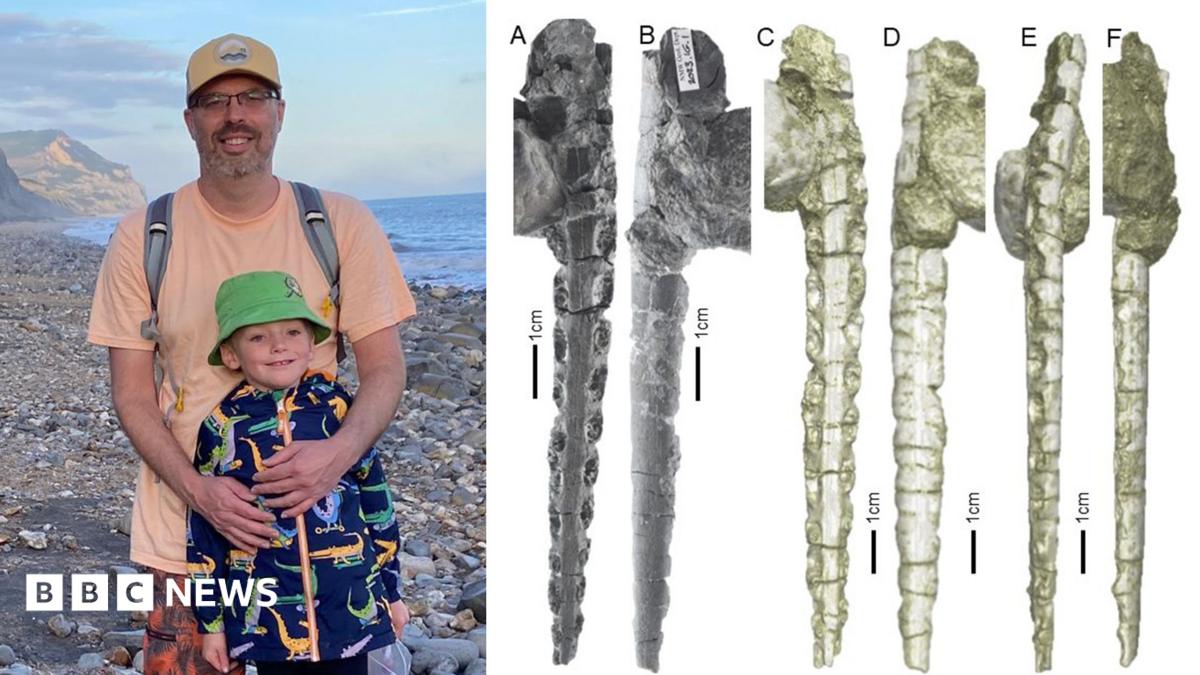
Researchers from Amgueddfa Cymru – Museum Wales, the State Museum of Natural History in Stuttgart and the University of Bristol have identified a mysterious fossil jaw found in the Bristol Channel as belonging to Sauryctis, a predatory fish that lived in shallow tropical seas during the late Triassic period.
The fossils were sent to the University of Bristol for detailed examination and compared with museum specimens from across Britain and Europe.
A Fossil That Confused Experts for Decades
“Many saurischian teeth were once mistaken for amphibian teeth, and that misunderstanding persisted into the 20th century,” said Cindy Howells, curator at the Museum of Wales.
“This adorable little jaw caused a lot of confusion when it was first discovered because it didn’t resemble any known species,” she said.
Mr Quinn said the fossils found in the Bristol Channel were formed by a storm around 200 million years ago.
“It’s remarkable that such a delicate fossil has survived,” she said.
“Triassic fossils in Britain have been studied for over 200 years, but this is the first time saurischian fossils have been discovered in these rocks.”
Two Separate Species Identified
The discovery led to the publication of a scientific paper, external. The study compared the fossil with specimens from museums throughout Europe.
Comparing the newly examined snout with museum specimens from Britain and Europe provided clear evidence that the fossil, originally thought to be Severnicthys, was actually a combination of two separate species.
The name Severnicthys had been used for an individual tooth and several small bones held in museum collections. These remains were believed to belong to amphibians well into the 20th century, rather than to fish as experts now recognize.
Fast Predators of Shallow Tropical Seas
“These predators lived in shallow tropical waters filled with small limestone islands,” said study co-author Dr David Whiteside.
“Saurictis was probably a fast and agile hunter, while Bilgeria was larger, more powerful and likely preyed on a more diverse range of prey.”
Another co-author, Dr Sam Cooper, said: “These fish have a very complex history.”
“It’s amazing how a single fossil discovered by Jonathan Bowe during the spring tides helped unravel nearly 200 years of confusion.”
Source: www.bbc.co.uk