


1,700-Year-Old Egyptian Tomb Holds Rare Greek Poem from a Mourning Son
Archaeologists in Egypt have discovered a 1,700-year-old limestone tomb containing a rare 19-line poem in ancient Greek. The inscription appears to have been written by a son mourning the death of his father.
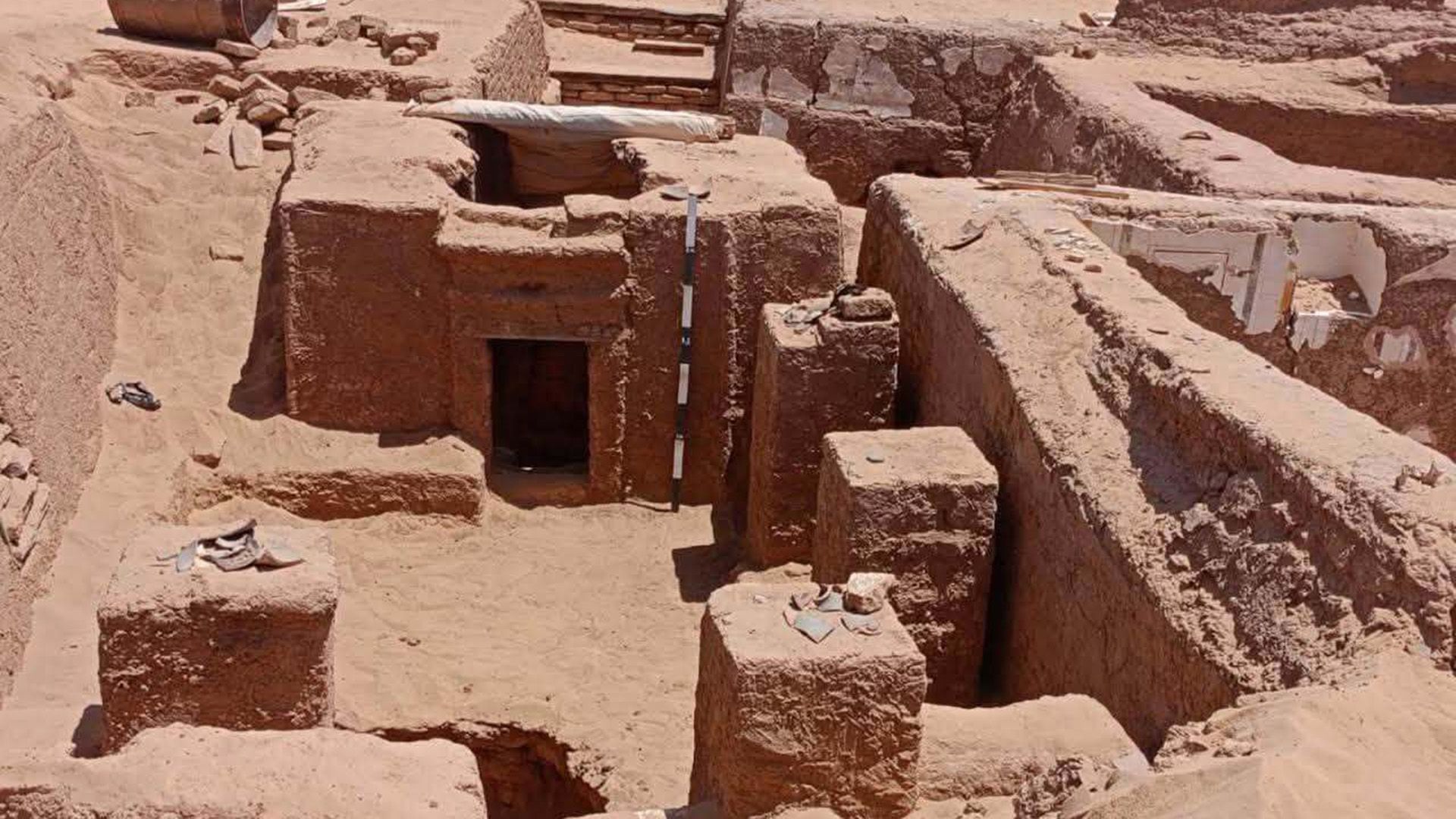
The pyramidal-roofed tomb dates to the 4th century, during the Roman Empire. Archaeologists found it in Egypt’s Dakhla Oasis, near the ancient city of Mortis, now known as Mut.
A Greek funerary poem for a father
The tomb was built for a married couple and contains a stone tablet inscribed in ancient Greek, according to a translated statement from Egypt’s Ministry of Tourism and Antiquities. The deceased man was named Pisehites and may have been a judge. The statement did not indicate whether human remains were found at the site.
Image credit: Egyptian Ministry of Tourism and Antiquities
The inscription is a poem of condolence that praises Pisehites for his kindness and wisdom, calling him an “advisor for life.” In its final line, Pisehites’ son, Sarapion, appears to address his father directly: “Hear me, father!” He then asks his father to accept funeral libations and offerings from his grieving children.
Angelos Chaniotis, a researcher at the New Jersey Institute for Advanced Study who was not involved in the excavation, described the inscription as a “very literary and original epithet.” He told Live Science that its language has a syntax associated with Homer’s famous epic poetry.
Chaniotis also noted the inscription’s use of diacritics, including accents. Their presence suggests that the author had a high level of education.
Hieroglyphs, protective spells and the underworld
The tomb contains hieroglyphic inscriptions recording spells intended to protect the deceased. Some refer to parts of the Amduat, an ancient Egyptian document describing the sun god’s journey through the underworld.
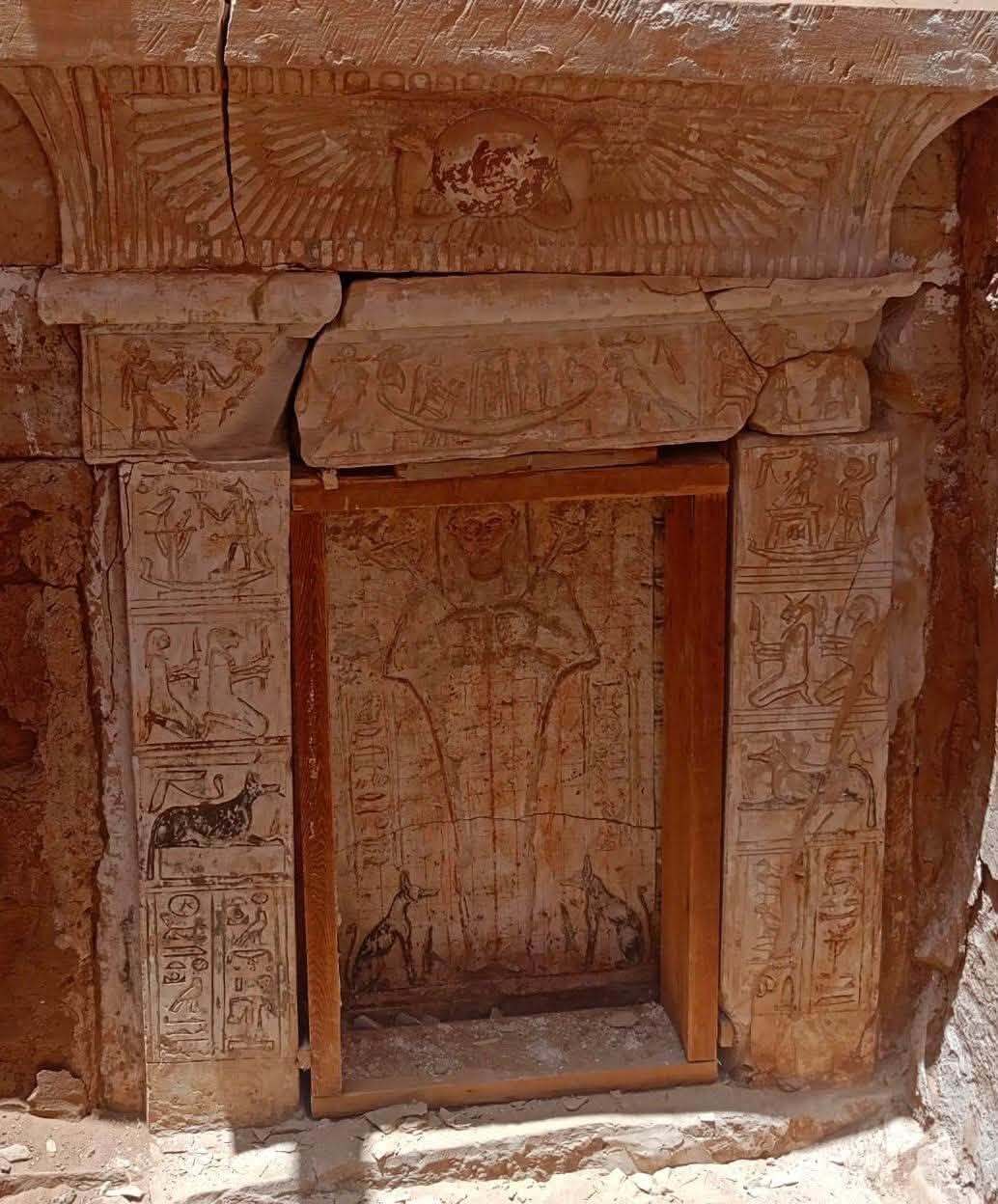
Image credit: Egyptian Ministry of Tourism and Antiquities
Visitors would descend 14 steps to reach the tomb’s entrance. The approach is decorated with statues and religious symbols, including a winged sun disc, figures of gods and two cobras.
Artifacts from Roman Egypt
Archaeologists also discovered an offering table, a wash basin, pottery and at least one coin depicting Constantine the Great, the Roman emperor who ruled during the 4th century.
Constantine famously legitimized Christianity and converted shortly before his death. However, researchers found no Christian decorations or writings inside the tomb.
The tomb may have been reused at a later date. The sun-brick temple above its entrance was likely built after Pisehites and his wife had been buried.
Live Science contacted the archaeology team but had not received a response by the time of publication.
Are you a fan of mummies and hieroglyphs? Test your knowledge with our Ancient Egypt quiz!
Source: www.livescience.com