


4,000-Year-Old Defensive Wall in Morocco Is the Oldest of Its Kind in North Africa Outside the Nile Valley
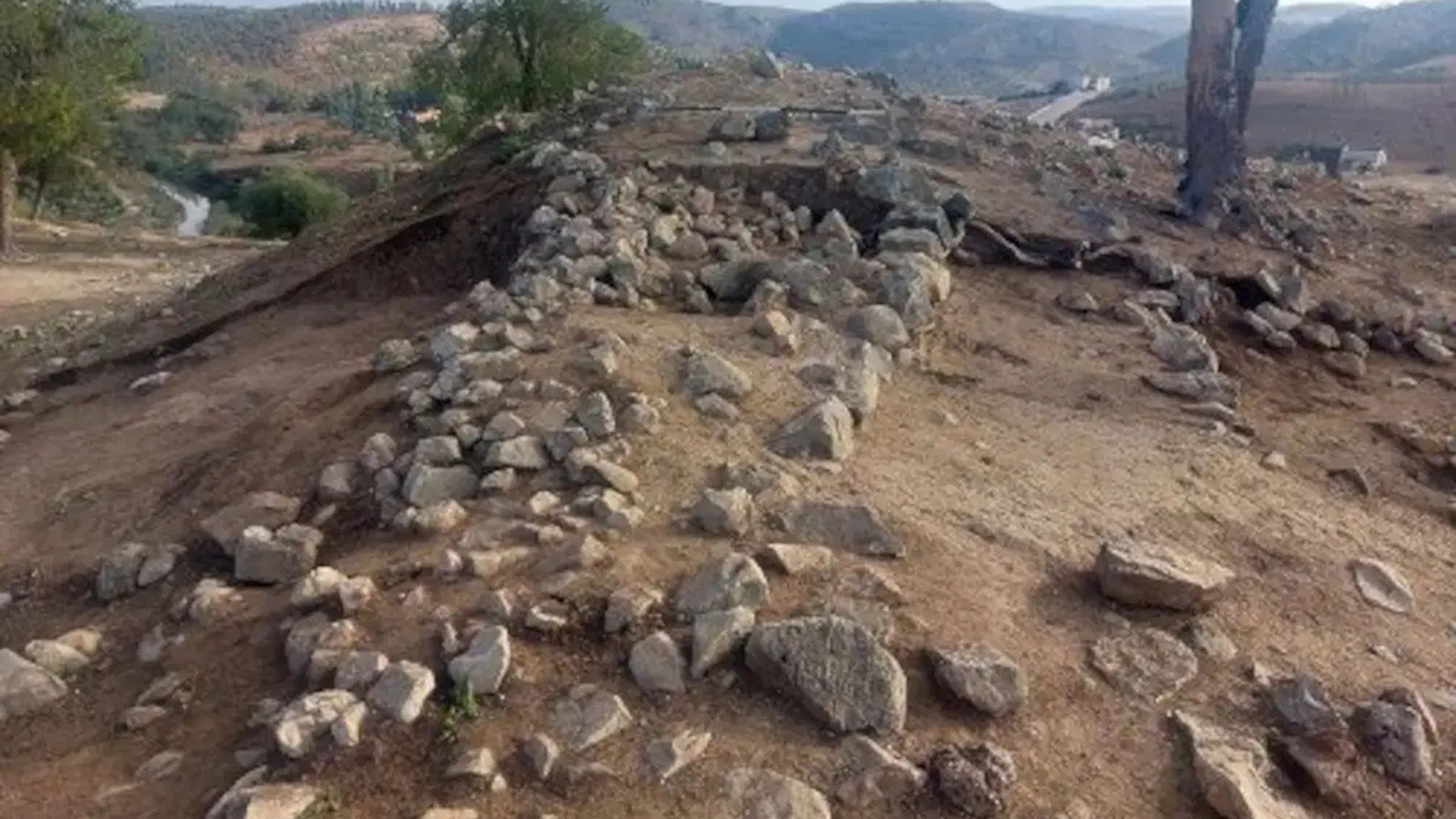
The largest defensive wall at Oued Beht. Archaeologists believe its base was built about 4,000 years ago.
Image credit: G. Lucarini, Oued Beht Archaeological Project
Archaeologists have unearthed a 4,000-year-old defensive wall in Morocco. The structure is the oldest known example of its kind in North Africa outside the Nile Valley.
The discovery is changing scientists’ understanding of human development in the Maghreb, the northwestern region of Africa that includes Morocco, Mauritania, Algeria, Tunisia and Libya. It also offers new evidence about the spread of agriculture, large-scale construction and organized communities in the region.
“For more than a century, the Maghreb region has been treated as a blank space in the story of post-Mediterranean prehistory,” archaeologist Giulio Lucarini of the Italian National Research Council told Live Science by email.
A prehistoric defensive system at Oued Beht
Lucarini is the lead author of a new study describing discoveries at Oued Beht, an ancient river valley about 50 miles (80 kilometers) east of Morocco’s capital, Rabat.
Italian, Moroccan and British archaeologists found a system of ditches, ramparts and defensive walls at the site. The foundations of the largest wall, on the southern side of the settlement, appear to have been built between 3,500 and 4,000 years ago using clay, ash, silt and stone.

The ruins of Oued Beht surrounded by defensive structures. The modern Moroccan village of Ait Cibernet is visible in the background.
Image credit: A. Garcia-Molsosa and T. Wilkinson, Oued Beht Archaeological Project
The defensive structures suggest that the settlement was important enough to protect. Researchers believe Oued Beht may have been an early agricultural center with livestock, cultivated crops and extensive storage facilities.
Among the discoveries are dozens of bell-shaped pits that may have been used to store grain. Their number indicates that the site’s storage capacity exceeded the needs of the people who lived there and may have served a wider surrounding community.
“Works like this are not improvised,” Lucarini said. “It requires planning, choosing the right location within the landscape, and taking the time to mobilize and coordinate your workforce.”
It remains unclear what the walls were built to defend against. The threat may not have been a specific invading army. Instead, the fortifications could reflect growing competition for land and resources, efforts to control movement through the landscape or the emergence of more formal leadership.
Evidence of connections between Morocco and Europe
The discovery also sheds light on relationships between North Africa and prehistoric Europe. Other researchers involved in the project previously studied the prehistoric village of Kach Kouch in Morocco’s Rif Mountains, near the Strait of Gibraltar.
Recent archaeological discoveries in Morocco mirror evidence from the prehistoric Iberian Peninsula, where African ivory and ostrich eggshells have long suggested contact with North Africa. The new findings provide a clearer view of the African side of that relationship.
However, Oued Beht was different from the large, fortified hilltop settlements found on the Iberian Peninsula. Those European sites featured planned architecture, rich bronze metalwork and extensive burial grounds that reveal pronounced social hierarchies. Oued Beht’s defensive system appears to have been considerably smaller.
“What this discovery shows is not that the two coasts were similar,” Lucarini said. “This shows that communities in the northwestern Maghreb were also investing in large-scale collaboration and control of strategic locations at a time when the western Mediterranean was undergoing change.”
The findings challenge older interpretations that assumed significant architectural and social complexity in North Africa must have originated elsewhere.
“Oued Beht is particularly interesting because it challenges us to reconsider the place of the Maghreb in Mediterranean prehistory,” said Iman Nagy, a northeastern African landscape archaeologist at UCLA who was not involved in the study.
The study was published in Libyan Studies. The researchers say the Oued Beht discoveries demonstrate that communities in the northwestern Maghreb were capable of planning and completing large construction projects thousands of years ago.

The Oued Beht area is an ancient river valley that connected Morocco’s interior to the Atlantic Ocean.
Image credit: A. Garcia-Molsosa and T. Wilkinson, Oued Beht Archaeological Project
Source: www.livescience.com