


Small, Distributed Batteries Could Transform Energy Storage in New York City
Large-scale, utility-scale battery facilities are rapidly coming online around the world. But communities have also pushed back, particularly in densely populated areas such as New York City, where concerns about relatively rare but high-profile incidents, including battery fires, can shape public opinion.
Why Distributed Energy Storage Is Gaining Momentum
“The biggest challenge for large-scale centralized energy storage providers is the fact that the benefits are abstract and the costs are tangible,” PopWheels co-founder David Hammer said at a New York Climate Week event on September 24.
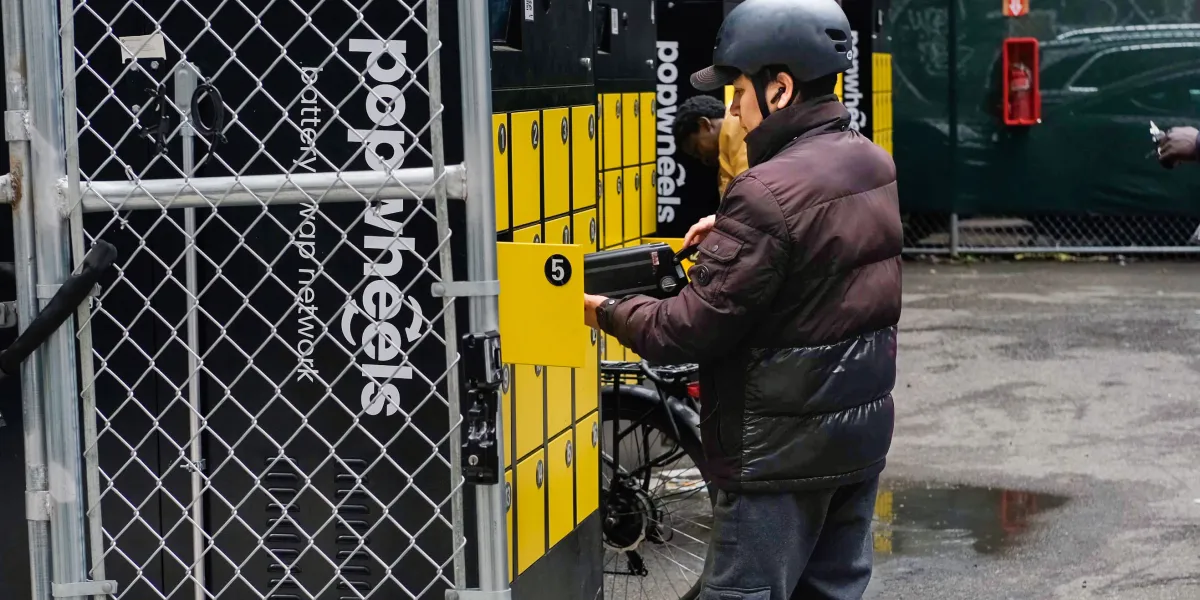
PopWheels built a battery-swapping system for delivery drivers who travel around the city on electric bikes. Instead of stopping to recharge, drivers replace depleted batteries with fully charged ones at a swap cabinet. Hammer said the company has about 50 cabinets in New York City, with approximately 2,500 batteries in circulation.
Battery Swapping for Food Carts
PopWheels recently began offering batteries to food cart operators, giving them an alternative to the gas generators they currently use. Approximately four batteries can provide 5 kilowatt-hours of power—enough to run most carts for most of the day.
Home Batteries Built Into Everyday Appliances
Other companies are bringing energy storage inside the home. Copper makes induction stoves with built-in batteries. The appliance allows residents to cook during a power outage and could also help homeowners avoid expensive electrical upgrades because the battery supplies some of the power needed while the stove is operating.
“We’re not just selling batteries for resiliency. We’re selling batteries for cost savings,” Copper co-founder and CEO Sam Kalish said at the event.
Plug-In Batteries for Homes and Businesses
Companies such as Every Electric and David Energy also sell plug-in batteries for homes and businesses. Every’s battery is designed to connect to an air conditioner. The company provides batteries and pays customers to reduce their energy use during periods of high grid stress.
David Energy follows a similar business model but focuses on commercial customers, including laundromats, parking lots, and gyms.
Small Batteries Can Reduce Permitting and Grid Costs
These batteries are either small or integrated into separate devices, so they typically do not require major power-grid upgrades or extensive permitting. Customers can simply plug them in and begin using them. Similar to the growing number of balcony solar systems, small battery modules can help offset a home or business’s energy needs.
Distributed Batteries Could Reshape the Power Grid
The shift toward distributed battery storage could bring major changes to the power grid. “This is the biggest thing to happen in the power grid space in the last 20 years,” said David Energy co-founder and CEO James McGinniss.
Source: www.technologyreview.com