


How to Teach Outdoors: The Benefits and Challenges of Outdoor Classrooms
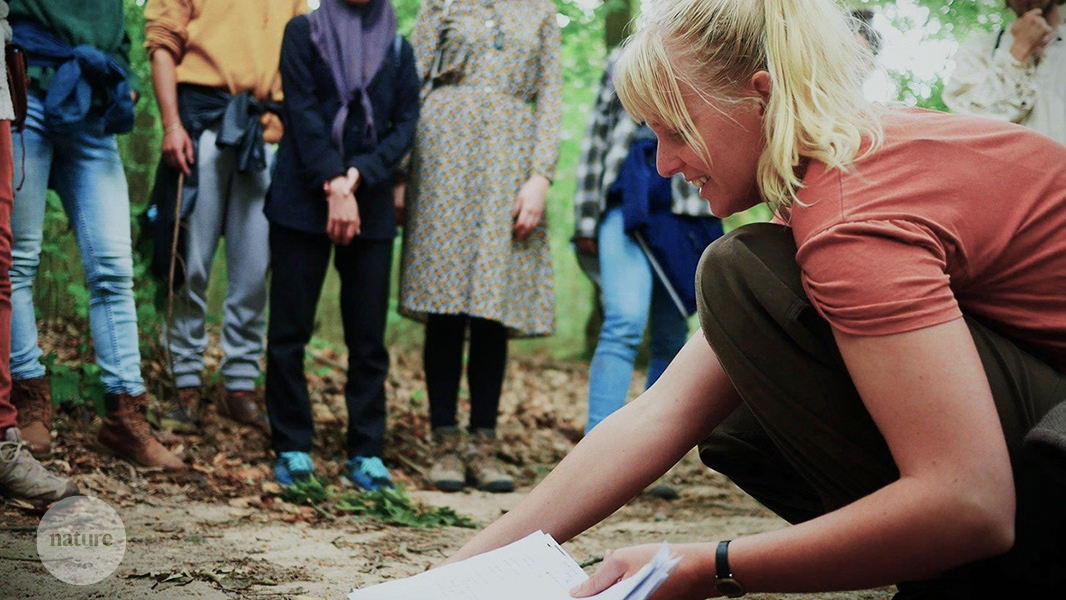
Education researcher Leanne Kasper advises teachers to approach outdoor education as an experience.
For Pedro María Abreu Ferreira, spending time outdoors is part of both his research and his teaching. He conducts long-term ecological research at the Pro Mata Nature Research and Conservation Center in the Serra Gaucha region of Brazil. He is also a biologist at the Pontifical Catholic University of Rio Grande do Sul in Porto Alegre, Brazil, where he teaches classes at the center.
Taking students outdoors is not always easy. Transportation problems are common during fieldwork. On the way back from a paleoecology trip, Ferreira and his team were delayed by a damaged bus suspension. During a botany visit to Promata Reserve, he and his students faced a powerful cold wave known as a polar air mass.
Weather and insects can also disrupt outdoor lessons. Ferreira once had to cancel a trip to a mangrove forest because there were so many mosquitoes and horseflies. “Even though we were wearing insect repellents and protective clothing, it was impossible to even think straight, let alone teach,” he recalls.
Despite these challenges, Ferreira believes outdoor classrooms are essential for teaching biology, especially ecology. “Teaching outside is a kind of obligation because you have to show your students what’s outside,” he says. “It’s a complete student experience.”
Outdoor lessons can offer a valuable change of setting for students and instructors, even when conditions are less comfortable. We spoke to instructors and outdoor education coordinators about the benefits of teaching outside and how to prepare for inclement weather.
Why teach classes outdoors?
Janne Fengler, a researcher in educational sciences and teacher training at the University of Luxembourg in Esch-sur-Alzette, says that outdoor education can be implemented in many ways across academic settings. As a member of the Outdoor Learning in Higher Education project, she and her colleagues are preparing a systematic analysis of outdoor education in universities and other educational environments.
Research has examined outdoor education in kindergartens, elementary schools and middle schools, Fengler says. However, less research has focused on outdoor learning in higher education.
More research is still needed. During the COVID-19 pandemic, many universities turned to outdoor learning to reduce the spread of the virus while continuing to provide in-person instruction.
“The importance of outdoor classrooms has increased since the arrival of the coronavirus,” says Jean-Philippe Ayotte Baudet, a science and outdoor education researcher at the University of Sherbrooke in Canada. During the peak of the pandemic, he was tasked with designing the university’s outdoor classrooms. “We tried to be creative and thought of some spaces we could use to welcome them outdoors.”
Preparing for weather and practical challenges
In September 2020, before COVID-19 vaccines were widely available and when global infections had exceeded 28 million, Lisa Bonner, a chemist at Eckerd College in St. Petersburg, Florida, had to learn how to teach outdoors. She held classes on a picnic bench beneath a canopy, with a poster of the periodic table taped to a nearby wall.
Rain created another challenge. Despite Florida’s sunshine, there were days when students had to crowd beneath the canopy while heavy rain created distracting noise.
Humidity was also a problem. Whiteboards stored in an air-conditioned building developed condensation as soon as they were taken outside into the hot Florida air. The wet boards were difficult to use, so Bonner says she had to arrive an hour before class to drive them and bring them up to temperature.
Source: www.nature.com