


Secret Cold War Satellites Launched on Titan Rockets Were Still Watching for Missiles Decades Later
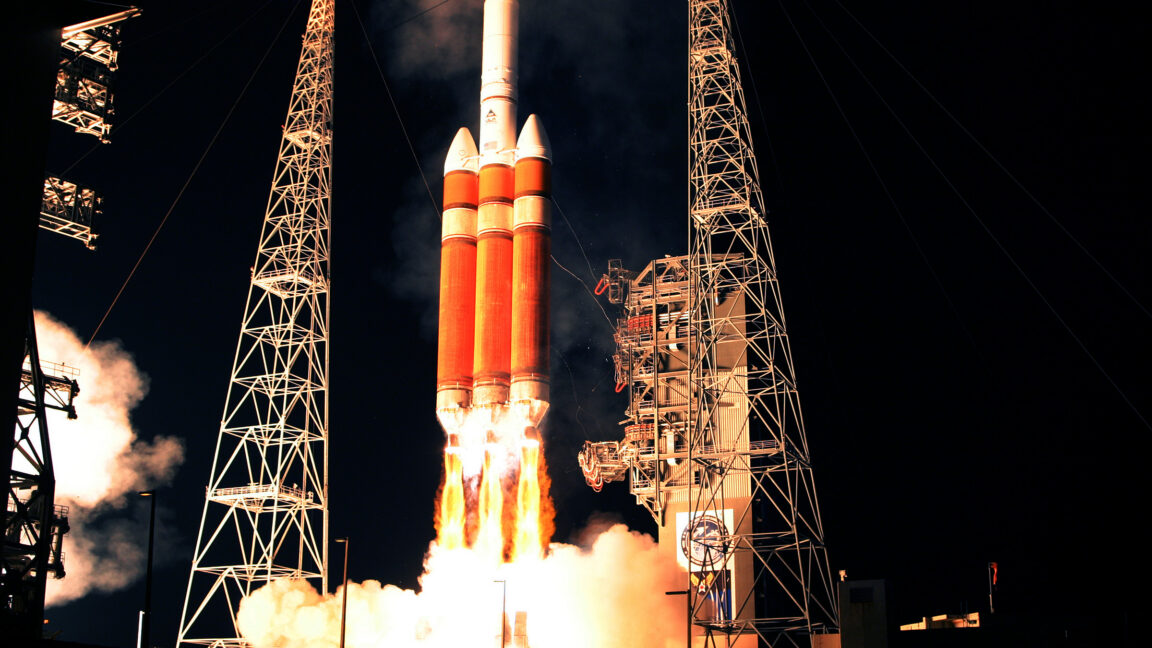
In late 1970, a Titan IIIC rocket launched from Space Launch Complex 40, then known as Cape Canaveral Air Force Station. Its payload was a top-secret US military satellite.
Spaceflight has changed considerably since then. The Titan IIIC failed in 1982 after dozens of launches, while other Titan rockets continued launching from Space Launch Complex 40 until 2005. That year, the US Air Force handed the launch pad to a small, little-known startup called SpaceX through a competitive process fiercely opposed by United Launch Alliance. Cape Canaveral is now a base of the Space Force.
But what happened to those classified payloads? Until last month, some of them were still operationally flying.
The satellite system built to detect missile launches
The US government later revealed that the secret payload launched in November 1970 was a “Defense Support Project” satellite. The first blocks of these satellites, launched between 1970 and 1973, weighed about 1 ton and carried approximately 2,000 infrared detectors. Essentially highly sensitive telescopes, the satellites were placed in geostationary orbit.
These satellites became some of the most important spacecraft operated by the United States. They helped detect the launch of nuclear warheads aimed at the country, making the Defense Assistance Program a key part of America’s military space capabilities during the Cold War.
The early satellites transformed experimental infrared observations into operational systems that continuously monitored missile launches around Earth. Originally designed to identify Soviet intercontinental ballistic missiles, the system became essential to nuclear deterrence. It later supported conventional military operations, including the detection of Iraqi Scud missile launches.
How the Cold War missile-warning satellites evolved
Over time, the military added personnel, improved the system’s reliability, and expanded its capabilities. Each satellite eventually carried more than 6,000 infrared detectors and weighed approximately 2.5 tons.
Defense Assistance Program satellites continued launching into space until 2007. One of them, DSP-16, was also launched aboard the Space Shuttle Atlantis in 1991.
Source: arstechnica.com