


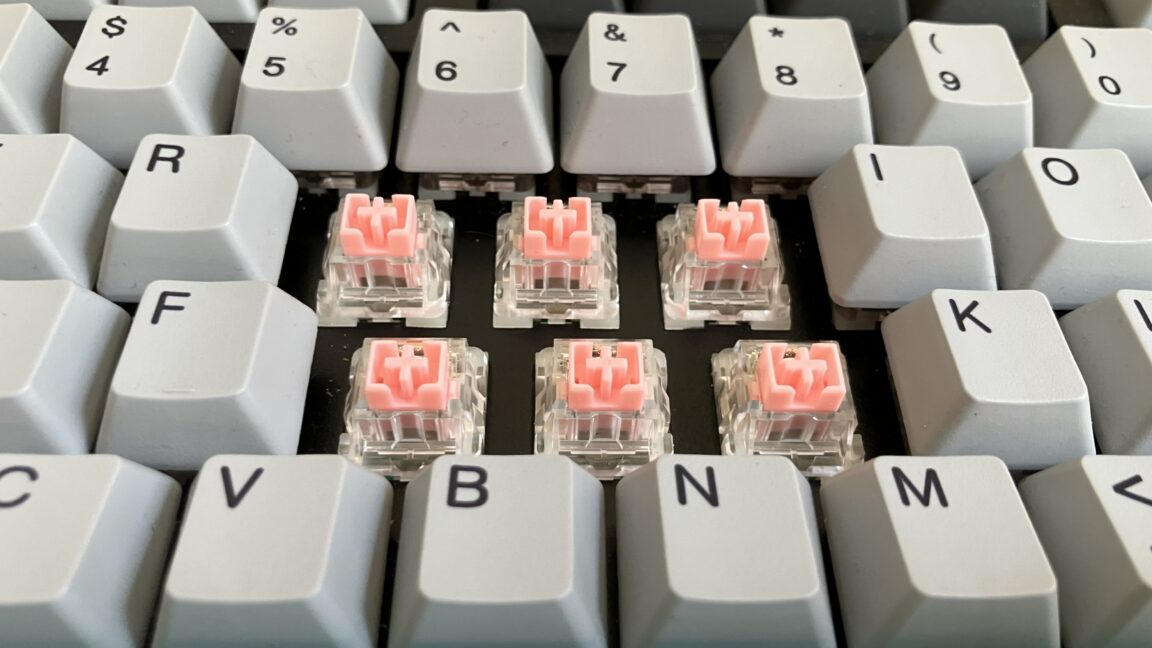
Contactless Keyboard Switches Explained: Are Optical and Hall-Effect Keyboards Worth It?
Mechanical keyboards are not always mechanical. Over the past six years, keyboards with optical switches, Hall-effect switches and other contactless switches have become increasingly common. They often cost more than traditional mechanical keyboards and command a premium over basic membrane boards.
In return, manufacturers promise theoretical benefits, particularly for gamers. However, in everyday use, the difference can be subtle.
So what are you actually paying for? This guide explains how standard mechanical switches work, why contactless keyboard switches are becoming more popular, and where their advantages and disadvantages matter most.
How a Standard Mechanical Switch Works
Let’s start with what happens when you press a key with a traditional mechanical switch inside a keyboard.
As shown in the Cherry MX Brown switch diagram below, a standard mechanical switch contains two metal leaves, also called contact points. They are shaped differently, with the top of the larger leaf bent away from the smaller leaf.
Credit: Das Keyboard
When you press a mechanical switch, its plastic stem moves downward toward the keyboard’s PCB and compresses a spring wrapped around the stem. When you release the key, the spring expands and returns the stem to its original position.
When the switch is not pressed, a protruding part of the plastic stem keeps the two metal leaves apart. As the stem moves downward, its components move with it, allowing the leaves to touch and close the circuit on the keyboard’s PCB. This sends a signal to the keyboard’s microcontroller, which tells the computer what input was made.

Credit: Cherry

Credit: Cherry
Traditional mechanical switches rely on physical contact between internal components. Because of that, the components can degrade over time.
Why Are Contactless Keyboard Switches Becoming Popular?
The switches covered in this guide differ from traditional mechanical switches because they do not register an input through contact between two metal plates. This is why they are often called contactless switches.
Optical switches, Hall-effect switches and other contactless designs have become increasingly common in modern keyboards. Manufacturers often claim that these switches can last longer than regular mechanical switches and are less susceptible to oxidation and corrosion, which can affect mechanical switches after long periods of use.
These potential benefits help explain why contactless keyboards are becoming more popular—and why they frequently cost more than traditional mechanical keyboards. Still, their advantages may be more noticeable in specific use cases than during everyday typing.
Source: arstechnica.com