


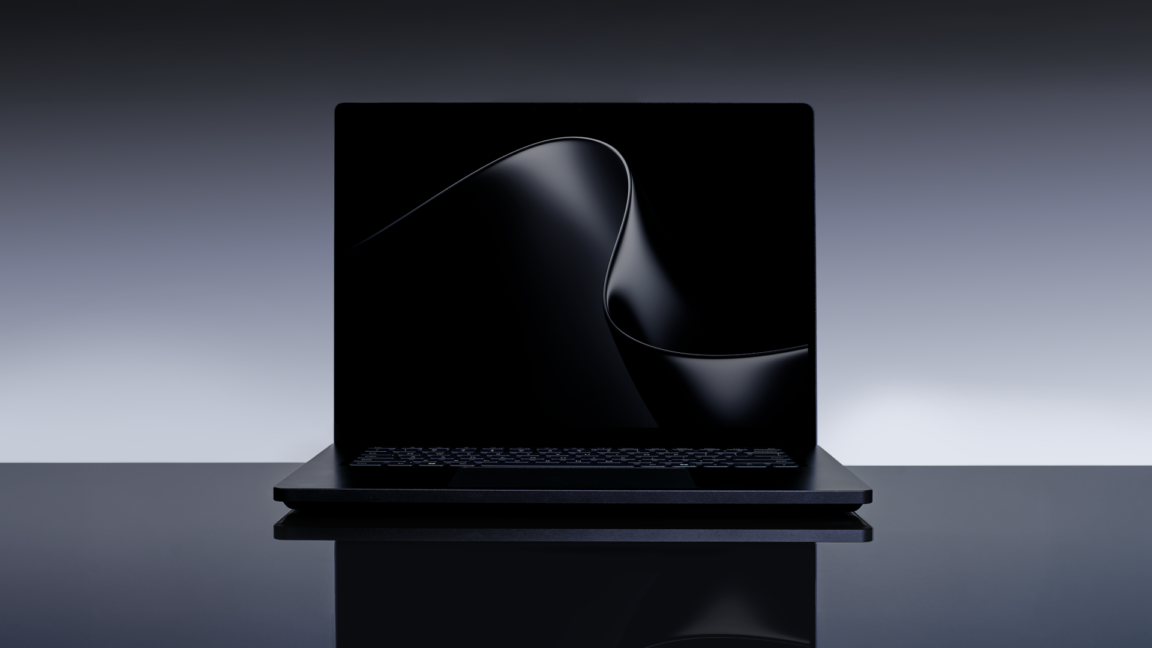
At its first live event in two years, Microsoft announced its latest Surface laptops, detailed upcoming Windows 11 changes, and shared its vision for local AI and agent workflows on personal computers. The presentation focused on developers and home enthusiasts interested in AI development, high-end graphics and local computing.
Microsoft Surface Laptop Ultra Debuts With Nvidia RTX Spark and Up to 128GB of Memory
Surface Laptop Ultra: Price, Specs and Release Date
Announced in May 2026, the new Surface Laptop Ultra is Microsoft’s first product to use the Nvidia RTX Spark SoC (system-on-chip). The laptop starts at $2,599 and is available in multiple SoC and memory configurations, including a 5,120-core or 6,144-core Blackwell GPU and up to 128GB of LPDDR5x unified memory.
Shipping begins October 16. Pre-order the Surface Laptop Ultra now.
Surface Laptop Ultra Targets Developers and Local AI
Although the Surface Laptop Ultra is clearly aimed at developers, Microsoft emphasized its graphics performance during the presentation. Its unified memory architecture avoids the physical VRAM limitations of traditional GPUs, allowing the laptop to allocate resources for modern gaming and local AI development and deployment.
Microsoft demonstrated Gears of War: E-Day running on the system. The demonstration suggests that AAA games can run on the Surface Laptop Ultra without a traditional dedicated gaming GPU.
Surface RTX Spark Development Box
Nvidia CEO Jensen Huang and Microsoft CEO Satya Nadella joined Microsoft on stage, where Pavan Davuluri, President of Windows and Devices, announced the Surface RTX Spark development box.
Priced at $5,999, the anodized aluminum black box is “designed to meet the needs of frontier developers.” The Spark Dev Box ships with a custom, developer-optimized build of Windows 11 configured for AI development and local AI workloads.
With 128GB of unified memory and an onboard Nvidia RTX GPU, the Surface RTX Spark development box delivers 1 petaflop, or 1,000 teraflops, of AI computing performance.
Source: arstechnica.com