


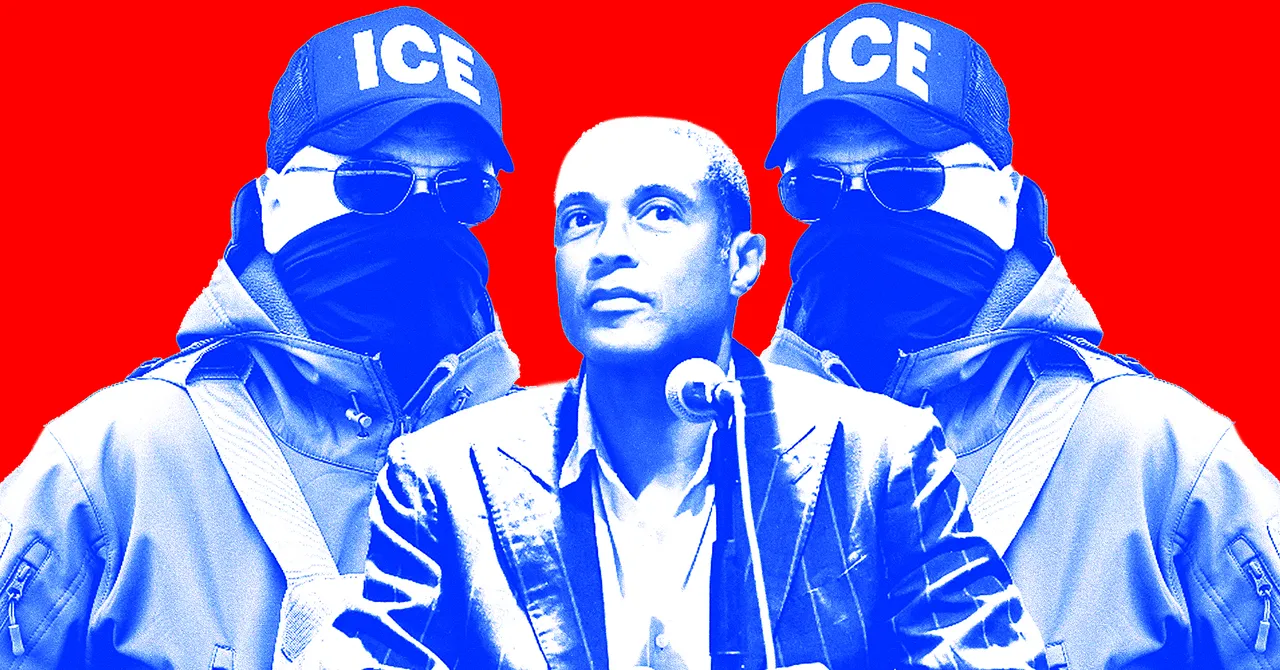
Cell-Site Simulators Were Used to Track Student Linked to Don Lemon’s Anti-ICE Protest Coverage, Court Records Show
U.S. law enforcement agencies received authorization to use controversial surveillance equipment capable of intercepting cellphone signals to locate and arrest a 21-year-old college student who helped journalist Don Lemon produce coverage of anti-ICE protests, according to court filings.
Warrants Targeted Student’s Cellphone
Jerome Richardson, a former Temple University graduate, was one of 39 people charged in January with conspiring to violate the civil rights of worshipers and disrupting religious services at Cities Church in St. Paul, Minnesota.
Protesters said they targeted the church’s January 18 service because one of its pastors, David Easterwood, also led ICE’s St. Paul field office. Those charged include journalist Georgia Fort and former CNN host Don Lemon, who say they attended to cover the demonstrations.
Twelve days after the protests, judges in two states signed warrants authorizing agents to target Richardson’s phone with a cell-site simulator, commonly known as a Stingray or IMSI catcher. One warrant was issued in Minnesota on January 30, and another was issued the following day in Pennsylvania.
In a motion seeking to exclude tracking evidence, Richardson’s lawyers said the purpose of the surveillance was “to locate and arrest him.”
Investigators Also Sought Data From Journalists
Investigators applied for cell-site simulator warrants targeting the phones of Fort and Jamael Lundy, a former Minnesota Senate candidate. They separately requested phone numbers associated with Fort and Lemon, which WIRED tracked, to obtain pen-register orders capable of recording phone numbers. It remains unclear whether a judge approved those applications.
Records reviewed by WIRED do not establish whether investigators actually deployed a cell-site simulator to locate Richardson or whether a judge approved the application targeting Fort and Lundy. In a letter to the court in July, Fort’s lawyers said prosecutors “did not know” whether the surveillance application had been granted or whether evidence had been submitted.
How Cell-Site Simulators Work
A cell-site simulator impersonates a cellphone tower and helps locate a targeted phone. The technology can also collect identifying information from nearby mobile devices, including phones belonging to people not suspected of a crime.
That indiscriminate collection has made the devices controversial among privacy advocates, who describe them as dragnet surveillance tools. The technology’s potential use against protesters and journalists has drawn particular concern.
Surveillance Technology Has Long Been Shrouded in Secrecy
The use of cell-site simulators has long been subject to secrecy requirements. According to FBI records released in 2023, police departments that borrowed the devices had to agree to keep details about their use confidential, including in court.
“The use of sophisticated surveillance capabilities, such as cell tower simulators, against members of the free press to report against the president is a horrific attack on the First Amendment,” said Cooper Quintin, a senior staff engineer at the Electronic Frontier Foundation, a technology-focused civil liberties nonprofit.
Quintin spent years researching the devices and developing tools to help people detect them. Using EFF’s detection software, WIRED found evidence suggesting that cell tower simulators were deployed near the 2024 Democratic National Convention in Chicago. However, it remains unclear who operated them or why.
Source: www.wired.com