


Ames Crater in Oklahoma Formed 370 Million Years Ago, New Study Finds
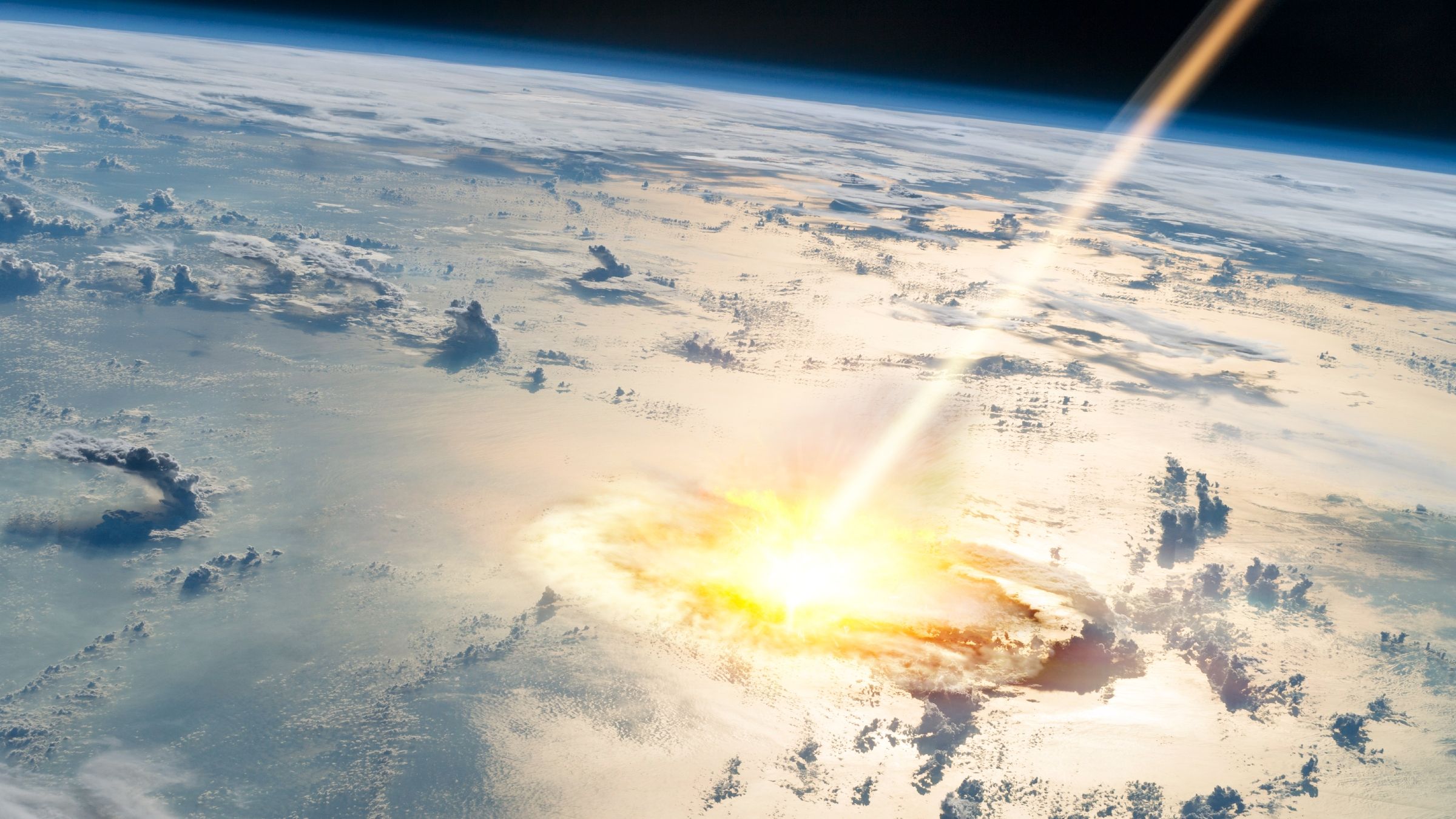
A buried meteor crater in northern Oklahoma is about 100 million years younger than scientists previously believed. The revised age suggests the impact may have occurred during one of Earth’s largest mass extinction events.
Known as the Ames impact structure, the crater lies beneath the small town of Ames in northern Oklahoma. Measuring approximately 10 miles (16 kilometers) across, it is the fourth-largest known impact structure in the United States.
The crater formed when a space rock roughly the size of the Eiffel Tower struck Earth at more than 70,000 mph (110,000 km/h). At the time, the region was covered by a shallow sea. Marine sediments later buried the crater, leaving no obvious surface features today.
The structure was identified in 1991 after an oil prospector accidentally drilled into it.
Scientists revised the crater’s age
Researchers previously believed that Ames Crater formed about 467 million years ago, during the Ordovician meteor event. That period saw an unusually large number of major impacts, possibly caused by the breakup of a single parent body somewhere in the solar system.
Fossilized marine animals found in and around the crater appeared to support that timeline. However, a new study published July 7 in the journal Meteoritics & Planetary Science places the impact much later.
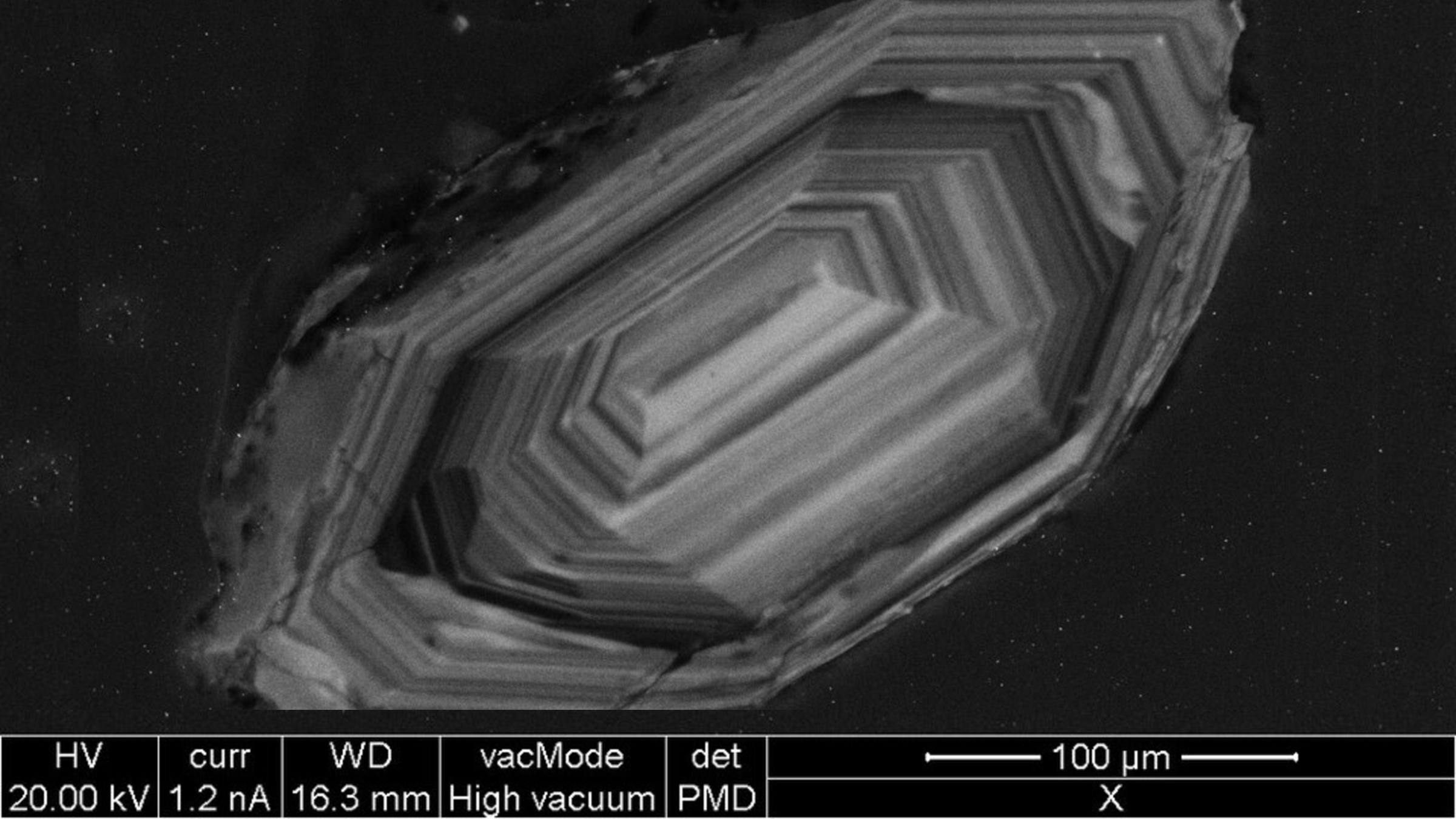
By analyzing fracture patterns in zircon crystals embedded in rocks from the buried crater, the researchers determined that the impact occurred about 370 million years ago—roughly 97 million years after the Ordovician meteor event.
Why zircon crystals matter
Zircon crystals are tiny grains of an extremely durable mineral called zirconium silicate. They occur throughout many of Earth’s rock formations and can preserve evidence of exposure to intense heat and pressure.
When an asteroid or other space rock strikes Earth, the resulting shock waves can fracture and alter zircon crystals. Scientists can study those microscopic changes to determine when an ancient impact occurred.
The study’s lead author, geologist and planetary scientist Elizabeth Catlos of the University of Texas at Austin, said the researchers repeatedly found evidence pointing to the younger age.
Dating zircon crystals has led scientists to revise the ages of other impact structures as well. More accurate dates could help researchers establish a clearer timeline of major impacts across North America.
A possible link to the Late Devonian mass extinction
The revised age removes Ames Crater from the Ordovician meteor event and places it within the Frasnian-Famennian mass extinction, also known as the Kellwasser event or Late Devonian mass extinction.
This extinction began about 372 million years ago and lasted several million years. During the event, roughly half of all marine life became extinct. Scientists have linked the die-off to environmental changes including ocean oxygen loss, global cooling and increased volcanic activity.
The researchers emphasized that the Ames impact did not cause the Frasnian-Famennian extinction. However, they said the impact could have sent a vast cloud of dust into the atmosphere, potentially contributing to regional cooling.
“No matter what technique we used, we kept coming back to this young signal,” Catlos said in a statement.
Co-author Danny Stockli, a geologist and dean of the Jackson School of Geosciences at the University of Texas at Austin, said studying more impact sites could help scientists build a more accurate timeline of major events in Earth’s history.
“With this study, we’re basically taking a key pawn from the Ordovician meteor event and throwing it into the Frasnian-Famennian meteor event and saying, ‘This is where this impact belongs,’” Catlos said.
The study was dedicated to co-authors Andrew Parisi and Michael Brookfield, who died before its publication.
Study details
Catlos, E. J., Parisi, A. F., Brookfield, M. E., Erickson, T., Gulick, S. P., Schmitt, A. K., Stockli, D. F., Miggins, D. P., Ruchte, B., and Cloos, M. (2026). Ames impact structure, Oklahoma: New radioisotope constraints and implications for the North American impact chronology. Meteoritics & Planetary Science, 61(8), 2103–2139.
Source: www.livescience.com