


World’s Smallest Crocodile Hunts Bats in a Cave Filled With Bat Guano
Rare footage from Gabon’s Abanda Cave shows dwarf crocodiles using stealth attacks to catch bats in total darkness.
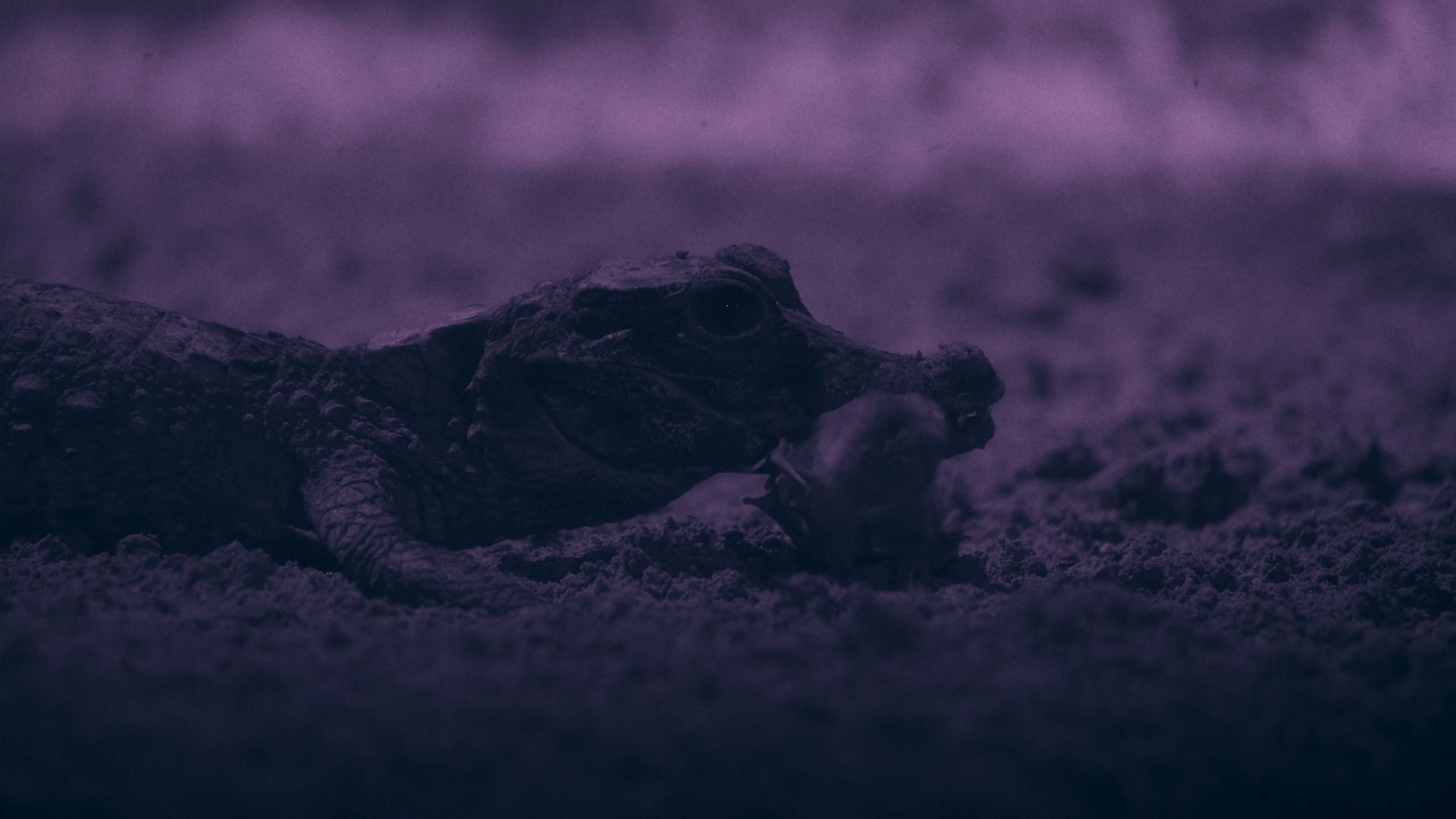
New behavioral footage has revealed how the world’s smallest crocodile hunts bats inside a remote cave filled with bat droppings. The footage will appear in the upcoming National Geographic series Africa: Earth’s Wild Homeland.
Rare cave crocodiles caught hunting bats
The African dwarf crocodile (Osteolaemus tetraspis) grows to about 5 feet (1.5 meters) long. The species is native to West and Central Africa, where it usually lives in surface habitats such as forests, rivers and swamps.
But the crocodiles living in Gabon’s Abanda Cave are unusual. Discovered in 2008, this isolated population spends its days navigating underground tunnels in complete darkness and moving through thick layers of bat guano.
Researchers already knew that dwarf crocodiles eat bats and insects. However, they had never observed exactly how the reptiles captured bats inside the cave.
That changed when scientists and filmmakers used specialized remote cameras to record the crocodiles hunting for the first time.
“I’ve been working with these guys for almost 15 or 16 years now, and that’s something we could never have seen,” Matt Shirley, a conservation ecologist and Rolex National Geographic Perpetual Planet Explorer, told Live Science.
Life in a cave of bat guano
The cave environment is difficult for both researchers and wildlife. During the dry season, the floor is covered by a thick layer of guano. When rain enters the cave, the material turns into deep, sticky mud.
“During the dry season, you’re just standing on top of this like a fluffy mattress cloud of bat guano, but when it rains, you’re in bat guano mud,” Shirley said. “Sometimes you have to stand up literally up to your neck in bat guano to catch alligators, or you have to lie down to crawl through tunnels and move head to toe through bat guano mud.”
Researchers do not know when dwarf crocodiles began living underground. They may have occupied the caves for thousands of years, but the remote and difficult-to-access cave system remained largely unnoticed until relatively recently.
Shirley said the new footage could help scientists reconstruct behavioral patterns and better understand how cave-dwelling crocodiles live.
Why are the cave crocodiles orange?
Unlike the grayish dwarf crocodiles found above ground, many of the cave-dwelling crocodiles have distinctive orange skin. Scientists believe the color comes from years of exposure to acidic bat guano, which gradually erodes and tans the animals’ skin.
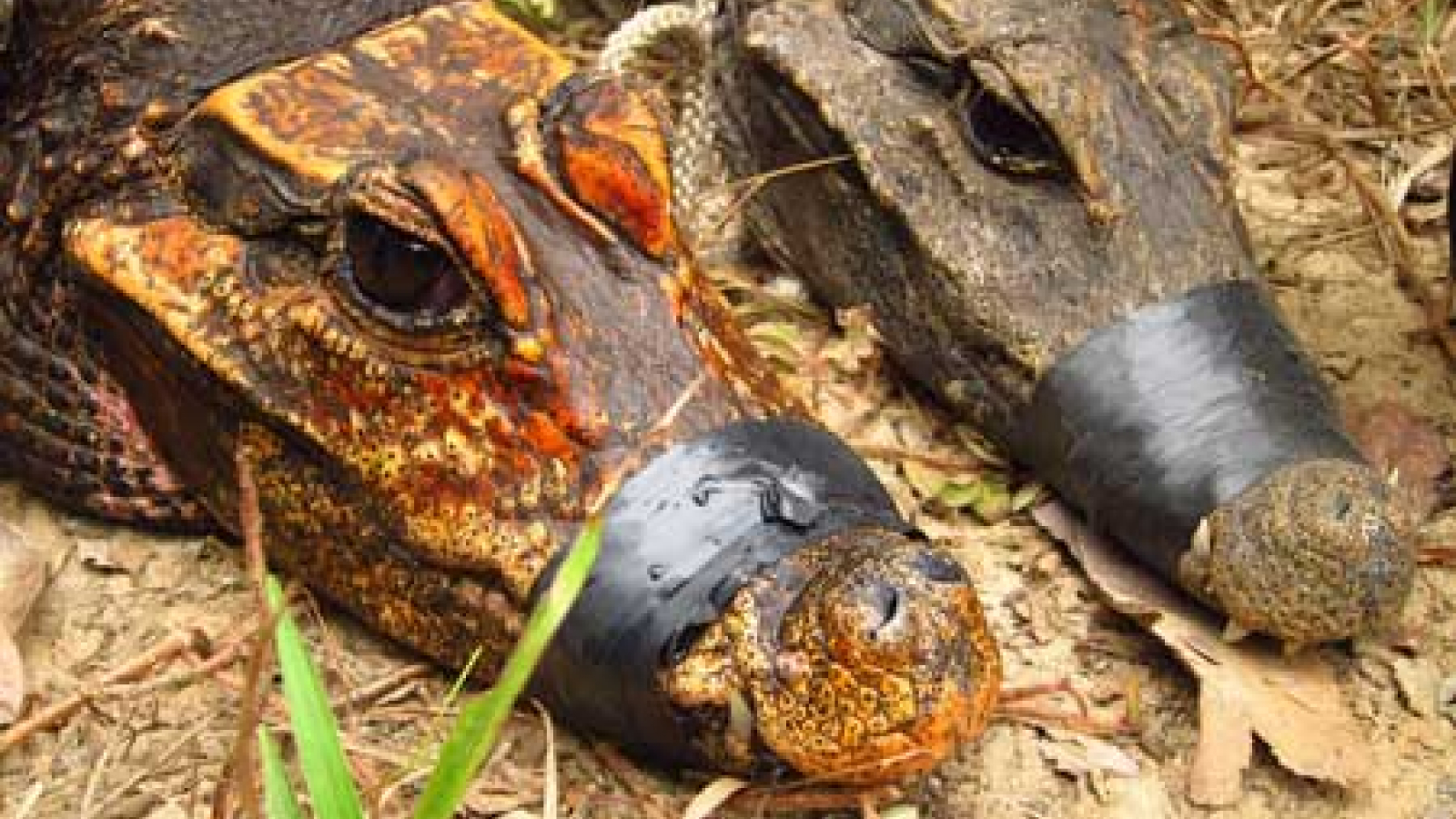
A 2016 study published in the African Journal of Ecology compared the cave crocodiles with dwarf crocodiles living in above-ground forest habitats.
The researchers found that the cave crocodiles may have access to more abundant food than their forest-dwelling relatives. The caves provide plentiful prey, including bats and insects, while also offering protection from predators.
An isolated population evolving underground
The cave crocodiles are considered part of the broader dwarf crocodile species, but they form a genetically isolated group. Because they remain in the cave and mate with one another, genetic differences can accumulate over generations.
Those differences may help the crocodiles adapt to the extreme conditions underground, including darkness, confined spaces, abundant guano and constant noise from nearby bats.
“It’s very ‘Jurassic Park’—a scenario where life finds a way,” Shirley said. “This is evolution in action.”
Are Gabon’s cave crocodiles endangered?
The dwarf crocodile is classified as endangered on the International Union for Conservation of Nature Red List. However, the IUCN has not evaluated the species for decades, so its current conservation status remains uncertain.
Dwarf crocodiles are a common source of protein in parts of West and Central Africa and face threats from overfishing and habitat loss. The species is also widespread, particularly in Gabon.
Abanda Cave lies outside a protected area, leaving its crocodile population vulnerable to human activity. Shirley said the Gabonese government is working to protect the cave by designating it as a protected area.
“I don’t think we’re worried about species extinction, but the cave population is definitely at risk until protected area classification is achieved,” Shirley said.
When to watch the National Geographic series
Gabon’s cave crocodiles are featured in the “Jungle” episode of the seven-part National Geographic series Africa: Earth’s Wild Homeland, narrated by actress Wunmi Mosaku.
The series will premiere on National Geographic on Friday, October 2, at 8 p.m. ET, with streaming available on Disney+ and Hulu the following day.
Source: www.livescience.com