


Inside Super Scam Me: How Romance Scammers Impersonate Celebrities and Military Generals
If you receive a direct message from an unverified account after commenting on Jon Bon Jovi’s official Instagram post, what would it take to convince you that the person messaging you is really the rock star? And if that account begins asking for money, would you recognize the scam before your bank account is drained?
In the documentary Super Scam Me, investigative journalist Mariana Van Zeller explores the toxic world of romance scams and online love bombing. In the clip below, published exclusively by Ars, Van Zeller teams up with ethical hacker Armand the Cyber to use fake Bitcoin receipts to lure out a fake Bon Jovi and help his victims find closure.
A sneak peek at National Geographic’s Super Scam Me.
How romance scammers manipulate their victims
The documentary premieres Saturday on National Geographic at 9 p.m. ET and is available to stream on Disney+ and Hulu. It follows victims of romance scams while examining how the line between an online “lover” and a scam victim can become blurred. The Federal Trade Commission says romance scams cost Americans approximately $1.5 billion each year.
The FTC has described romance scams as the leading form of financial fraud in the United States. Scammers often target older women who lack community and are seeking connection online, including widows and divorcees, as previous reporting has warned. Many victims never recover their money, while overseas scammers are becoming more sophisticated with the help of artificial intelligence and other tools. Experian predicted that AI-driven fraud would remain a major threat in January.
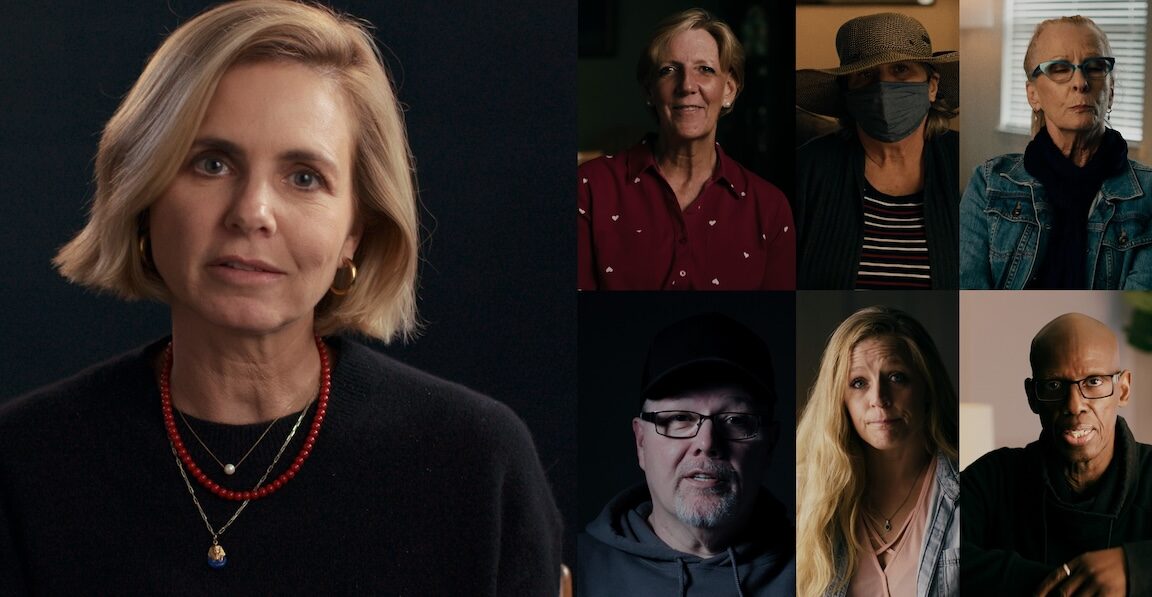
Rather than focusing only on individual victim stories, Super Scam Me shows how romance scams work across social media platforms such as Instagram and dating apps including Match and Tinder. Van Zeller has reported on the fraud industry for years. After seeing how many victims were left financially and emotionally devastated, she designed a social experiment in which she would become a target herself.
Her plan quickly succeeded. A Ghanaian con artist began posing as a handsome foreign four-star military general named “Mark Turner.”
  <div class="flex-1">
    <div class="ars-lightbox-item relative block h-full w-full overflow-hidden rounded-sm">
      <a data-pswp-width="1200" data-pswp-height="1600" data-pswp-srcset="https://cdn.arstechnica.net/wp-content/uploads/2026/10/SuperScamMe_06.jpg 1200w, https://cdn.arstechnica.net/wp-content/uploads/2026/10/SuperScamMe_06-640x853.jpg 640w, https://cdn.arstechnica.net/wp-content/uploads/2026/10/SuperScamMe_06-1024x1365.jpg 1024w, https://cdn.arstechnica.net/wp-content/uploads/2026/10/SuperScamMe_06-768x1024.jpg 768w, https://cdn.arstechnica.net/wp-content/uploads/2026/10/SuperScamMe_06-1152x1536.jpg 1152w, https://cdn.arstechnica.net/wp-content/uploads/2026/10/SuperScamMe_06-980x1307.jpg 980w" data-cropped="true" href="https://cdn.arstechnica.net/wp-content/uploads/2026/10/SuperScamMe_06.jpg" target="_blank" class="cursor-zoom-in">
        <img decoding="async" width="1024" height="1365" src="https://cdn.arstechnica.net/wp-content/uploads/2026/10/SuperScamMe_06-1024x1365.jpg" class="ars-gallery-image" alt="Advertisement for Mary Zell and Mark Turner in Accra, Ghana" loading="lazy">
      </a>
      <div class="pswp-caption-content" id="caption-2176986">
        Advertisement for Mary Zell and Mark Turner in Accra, Ghana.
        <p>National Geographic/Daniel Hollis Diamond</p>
      </div>
    </div>
  </div>
</div>
Van Zeller’s undercover romance-scam experiment
To conceal her journalistic identity, Van Zeller posed as a middle-aged antiques dealer named “Mary Zell.” She used a wig, large glasses and a prosthetic nose in case scammers attempted a reverse image search on her profile. She also staged photographs to present Mary as a fun-loving single woman living her best life.
After identifying the impostor, Van Zeller planned to confront him using tactics similar to those she used to expose the fake Bon Jovi. To track him down, she partly relied on flyers distributed in his neighborhood. The flyers featured mash-up photographs of supposedly romantic couples created by “Mark Turner” to woo “Mary Zell.”
Source: arstechnica.com