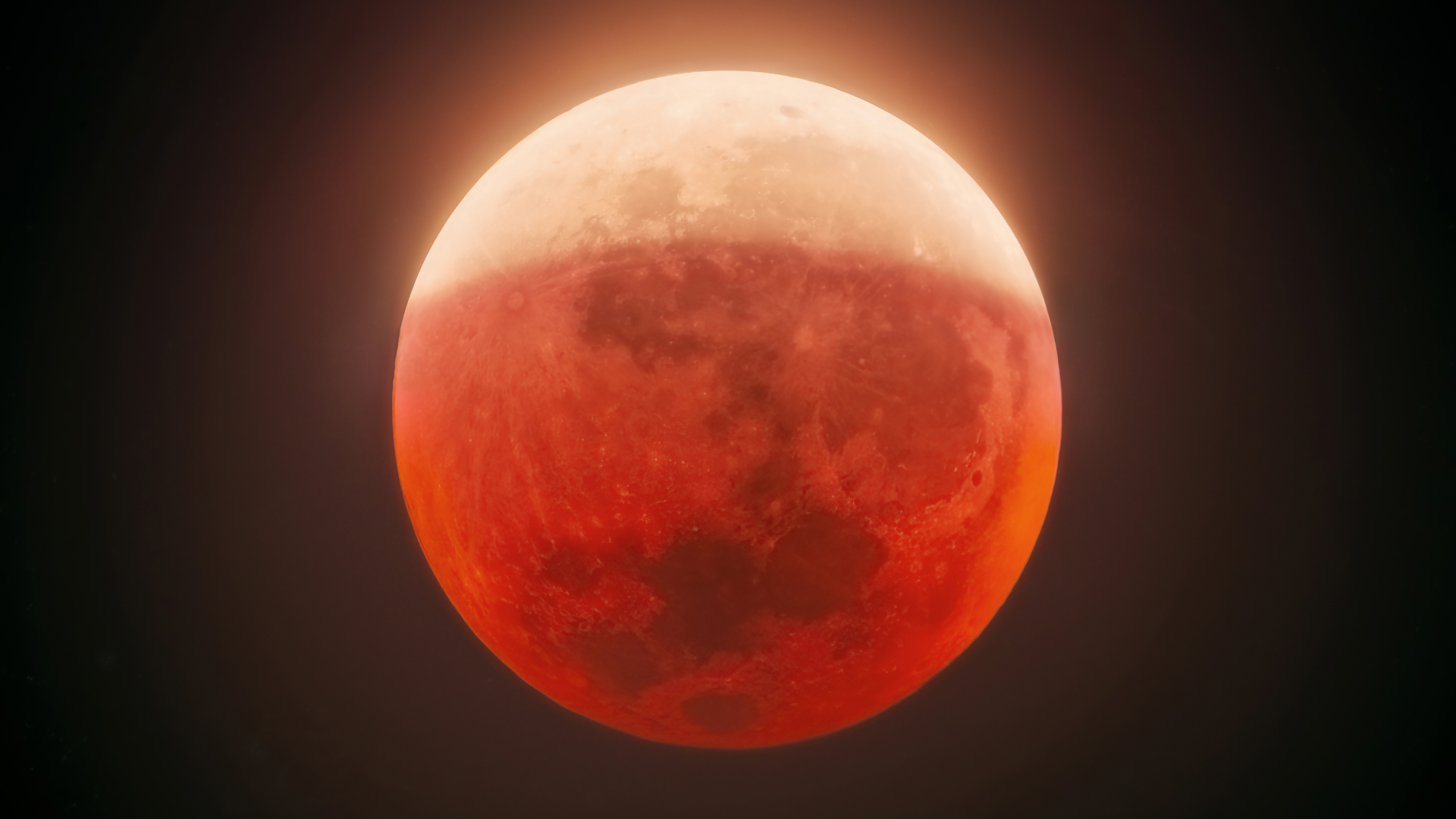
Deep Partial Lunar Eclipse Will Turn the August Full Moon Coppery Red
Skywatchers are in for a spectacular celestial event tomorrow night, August 27–28, when a deep partial lunar eclipse will transform the full moon into a striking copper-red orb.
As the full moon passes through Earth’s shadow, approximately 96% of its surface will take on a reddish glow. In North and South America, every stage of the lunar eclipse will be visible from Thursday night, August 27, beginning at 9:23 p.m. EDT and continuing until approximately 3 a.m. on Friday, August 28. The eclipse will reach its maximum shortly after midnight.
Observers in Europe may be able to see the final stages of the lunar eclipse before the moon sets below the horizon just before dawn.
Although this event will not officially qualify as a “blood moon” because the moon will not be completely immersed in Earth’s shadow, it will be the deepest partial lunar eclipse visible worldwide until the next total lunar eclipse on December 31, 2028.
Latest videos fromLive Science
Why Does the Moon Turn Red During a Lunar Eclipse?
A lunar eclipse occurs when the moon moves behind Earth and enters its shadow. Rather than disappearing completely, the moon often turns a deep copper or reddish color because of the way Earth’s atmosphere filters and bends sunlight.
Sunlight contains a spectrum of colors. Earth’s atmosphere scatters much of the blue light, while red and orange wavelengths pass through the atmosphere more effectively. This red light is refracted, or bent, toward the moon, creating the familiar blood-red appearance associated with a total lunar eclipse, according to the European Space Agency.
The precise color and brightness of a lunar eclipse depend on conditions in Earth’s atmosphere. Volcanic ash, smoke and desert dust can scatter additional light and make the eclipsed moon appear darker or more intensely red.
Unlike a solar eclipse, a lunar eclipse is safe to view with the naked eye. No special eclipse glasses are required, although binoculars or a telescope can provide a closer look at the moon’s changing color and surface features.
For the best view, choose a location with a clear, unobstructed sky and minimal light pollution. A best telescope, best smart telescope or best stargazing binoculars can reveal additional detail on the lunar surface. If you want to take a photo of the moon, explore our recommendations for the best astrophotography camera to capture the best shots of the lunar eclipse.