


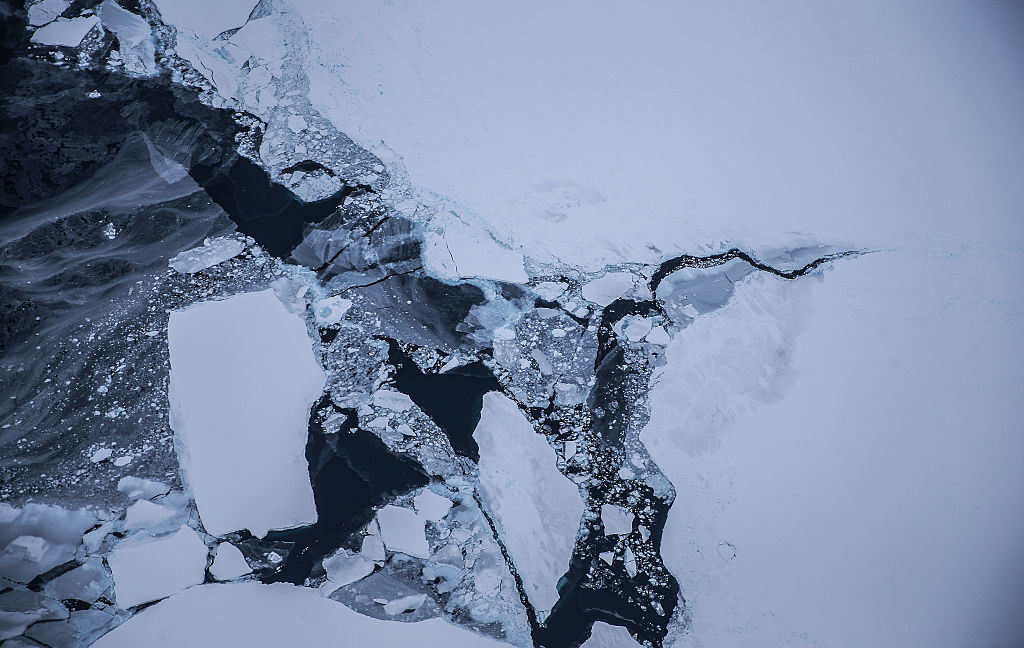
Rapid Antarctic sea ice loss since 2016 is already changing the Southern Ocean’s deep-ocean circulation, researchers say, with potential consequences for global climate, weather patterns, and ecosystems. The speed and persistence of the decline suggest that the ocean around Antarctica may be entering a new state, although scientists caution that it is not yet clear whether the changes are permanent.
These impacts could include more frequent storms identified in 2024 and changes in ocean heat loss, according to a study. An extensive scientific review published earlier this year concluded that changes in Antarctic sea ice extent “influence not only atmospheric variability but also the global distribution of atmospheric heat and moisture.”
The review said the “speed and persistence” of sea ice loss suggested that the ocean around Antarctica could be transitioning to a new state. Such a transition would likely affect both the Antarctic ecosystem and the global climate system.
Sea ice loss is altering deep-ocean circulation
Michael Meredith, a British Antarctic Survey oceanographer and longtime head of BAS Polar Oceans, said the research showed that Antarctica’s dramatic sea ice loss since 2016 was already affecting the nature and circulation of the deep ocean.
“The Southern Ocean is a critical watershed for all of the world’s oceans,” he said. “This could have global implications as this is the main location where old water is reprocessed into new water.”
The Southern Ocean also plays a “huge role” in absorbing human carbon dioxide emissions, helping slow the rate of climate change in regions where people live, Meredith said. Any disruption to these important ocean cycles requires attention, he added.
Meredith said it is not yet clear whether the changes will be permanent because the observational record is relatively short. However, global climate models used to guide policy still struggle to accurately represent the recent loss of sea ice, highlighting the need for additional research and monitoring.
“Our climate models need to catch up,” he said. “However, if sea ice levels remain low, these changes will continue to spread across the world’s oceans, with ripple effects across climate and ecosystems.”
Changes could affect climate within decades
Related research in recent years has found that deep circulation in the Southern Ocean is slowing, reducing the rate at which new water flows in and cools the deepest parts of the ocean. New research indicates that the upper ocean is changing rapidly in response to sea ice loss, Meredith said.
“That’s important because upper circulation can affect our climate within years to decades, rather than centuries,” he added.
Bob Barwin is an Austria-based reporter who has covered climate science and international climate policy for more than a decade. Previously, he reported on the environment, endangered species, and public lands for several Colorado newspapers, and also worked as editor and associate editor for a community newspaper in the Colorado Rockies.
This story was originally published by Inside Climate News.
Source: arstechnica.com