


11th-Century Pendant Blends Christian and Pagan Imagery in a Rare Archaeological Find
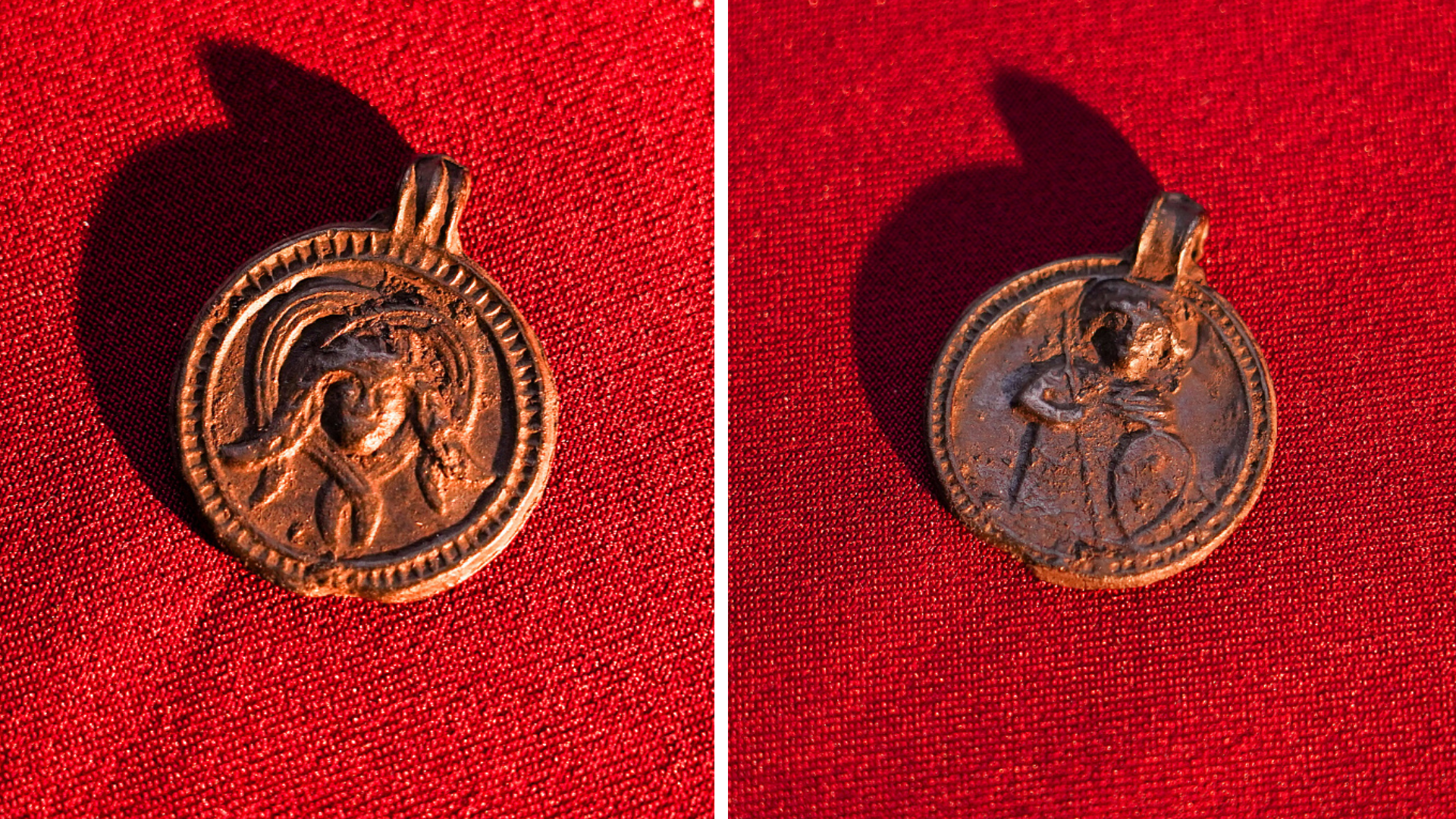
Archaeologists excavating a medieval settlement in northwestern Russia have uncovered an unusual 11th-century pendant that combines Christian and pagan imagery. It is the oldest known amulet of its type found in the region.
The double-sided copper-alloy pendant was discovered during summer excavations in Staraya Russa, a historic town located between Moscow and St. Petersburg, according to a statement from Novgorod State University.
One side shows a Christian saint, while the other depicts a woman’s head with snake-like hair—a figure that resembles Medusa from Greek mythology.
What is a Russian “snake pendant”?
Known in Russian as a “snake amulet” or “snake pendant,” this type of jewelry typically pairs a Christian image with a serpent or mythological figure. Four other examples are known from Christian sites in the area, but they date from the 12th to the 14th centuries.
Because the newly discovered pendant was found in 11th-century layers, it suggests that an early Christian community existed in Staraya Russa earlier than previously thought.
“The main feature of the serpentine pendant is the combination of images that, from a strictly arbitrary point of view, are incompatible,” Sergei Tropov, director of the Archaeological Research Center at Novgorod State University, said in the statement.
One side of these pendants generally features a Christian figure—such as Jesus, the Virgin Mary or a saint—while a serpent is prominently represented on the opposite side.
A warrior saint and a possible Medusa figure
The front of the newly discovered pendant depicts a warrior saint carrying a spear and shield. Tropov linked the image to St. Theodore Stratelates, also known as Theodore of Heraclea.
According to church documents, Theodore was famous for killing a giant serpent that terrorized his homeland in Asia Minor. The back of the pendant shows a woman’s head with snake-like hair, although researchers cannot determine whether it specifically represents Medusa.
“The ‘irreconcilable’ image in this case could symbolize the victory of the forces of light over the forces of darkness,” Tropov said.
Evidence of a complex religious landscape
The tradition of serpentine pendants probably reached Russia from the Byzantine Empire. The newly found example was made from copper rather than more expensive silver or gold, suggesting that it may have belonged to middle-class people who lived in medieval mansions in Staraya Russa, Tropov said.
The pendant’s combination of Christian saints and pagan mythological imagery reflects the complex religious landscape of Russia around a thousand years ago. Although Christianity took root in the region, some people continued to preserve older pagan traditions and symbols.
Source: www.livescience.com