


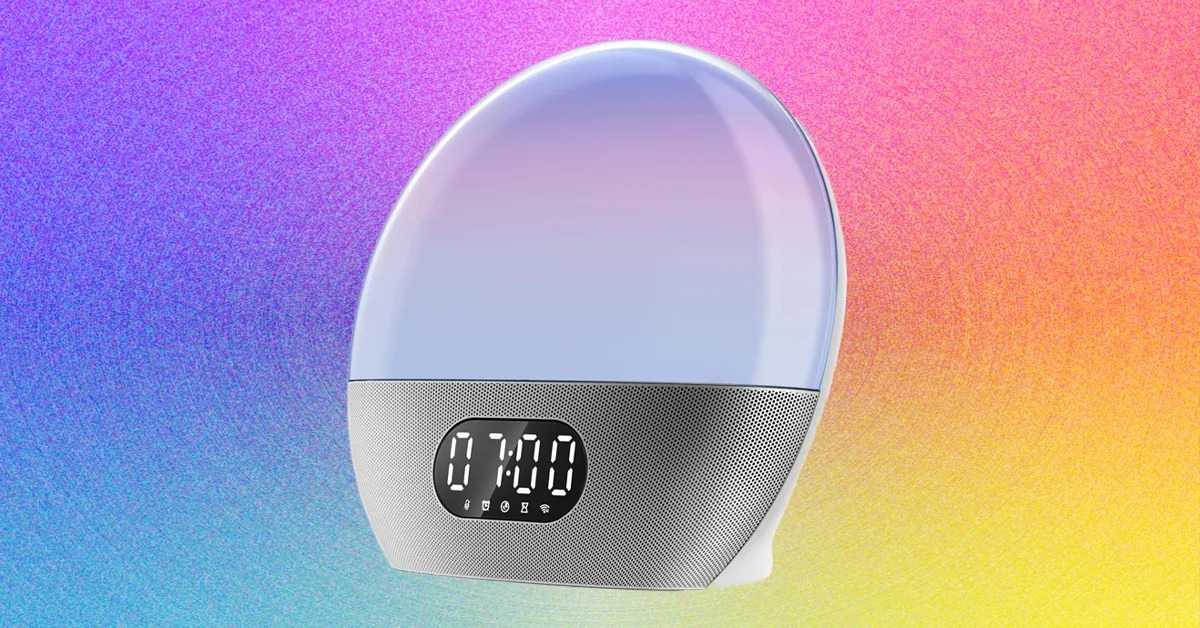
Sunrise alarm clocks are designed to make waking and sleeping more gradual by combining timed light with sounds, alarms and, on some models, a bedside-lamp function. Features vary considerably by price: some devices include sunset routines, radios and many sound options, while others offer only basic alarms. Choosing the right model depends on whether you need help falling asleep, a bright bedroom lamp, particular alarm sounds or app control.
Features to look for in a sunrise alarm clock
More expensive sunrise alarm clocks generally offer more features than cheaper models. Consider how you plan to use the device before deciding how much to spend.
Sleep and relaxation features
If you have trouble falling asleep, look for a model with a sunset routine or other relaxation features. A gradual dimming cycle and calming sounds can help establish a consistent bedtime routine.
Brightness and lamp functionality
If you want one device to serve as both an alarm and a bedside lamp, choose a brighter model with simple controls for switching on the lamp. Check the specifications carefully, because not every sunrise alarm has this feature. Small, inexpensive models may not be powerful enough to illuminate an entire bedroom.
Alarm sounds and audio options
Most sunrise alarm clocks include some sound-machine functions, but the number of sounds varies. Cheaper models typically offer only a few options and may not include the sound you prefer. If you want more flexibility, check the number and types of sounds before buying.
App and Wi-Fi control
Some sunrise alarms do not support companion apps or Wi-Fi. Apps are not essential for using a sunrise alarm, but they can make setup and scheduling more convenient. Models from Casper, Hatch, Loftie and WiiM offer app-based setup options.
Lumie Bodyclock Luxe 700FM
The Lumie Bodyclock Luxe 700FM is a large, bright sunrise alarm with a stylish design and a dedicated lamp-mode button. Its light is bright enough to illuminate a bedroom like a regular lamp, making it useful beyond its alarm function. The clock also includes sunrise and sunset settings, 27 sound options, a built-in radio and storage for five favorite radio stations.
Its main limitations are the 24-hour clock and the lack of Wi-Fi or app support. The time must be set manually, including when daylight saving time changes. The device is listed at $259 through Amazon.
For a lower-cost alternative, the Lumie Shine 300 costs $169. It is smaller and produces less sound, but offers otherwise similar functionality.
Source: www.wired.com