


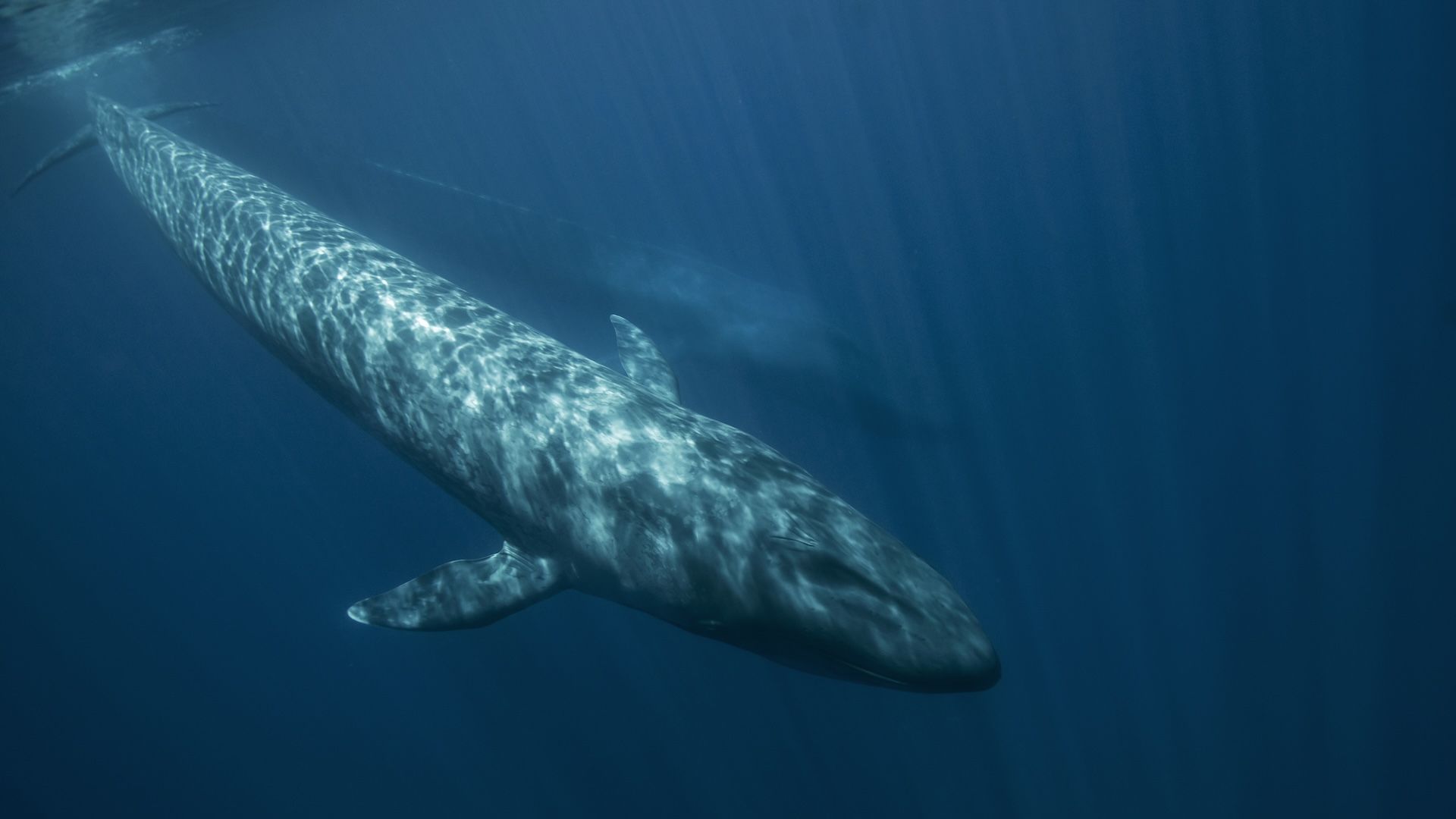
Researchers spent nine months searching waters around the Galápagos Islands for blue whales, but did not find or tag a single animal. The expedition, conducted from October 2025 to July 2026 in areas where blue whales have historically been recorded, coincided with unusually warm ocean conditions linked to El Niño. Scientists suspect the whales may have moved south toward cooler, more productive waters where krill is more abundant, rather than having died.
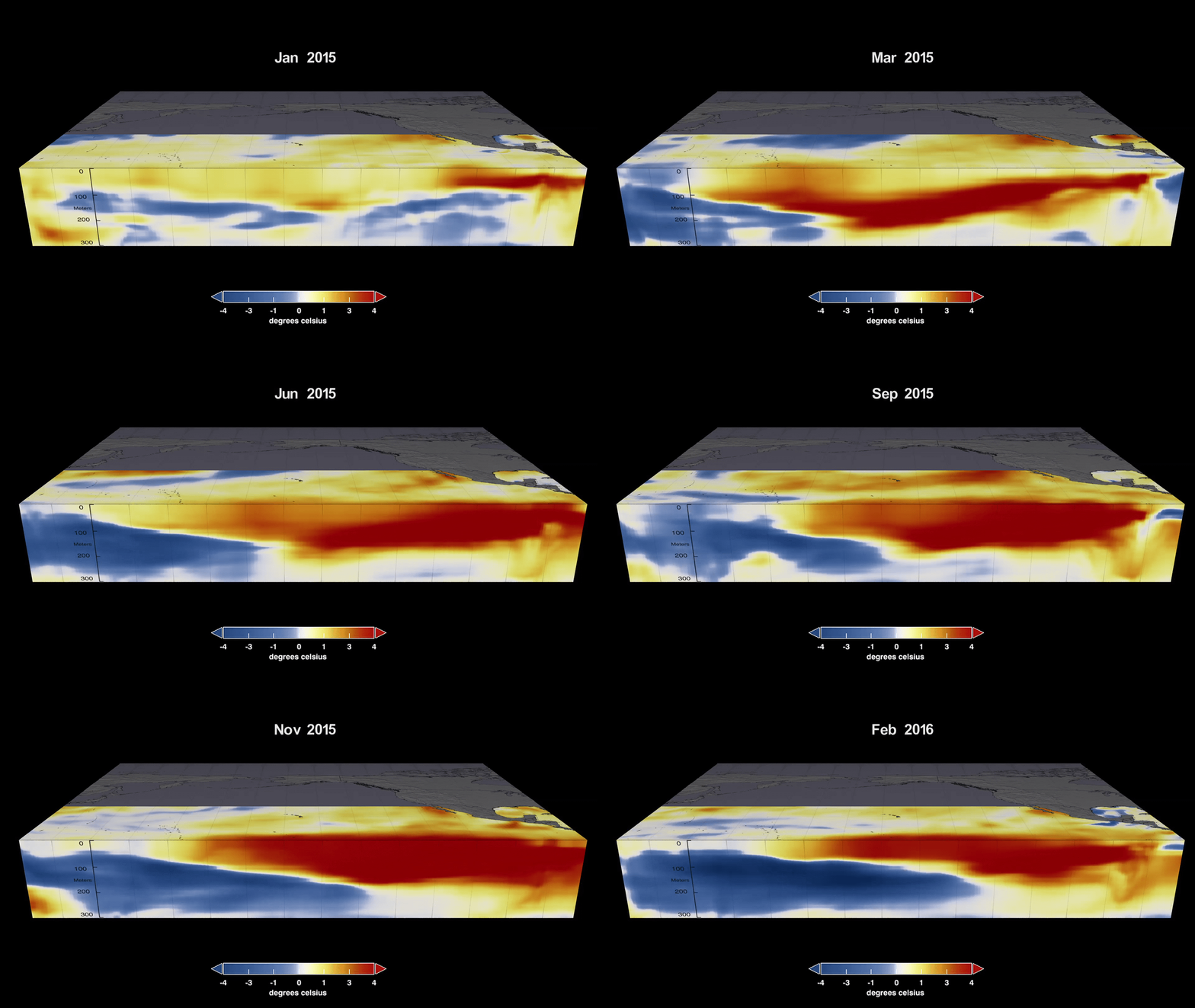
Sea-surface temperatures reached 82 degrees Fahrenheit (28 degrees Celsius) during the expedition. At a depth of about 330 feet (100 meters), water temperatures ranged from 66 to 67 F (18.9 to 19.4 C), as much as 9 F (5 C) warmer than normal for that time of year.
That unusual warmth may have changed where blue whales can find food and, consequently, where they travel. Researchers think the whales may be seeking cooler waters with greater biological productivity.
“The hypothesis is that the whales are staying in more productive areas,” said Daniela Alarcón, the expedition leader and a researcher at the University of San Francisco de Quito’s Galápagos Campus and Galápagos Science Center. “In the slightly cooler waters further south.”
The whales may have moved off the coast of Peru or to another area where researchers are unlikely to find them. In this scenario, Alarcón said, the unusually warm water around the Galápagos could act as a “temperature wall,” preventing the animals from foraging there.
Why water temperature matters
Blue whales (Balaenoptera musculus) can consume up to 12,100 pounds (5,500 kilograms) of krill — the small crustaceans that make up their main food source — each day. They therefore need to locate areas with enough prey to sustain them.
“These are very large animals, so they need to be moved to areas where they can continue to feed,” Alarcón said.
It is not yet clear whether this year’s El Niño caused a shortage of krill in waters off the Galápagos, but indirect evidence points to a possible mismatch between the whales and their prey.
“I thought that if I tried harder, I might be able to find one. But we searched and searched and searched and found nothing.”
Daniela Alarcón, expedition leader
Blue whales generally feed in water around 71 F and have been observed this season at depths of about 197 feet (92 meters) around the Galápagos Islands, according to the source article. Meanwhile, peaks in chlorophyll concentration — an indirect indicator of phytoplankton abundance, and therefore of the food available to krill — were much higher between 12 and 37 meters (39 and 121 feet) below the surface.
Because the researchers did not measure krill abundance directly, the data suggests but does not confirm that the whales’ preferred feeding depth did not coincide with the depth where their prey was concentrated.
“Honestly, we have never encountered such an unusual situation before,” said Juan Pablo Muñoz, a marine biologist at the University of San Francisco de Quito who also took part in the expedition.
A continuation of a recent trend
The whales’ absence did not come as a complete surprise. Sightings reported to the Whale Galápagos Citizen Science Network had already begun to decline between August and September 2025. Two blue whale sightings were reported in May and June 2026, but researchers could not confirm either one despite conducting additional searches.
“We knew the situation was not the same, but we thought that if we tried harder, we might be able to find some individuals,” Alarcón said. “But after many searches, we couldn’t find anything.”
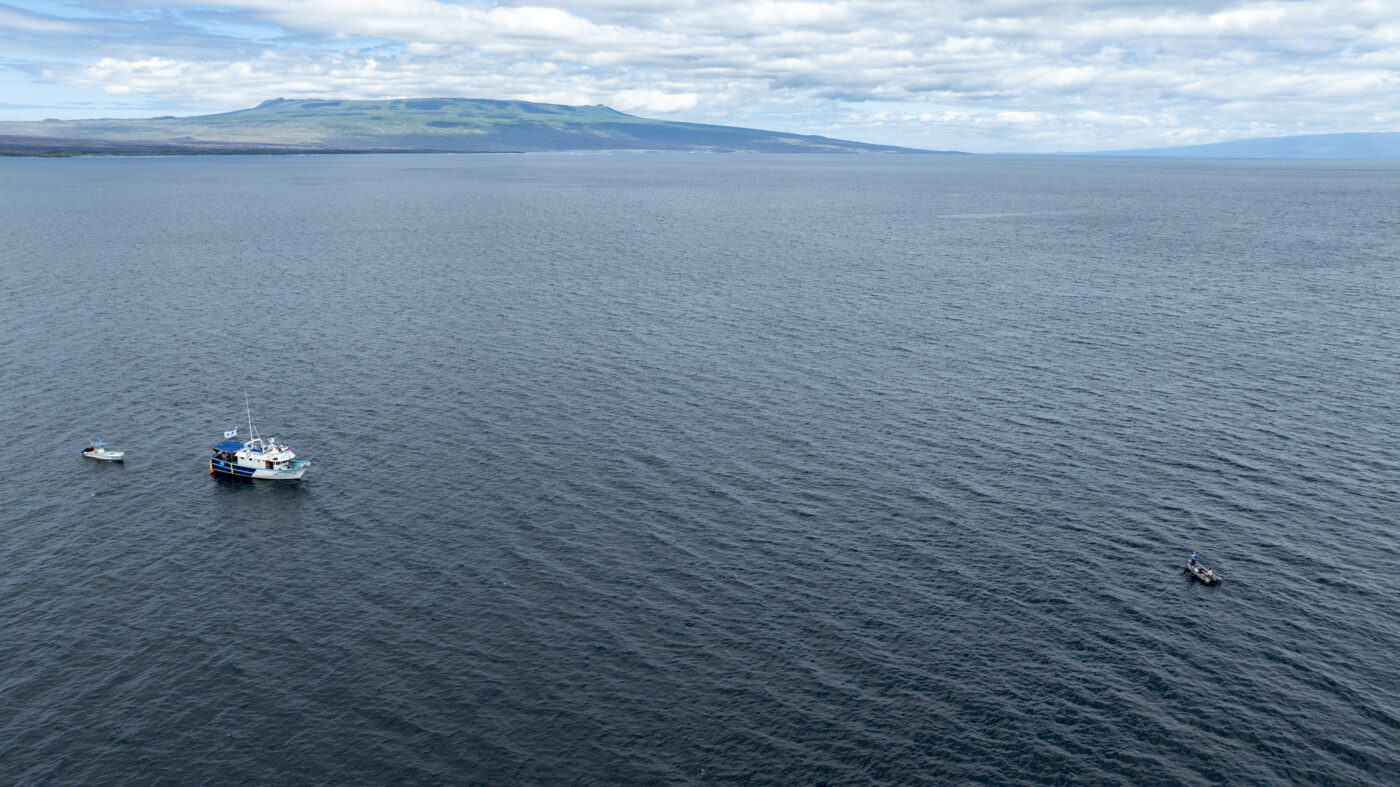
Some of the difficulty may be explained by the animals’ elusive behavior. Humpback whales (Megaptera novaeangliae) are generally easier to locate, Muñoz said. In some places, they can be seen from shore or after a 30-minute boat trip. Blue whales, by contrast, rarely approach mainland Ecuador’s coast and usually remain far from population centers in the Galápagos.
Blue whales respond to temperature changes
Fernando Felix, a marine biologist at the Pontifical Catholic University of Ecuador who was not part of the expedition, said he was not surprised by the results. Felix is also a researcher at the Museo de la Whale (Museo Ballenas).
“We already knew that there were no blue whales in the Galápagos Islands,” Felix told Live Science.
He said there is historical precedent for this behavior in the southeastern Pacific. The 1982–1983 El Niño event caused substantial ocean warming and coincided with declines in several species, including blue whales, fin whales (Balaenoptera physalus) and Bryde’s whales (Balaenoptera brydei). Records showed the whales moving south.
“We might think that because they’re ‘just animals’ that they don’t have a memory or don’t understand these processes, but we’re wrong,” Felix said. He explained that when temperatures become abnormally high, vertical mixing in the ocean is disrupted and food becomes less available in the Galápagos. The whales respond to those environmental conditions by migrating toward areas where feeding conditions appear better.
Rather than indicating mass mortality, the whales’ disappearance may reflect changes in their movements as they respond to shifting ocean conditions, Felix said.
“I don’t think the whale is dead,” he said. “They just didn’t go to the Galápagos region. They went to other places where conditions were better.”
Felix suggested that environmental changes may also have affected dolphin movements. The animals may have migrated to colder waters where food was more abundant, or their groups may have dispersed.
When will the blue whales return?
The effects of El Niño are expected to continue for several months. “From January to May 2027, warm water will come from the north and warm water will come from the west,” Felix said. “This is going to hit us very hard.”
Once El Niño weakens and ocean conditions begin to return to normal, blue whales, humpback whales and dolphins will likely return to Galápagos waters, Felix said. Pelagic fish — species that live in the water column rather than on or near the seafloor — such as tuna, marlin, anchovies and sardines are also expected to return.
Muñoz agreed. Krill populations can recover within one to three months after cool, nutrient-rich seawater rises to the surface. More whale sightings were recorded in the years following the 2015 and 2023 El Niño events. Based on those precedents, Muñoz suggested that 2028 could be a promising year if cold water returns to the surface.
“The system has recovered,” he said.
Felix compared El Niño to restarting a computer. “It resets the environment and allows ecological processes to start again,” he said. He remains confident that blue whales will return to the region.
“I can guarantee you that at this point in 2028, there will be a large population of blue whales,” Felix told Live Science.
Source: www.livescience.com