


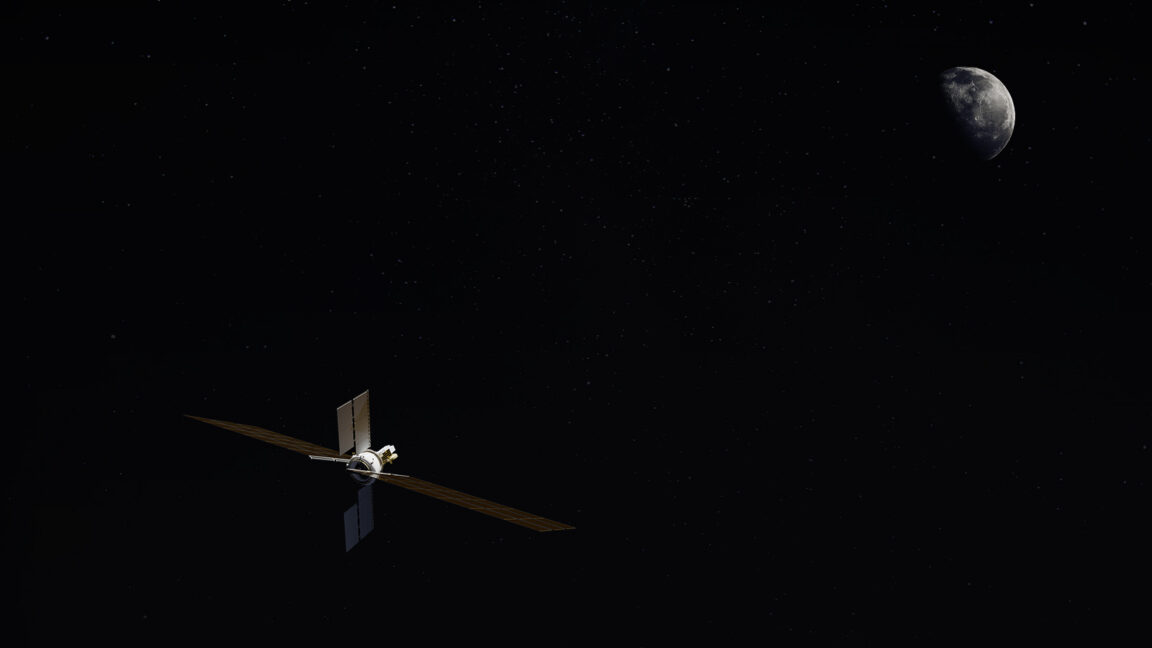
Three former SpaceX engineers are developing spacecraft designed to use water as propellant, coolant, and radiation shielding for transportation between low-Earth orbit, geostationary orbit, and the Moon. Robert, Ryan, and Kirby Carlisle founded Argo Space in late 2022, but their first demonstration mission, Navigator, encountered a solar-array failure after launching on a Falcon 9 rideshare in July, leaving the spacecraft without enough power to test its propulsion system.
Building spacecraft instead of rockets
Robert, Ryan, and Kirby Carlisle worked at SpaceX during the Falcon 9 era, witnessing the transformation of the global launch industry from inside the company.
The brothers launched, modified, and sold rockets. However, when they left SpaceX to establish their own space company—a lifelong ambition for the Carlyle brothers—they decided not to build rockets. Instead, they focused on spacecraft.
In late 2022, the Carlyle family founded Argo Space to develop infrastructure in space. The company’s vision is to reduce the need to transport propellants from Earth, both for travel through the atmosphere and for movement within space. Argo selected water as its propulsion method because it is found throughout the solar system and could potentially be extracted from the Moon.
“We founded a company based on water,” Robert Carlyle said in an interview.
A water-based transportation network
Access to water is central to Argo Space’s plan to create a transportation network linking low-Earth orbit, geostationary orbit, and the Moon. The network could support more affordable logistics services, including satellite replenishment, refueling, repair, and redeployment.
In Argo’s concept, water would serve purposes beyond propulsion. It could also act as a coolant and radiation shield. Much of the spacecraft, including its thrusters and avionics, would be cooled using water. This could increase the spacecraft’s propellant mass fraction, allowing more of its mass to be dedicated to propellant and enabling it to travel farther and perform more work.
“In the long run, this waterborne transportation will provide a commercial incentive, a profit motive to go and extract from shallow gravity wells on the Moon,” Robert Carlyle said.
When even former SpaceX users cannot find their Falcon 9
Argo Space flew its first demonstration mission, named Navigator, as a Falcon 9 rideshare payload in July. The company successfully established contact with the spacecraft, but one of its two deployed solar arrays failed.
Controllers spent roughly half a day troubleshooting the issue and collecting data about the spacecraft’s condition. However, Navigator’s power level remained negative, and its batteries were depleted. The spacecraft did not have enough energy to test its propulsion system.
Source: arstechnica.com