


The Future of Quantum Computing: Insights Beyond the Horizon
The Department of Defense may hold the key to predicting the success of PsiQuantum. The Defense Advanced Research Projects Agency (DARPA), known for its pivotal role in technological advancements, is assessing which quantum companies can truly deliver on their promises. Over the past 18 months, program leaders have expressed increased confidence. Joe Altepeter, the program’s former director and a self-proclaimed “quantum skeptic,” shared in March 2025, “I’m more optimistic now than at any point in the last 10 years.” His successor, Micah Stoutimore, added earlier this year that, “By 2033, we will build a utility-scale quantum computer,” referring to systems that generate more value than their operational costs.
DARPA has been rigorously evaluating PsiQuantum’s technology for over a year, placing it into the third phase of a benchmarking initiative that aims to confirm its operational viability. However, for many in the industry, PsiQuantum remains an enigmatic entity.
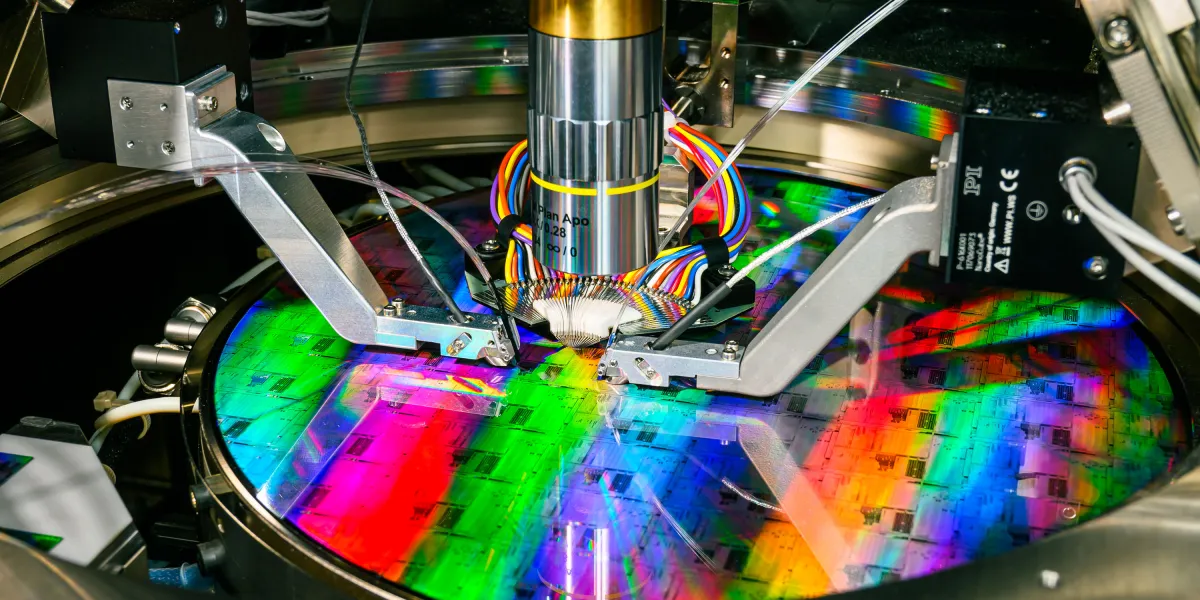
Image Courtesy of Cyquantum
“It’s challenging for outsiders to assess,” comments Scott Aaronson, a theoretical computer scientist from the University of Texas at Austin. His popular blog often discusses various industries. In contrast, companies like Google and Quantinuum consistently publish data showcasing their advancements, laying the foundation for building larger quantum systems.
Where other companies focus on incremental improvements, PsiQuantum is set on ambitious commercial goals: developing quantum computers with one million qubits. This scale is expected to unlock research possibilities that remain unattainable with traditional computers. Although PsiQuantum aims to distinguish itself with this industrial-scale ambition, IBM has also been advancing its capabilities, previously targeting a large-scale error correction system by 2028, a deadline that has recently been adjusted to 2030.
Empowering Industries with Quantum Solutions
Beyond merely constructing quantum machines, PsiQuantum is dedicated to aiding global industries in formulating strategies to utilize this groundbreaking technology. The company has forged partnerships with prominent clients such as defense powerhouse Lockheed Martin for materials design, automotive giant Mercedes for battery innovations, and aerospace leader Airbus.
Ernst from PsiQuantum emphasizes that the lack of lab computers among these companies is not a hinderance. “Next year or the year after, the PlayStation 6 from Sony will debut, and game developers are already creating content for it,” he states. “It’s a similar concept.” This analogy, while simplistic, underscores that quantum algorithms can address research challenges even without the hardware being fully developed.
The essence of PsiQuantum’s mission is to enable quantum information specialists to transform design challenges—like the battery specifications for Mercedes’ electric vehicles—into solvable algorithms. The firm provides a software package known as build, allowing companies to create their own algorithms that may one day operate on these quantum machines.
The trajectory of quantum computing hinges on the development of these algorithms. While quantum computers are often viewed as universal accelerators, they excel only at specific problems. For them to provide solutions, questions must be articulated using tailored algorithms. Researchers dedicate their entire careers to crafting these algorithms, even in the absence of the necessary computing hardware. Fundamentally, these algorithms leverage the principles of quantum mechanics to manipulate probabilities in ways that traditional computers cannot achieve.
Source: www.technologyreview.com