


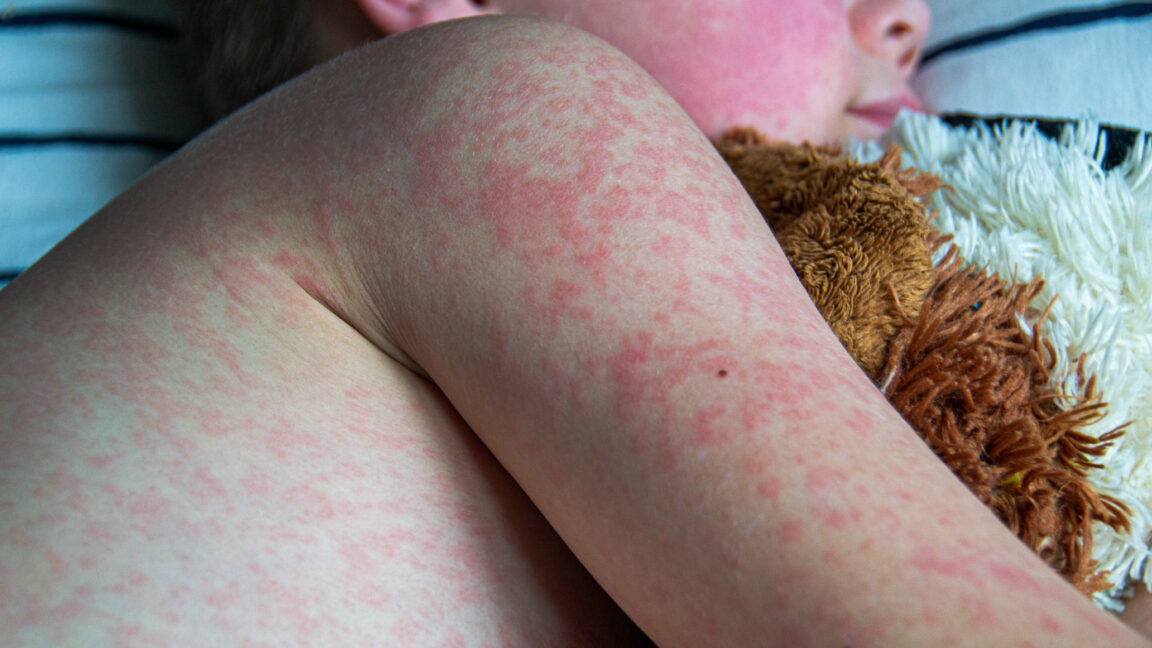
Centers for Disease Control and Prevention scientists were reportedly prevented from issuing an urgent alert to clinicians about the serious risks of measles during pregnancy, according to The Washington Post. The report came days before what it described as the seventh preventable measles death, amid concerns that approval delays are obstructing public health communication.
CDC measles alert reportedly blocked
Expert scientists at the CDC, which is overseen by Secretary Kennedy, reportedly sought to send an advisory through the CDC Health Alert Network about the risks and management of measles cases during pregnancy. However, officials told the Post that the CDC director’s office refused to provide the approval required to issue the alert.
Given the success of earlier vaccines and vaccination campaigns, many clinicians have never encountered a measles case during pregnancy in their careers. The infection nevertheless poses a serious, potentially life-threatening risk to both the pregnant woman and the fetus.
After the alert was blocked, scientists attempted to publish the information in the CDC’s Morbidity and Mortality Weekly Report (MMWR). The publication’s peer-review process takes longer than issuing recommendations, and the Post reported that vaccine-related studies already approved for publication in the MMWR have also faced suspicious delays. Scientists are considering releasing the information outside the agency to avoid the complicated approval process.
HHS says CDC is tracking measles
In response to the Post report, an HHS spokesperson told Ars Technica that the CDC is closely monitoring measles and is “guiding physicians and public health officials to protect mothers and children.” The spokesperson added that information about measles “goes through CDC’s scientific review and approval process, which informs publication decisions and timing.”
“Secretary Kennedy and CDC Director Dr. Erica Schwartz remain clear that the MMR vaccine is the most effective way to prevent measles,” the HHS spokesperson said in a statement emailed to Ars Technica after publication.
Source: arstechnica.com