


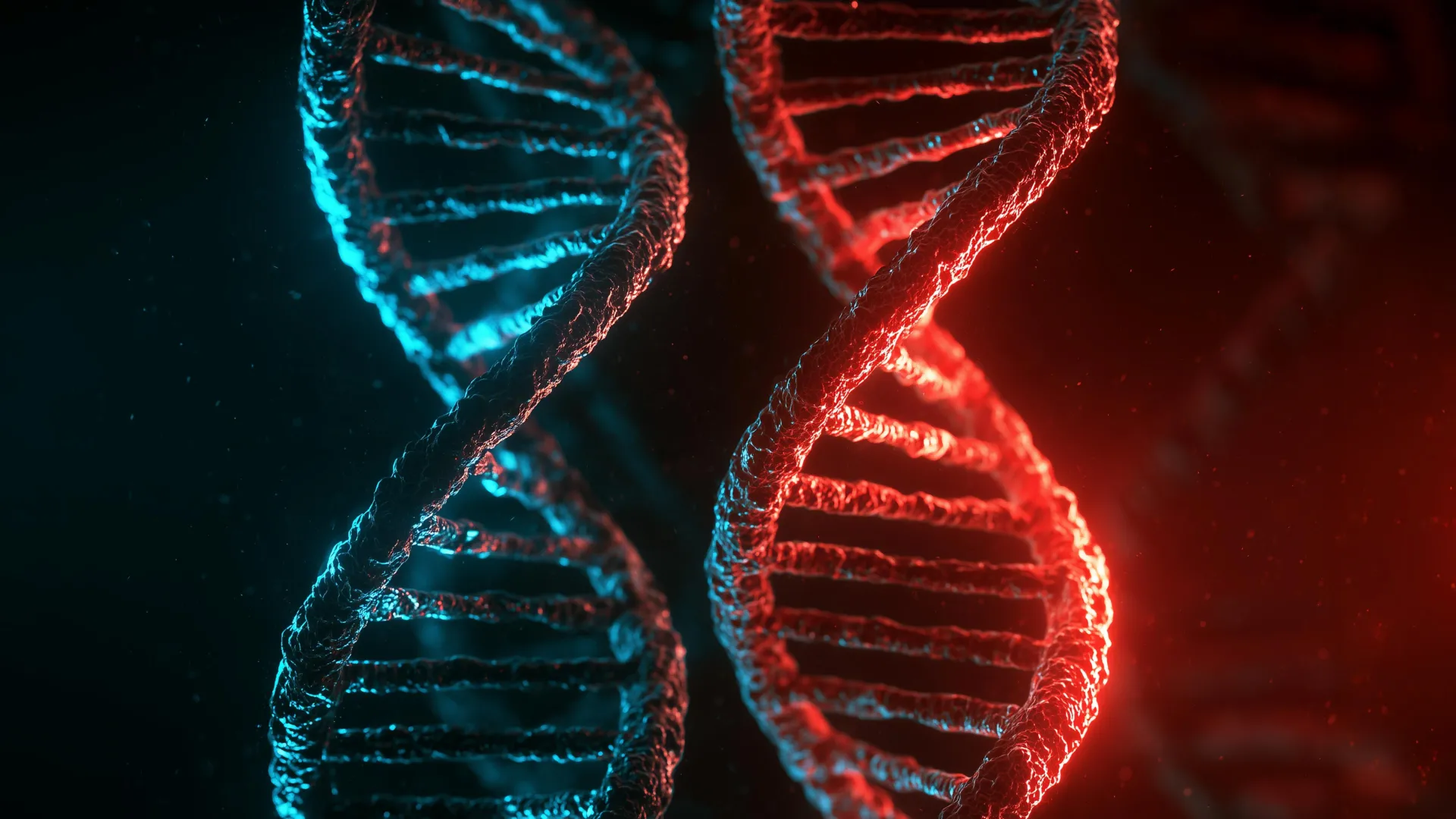
Scientists from the University of Strathclyde and Durham University have proposed what they believe is the first method for detecting “mirror life”—a hypothetical form of life made from molecules that are reversed versions of those used by organisms on Earth. The technique would analyze distinctive light signals produced by chiral molecules, potentially allowing researchers to distinguish ordinary organisms from their mirror-image counterparts before such a system, if it ever emerged, posed a threat.
Why mirror life could pose a biological threat
Mirror life does not currently exist, but some experts regard it as a serious potential biological safety concern. Artificial organisms built from mirror-image biomolecules could interact with Earth’s ecosystems in unpredictable ways and might bypass some natural defenses that protect people, animals and plants.
Although mirror life is considered unlikely to emerge, its possible effects could be severe enough to justify developing detection methods in advance. Concerns about the concept have led scientists to recommend restrictions on research aimed at creating organisms that can reproduce using mirror biomolecules.
The potential danger has also attracted attention from governments and international bodies, including the UK Government Science Office and the United Nations Secretary-General’s Scientific Advisory Committee.
The role of molecular handedness
The underlying science involves a property called chirality, often described as a molecule’s “handedness”. Just as a person’s left and right hands are mirror images that cannot be perfectly aligned, some molecules can exist in two forms with the same chemical composition but different three-dimensional configurations.
These structural differences can have significant biological effects. Although two mirror-image versions of a molecule contain the same atoms connected in the same order, the human body can respond to them very differently. A drug, for example, may successfully treat a disease while its mirror-image counterpart is ineffective or even harmful.
Scientists are concerned that organisms assembled by reversing biological components could interact with existing life in unexpected ways.
The researchers emphasize that mirror life remains entirely hypothetical. Their proposed detection method is intended as a preventive measure, not as a response to an existing biological threat.
How light could reveal mirror life
The proposed approach relies on circularly polarized luminescence (CPL), a phenomenon that can reveal the chirality of certain materials or biological structures.
Light can display polarization patterns that rotate in opposite directions. By analyzing those patterns, researchers can obtain information about the three-dimensional arrangement of molecules.
The underlying concept has a familiar application in the polarizing technology used by modern 3D movie glasses to create the illusion of depth.
The research was published in Royal Society Open Science under the title “Circularly Polarized Luminescence (CPL) as a Contingency Assay for the ‘Mirror Life’ Biohazard”. It was led by Dr Lewis McKenzie from the School of Pure and Applied Chemistry at the University of Strathclyde, in collaboration with Professor Robert Pal from the University of Durham.
Dr McKenzie said: “We do not expect mirror life to appear tomorrow, but if it were to occur, there could be serious consequences and it makes sense to develop detection methods before they are needed. Professor Pal and I had been working on CPL technology since before the recent concerns became prominent, and preventing mirror life was an obvious fit for our research.”
A molecular fingerprint for detecting mirror life
To identify potential mirror organisms, the researchers propose using fluorescent probes that attach to specific structures inside cells.
When the probes bind to their targets, they generate a characteristic CPL signal. Scientists could analyze the resulting patterns to determine whether a biological sample contains the molecular handedness associated with normal terrestrial organisms or its mirror-image counterpart.
The optical signal could act as a molecular fingerprint, revealing differences that may be difficult to detect by other means.
However, relying on a single fluorescent probe could produce misleading results. To improve reliability and reduce the risk of false readings, the research team proposes combining several probes designed to recognize different cellular structures.
By examining multiple signals together, researchers hope to develop a more dependable way to distinguish conventional life from hypothetical mirror-life forms.
Testing the technology without creating mirror organisms
A key advantage of the proposed technology is that scientists can begin testing and improving it with ordinary biological samples. They would not need to manufacture mirror organisms to determine whether the underlying detection principle works.
The researchers also believe the method could eventually be incorporated into several types of scientific instruments, allowing mirror-life screening in different settings.
Professor Pal has already demonstrated laboratory-scale CPL detection techniques using equipment commonly employed to examine large numbers of cell samples, including microscopes, cameras and biological cell-plate readers.
However, a complete detection method specifically designed to identify mirror life has not yet been experimentally demonstrated. Further studies are needed to determine whether the proposed approach can reliably distinguish different forms of molecular handedness in biological samples.
Professor Pal said: “CPL detection is based on the same basic concept that allows modern 3D cinema glasses to create stereoscopic images.
“This CPL detection approach can be applied to many types of systems for cell analysis, such as biological plate readers, microscopes, and cameras. This means that our mirror life assay approach can be generalized to many environments depending on the end user’s needs.”
Source: www.sciencedaily.com