


Climate Change Loss Is Also a Mental Health Crisis
Climate-related loss affects more than homes, crops and livelihoods. It can erode cultural identity, social cohesion, dignity and hope for the future.
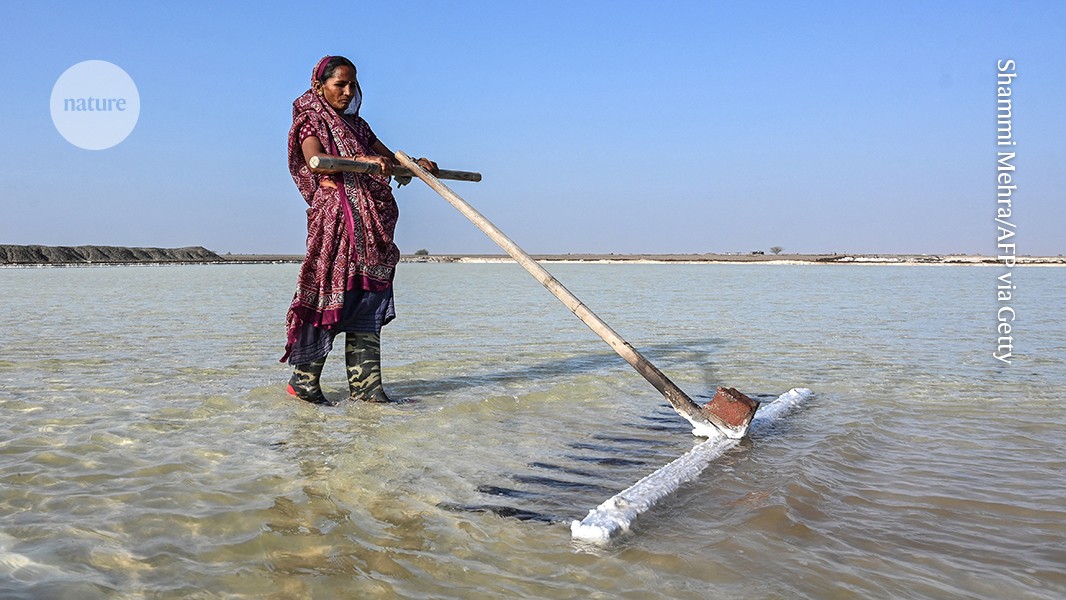
Salt extractors in the Indian state of Gujarat often have to work during extreme heat waves.
My first understanding of climate loss as a mental-health issue did not come from reading a report or attending a summit. It came from listening to people describe what they were afraid of losing.
When working with coastal communities in Kenya, we heard concerns that initially sounded economic: declining fish catches, the destruction of marine ecosystems and diminished livelihoods. But the conversation quickly deepened. Community members spoke of increased insecurity caused by deepening poverty, increased drug use among unemployed youth, gender-based violence, sex tourism and adolescent pregnancy.
People were also concerned about the decline of traditions tied to the sea and knowledge passed down from generation to generation. Community rituals and identities were rooted in fishing livelihoods. What people feared losing was not only their income, but also stability, a sense of belonging and hope for the future.
Climate loss affects identity, belonging and hope
As a clinical psychologist and public-health researcher, I have heard concerns about climate change that extend far beyond housing, crops and livelihoods. People talk about losing their sense of belonging. They worry that their children will grow up separated from the places where their families have lived for generations. They speak of sadness over vanished landscapes, anxiety about an uncertain future and the fatigue that comes from living through repeated crises.
As governments prepare for the next round of negotiations, including the COP31, the 31st United Nations Climate Change Conference, in Antalya, Turkey, in November, I and others are participating in 2026 New York City Climate Week. A conversation about climate-related loss and damage is urgently needed.
Communities are already experiencing irreversible damage, including permanent displacement, ecosystem destruction, the loss of cultural heritage and repeated disasters that undermine resilience. The devastating floods in Nepal last month are a notable example.
Mental health remains missing from climate-loss policy
Mental health is at the heart of these losses, yet it remains largely invisible in the systems designed to address them. When mental health is recognized in climate-change policy, it is usually through adaptation, with a focus on helping people cope with changes that are taking place.
These policies include preparedness, psychological first aid, resilience programmes and stronger health systems. Investments in these areas are essential, but they address only part of the problem.
What happens when people cannot adapt?
What happens if a person cannot adapt? What happens when fishing communities can no longer sustain their livelihoods? People often experience climate change not as a single disaster, but as a gradual erosion of health, livelihoods, social cohesion and dignity.
I have seen this among women salt workers in Gujarat, India. Working in rising temperatures, sometimes above 50 degrees Celsius, is difficult, compounding physical hardship, financial insecurity and chronic stress. The workers are supported by a grassroots union.
Climate loss and damage must include mental health
The United Nations framework for climate loss and damage is one of the few areas of climate policy that recognizes harms that are not purely economic. It offers an opportunity to address these pressures.
Mental health should not be put on the back burner. It should be recognized as a legitimate area for government investment. Climate-related damages should be measured, and institutions should be held accountable for addressing them.
But this raises an uncomfortable question: how do we value mental health?
Source: www.nature.com