


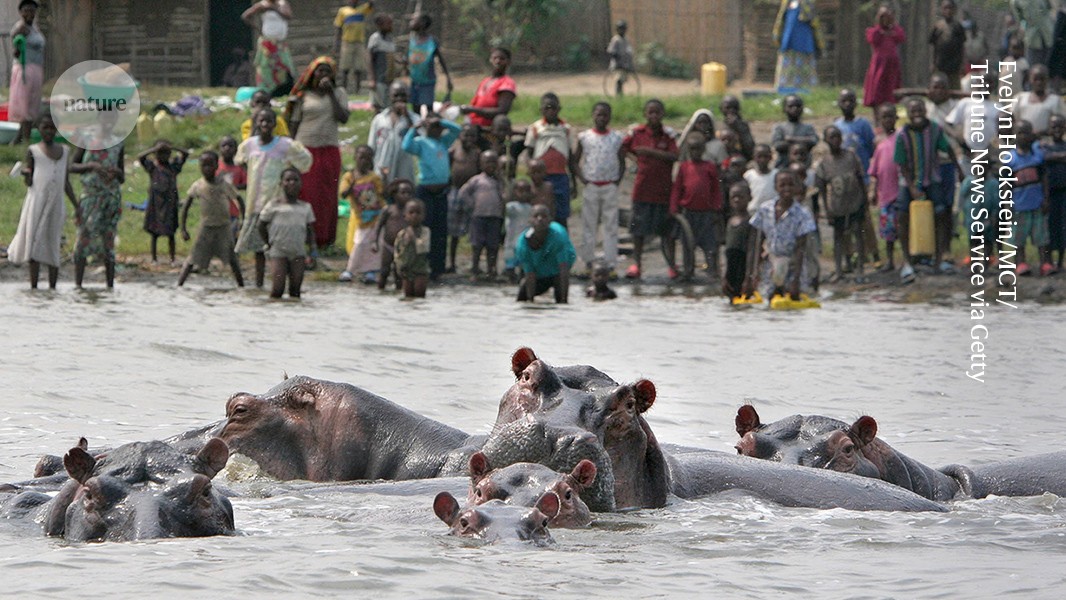
An anthrax outbreak has killed at least 30 hippos in the Democratic Republic of the Congo (DRC) over the past month. No human infections have been reported so far, although authorities are closely monitoring the situation. The outbreak is placing additional pressure on health and conservation teams already dealing with humanitarian challenges, including Ebola and cholera outbreaks and armed conflict in the region.
The first carcass was found in September in Virunga National Park in the eastern DRC. Laboratory tests confirmed that the hippopotamus had died of anthrax, a serious bacterial infection.
Anthrax occurs naturally in soil around the world. Livestock and wild animals can become infected when they encounter anthrax spores. Virunga National Park officials said in a statement that teams were monitoring the affected areas and coordinating the safe handling and disposal of carcasses. They added that no new deaths had been recorded in the previous two weeks.
David Hayman, a disease ecologist at Massey University in Palmerston North, New Zealand, said the main risk to people comes from handling infected carcasses or eating contaminated meat. Anthrax can be treated with antibiotics if it is detected early, but it can be fatal if left untreated.
Although no human infections have been reported during the current outbreak, Charity Mutesi, an epidemiologist at the Uganda National Institute of Public Health in Kampala, said some infections might go undetected. People may choose to remain at home rather than seek treatment at clinics, she said. Herbs are often used for lesions caused by some anthrax infections, while other people seek care from drug shops, private clinics or traditional healers. These providers do not report cases to the country’s disease-surveillance system, Mutesi added.
Recurring outbreaks
The DRC has experienced several anthrax outbreaks affecting animals and people in recent years. In March 2025, an outbreak killed approximately 65 hippos. In the region bordering Uganda, 15 people have tested positive, two of whom have died.
“It’s very worrying that these outbreaks are continuing,” said Ricardo Soares Magalhães, an epidemiologist at the University of Queensland in Brisbane, Australia.
Source: www.nature.com