


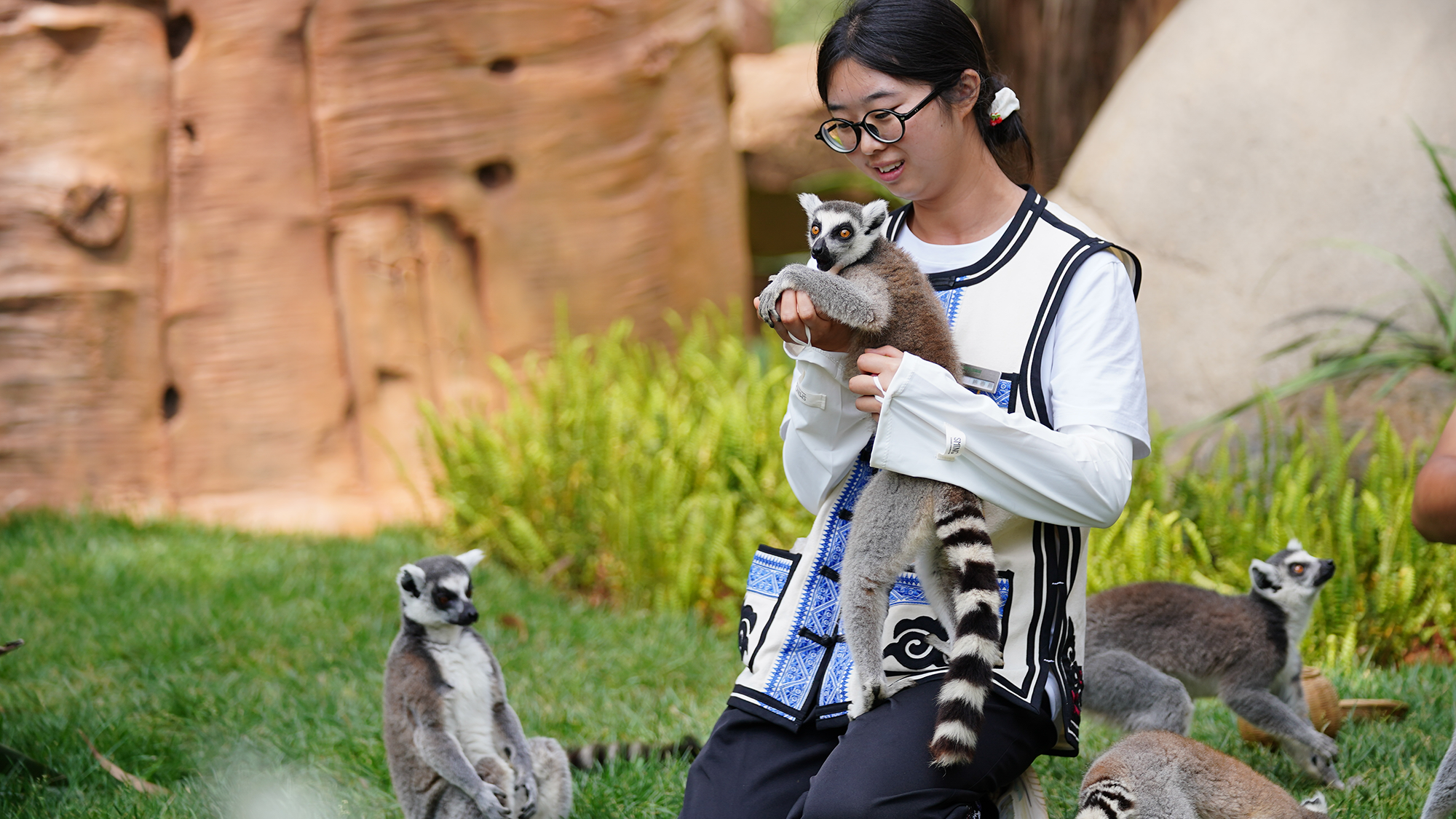
Four lemurs died from human herpesvirus after close contact with people
Four lemurs that had close contact with humans—including one involved in a “lemur yoga” class—developed fatal infections from herpes simplex virus type 1 (HSV-1), according to a new study.
HSV-1 is extremely common in humans. Most infected people experience no symptoms or develop cold sores. However, the virus can cause severe and sometimes fatal disease in nonhuman primates that have not evolved alongside it.
All four lemurs in the study developed encephalitis, an inflammation of the brain, and later died. Previous research has shown that herpesvirus infections in primates can cause serious illness and become deadly.
The report is the first molecular confirmation of HSV-1 infection in a lemur, based on polymerase chain reaction (PCR) testing. Earlier reports had identified human herpesvirus infections in lemurs using other laboratory methods, but had not confirmed the virus through molecular analysis.
Latest videos fromLive Science
Researchers say the cases demonstrate the dangers of unusually close contact between humans and captive or privately owned primates.
“Humans have a very high rate of HSV-1 infection, and the virus is highly adapted to us,” Dr. Jim Wellehan, a professor at the University of Florida College of Veterinary Medicine and co-author of the study, told Live Science. He said HSV-1 can be far more dangerous when it infects lemurs and other primates that lack a long evolutionary history with the virus.
How “lemur yoga” may have exposed one animal to HSV-1
In a study published in July in the Journal of Zoo and Wildlife Medicine, Wellehan and his colleagues confirmed HSV-1 in two ring-tailed lemurs (Lemur catta), one black-and-white ruffed lemur (Varecia variegata) and one ruffed lemur hybrid (Varecia rubra × Varecia variegata). All four animals were privately owned.
The study cases occurred over an eight-year period in the United States. One of the infected animals had been used in a “lemur yoga” session, in which people practiced yoga while lemurs moved around the room.
Wellehan said the infection was almost certainly linked to close human contact during the session, although the researchers could not prove that transmission occurred during one particular class. The other three lemurs were exotic pets that also had frequent contact with people.
“People are doing yoga while lemurs are walking around, and that is not good for the lemurs,” Wellehan said in a statement.
HSV-1 is not limited to lemurs. The virus has previously caused fatal disease in captive and wild primates, including marmosets, saki monkeys and gibbons. Human herpesviruses rarely infect other primates, but the infections can be severe when they do occur.
“Herpesviruses have remarkable host fidelity,” Wellehan said in a statement. “They generally do not make large jumps between host species.”
HSV-1 usually causes few symptoms in humans, but cold sores are a common sign of infection.
(Image credit: Basak Gurbuz Derman via Getty Images)
How HSV-1 causes fatal encephalitis in lemurs
HSV-1 and its close relative HSV-2 spread primarily through close contact. HSV-1 is most often transmitted through saliva, contact with the mouth or skin, or exposure to cold sores. Most adults have been infected with HSV-1, and the virus can spread even when no symptoms are visible.
Because lemurs have not co-evolved with HSV-1, frequent direct contact with humans may put them at particular risk, the researchers said. The virus is not typically spread simply by sharing the same airspace; more direct contact is generally required.
The infected lemurs displayed symptoms including lethargy, loss of appetite, ulcers in the mouth and throat, and difficulty breathing. One ring-tailed lemur experienced repeated, prolonged seizures and died two days after being examined by a veterinarian.
Post-mortem examinations revealed inflammation and tissue destruction in the animals’ brains. Researchers also found intranuclear inclusions, abnormal structures inside cells that are associated with herpesvirus infections.
Additional testing detected HSV-1 genetic material and viral proteins in the animals’ brain cells, providing evidence that the virus caused the encephalitis. Two lemurs tested positive through oral or mucosal swabs collected while they were alive, while the other two were diagnosed after death.
These results suggest that oral and mucosal swabs could help veterinarians identify HSV-1 infections in living lemurs in the future, rather than relying solely on post-mortem testing.
Humans and HSV-1 have a long evolutionary relationship, but lemurs do not. That difference may help explain why an infection that is often mild in people can cause devastating neurological disease in lemurs.
Researchers said accredited zoos generally use strict biosecurity procedures to reduce the risk of pathogens spreading between humans and animals. The cases instead highlight the broader risks of keeping exotic primates as pets or bringing them into unusually close contact with people.
“It might be fun, but it is not in the lemur’s best interest,” Wellehan said of activities that encourage direct interaction between people and lemurs.
Hauck, H., Fraess, G. A., Lo, M., Gomez, Z. P., Dark, M. J., Farina, L. L., Edwards, J. F., O’Connell, A., Lisboa, C., Gertje, H., and Wellehan, J. F. (2026). Human alphaherpesvirus 1 in two ring-tailed lemurs (Lemur catta), one black-and-white frilled lemur (Varecia variegata), and one Varecia hybrid lemur (Varecia variegata × Varecia rubra). Journal of Zoo and Wildlife Medicine, 57(3), 480–489.
What do you know about chimpanzees and great apes? Test your knowledge with our primate quiz.
Source: www.livescience.com