


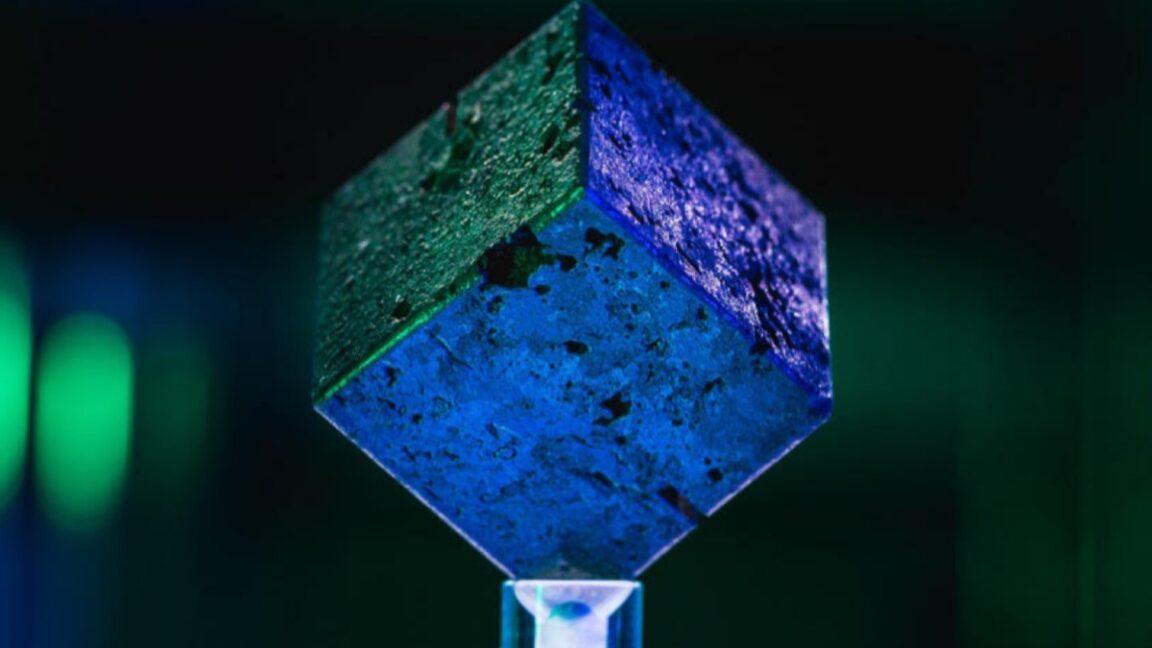
A new analysis of Nazi Germany’s B8 nuclear reactor experiment concludes that the project required substantially more uranium and heavy water than Werner Heisenberg had estimated. By examining archival records and two surviving uranium cubes, researchers found that the reactor would have needed between 1,292 and 1,775 cubes to reach criticality—and that the materials available to German scientists were likely inadequate.
Reassessing the B8 reactor
Coase and Hiebert previously discovered a box of declassified documents on German uranium in the National Archives, along with about 400 additional uranium cubes from another nuclear reactor experiment conducted by the Gottow group. They concluded that Germany possessed enough uranium inventory for the B8 reactor to reach criticality, suggesting that the country’s secretive and isolationist research structure hindered its nuclear program because the two groups did not share information or resources.
The latest paper builds on that earlier research but reaches a different conclusion. Koeth, Hiebert, and their coauthors examined historical records, technical reports, correspondence, and other archival material. They also analyzed two surviving uranium cubes to investigate the uranium, heavy water, and graphite blocks used in the B8 experiment.
More uranium and heavy water were needed
The researchers determined that the B8 reactor required between 1,292 and 1,775 uranium cubes to reach criticality. It also needed twice as much heavy water as the Norsk hydroelectric power plant in Vemork, Norway, produced—the only source of heavy water available at the time throughout the war.
“Our calculations suggest that Heisenberg significantly underestimated the materials needed,” the authors write.
Graphite quality posed another obstacle
The authors also cite previous research identifying important differences between American and German graphite production. The United States used petroleum coke, and some of that supply reached Germany. However, the British naval blockade in January 1940 cut off German access to vital resources.
German nuclear physicists therefore had to use metallurgical coke from the Ruhr region. It contained twice as much impurity as the American coke. American scientists faced a similar problem until they discovered a source in Pennsylvania with unusually low boron content.
Given the materials available to German scientists at the time, the authors conclude that “natural uranium, graphite moderation piles could not reach criticality.”
PNAS Nexus, 2026. DOI: 10.1093/pnasnexus/pgag282 (About DOI).
Source: arstechnica.com