


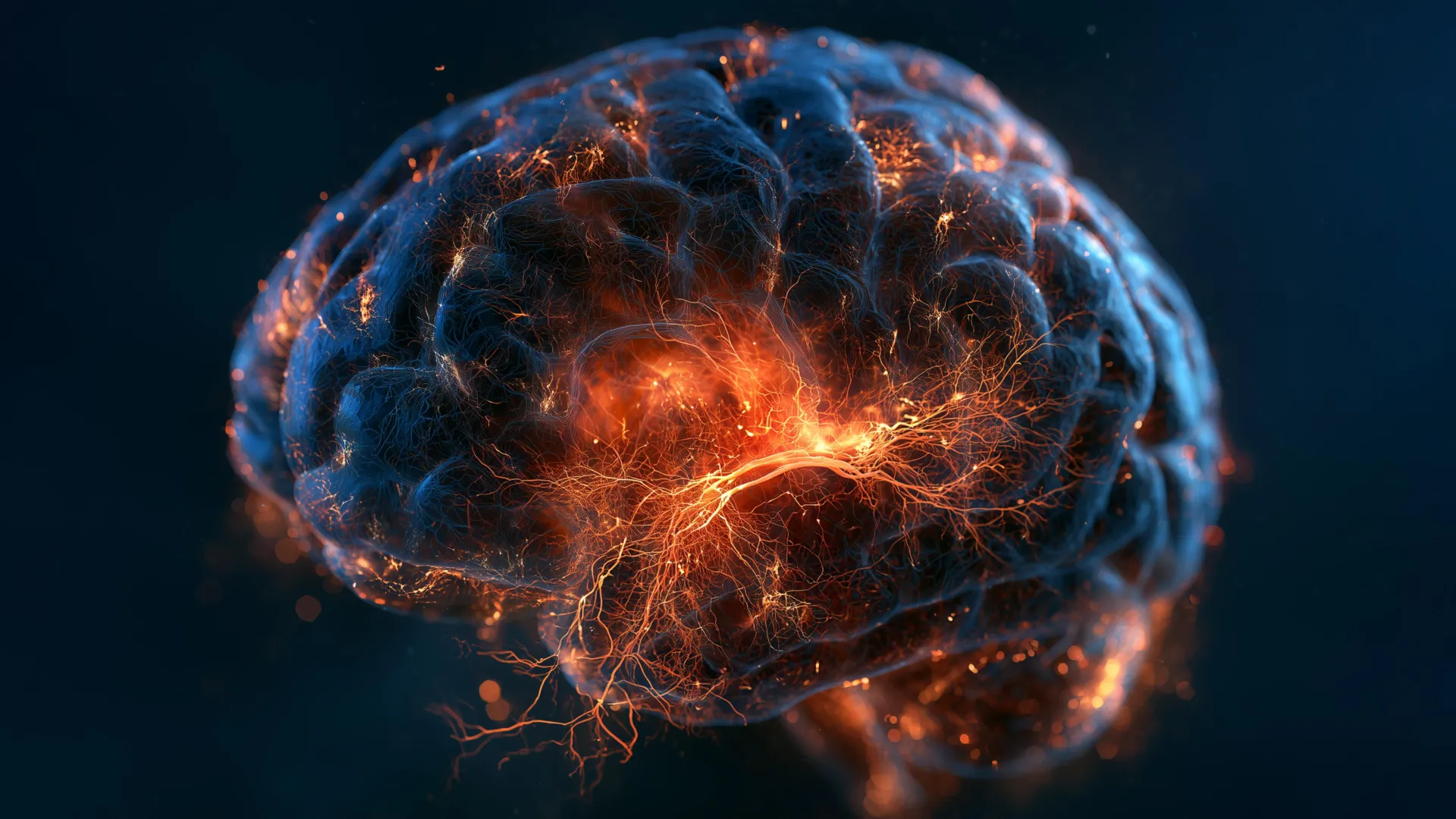
New research from Columbia University suggests that the limited production of new neurons in the adult hippocampus may help protect against depression. The study found that adult hippocampal neurogenesis—the process of generating new brain cells—appears to be disrupted in people with major depressive disorder.
Although most of the brain’s approximately 100 billion neurons develop before birth, a small number of new neurons continue to form in the adult hippocampus. The new findings provide the first evidence that this process may be shut down in adults with major depressive disorder.
Researchers also identified molecular programs involved in regulating adult neurogenesis, offering potential clues for developing more targeted depression treatments.
“Historically, depression was thought to be a disease caused by a deficiency of neurotransmitters, particularly serotonin,” says Maura B. DuPont, professor of psychiatry and leader of the study. “Depression is now understood to involve multiple problems that affect the ability of neurons to adapt to stress and changes in the environment.”
“Without the ability to create new neurons, people with depression may not have the resilience needed to effectively adapt to their environment,” DuPont adds.
How adult hippocampal neurogenesis affects memory and emotions
The researchers focused on the hippocampus, a brain region that plays a central role in episodic memory and emotional responses to the environment. The hippocampus is also one of the few areas of the adult brain where new neurons continue to develop.
While the hippocampus is not the only brain region involved in depression, its influence on memory and emotion makes it an important focus of psychiatric research. Changes in this region may contribute to the tendency of people with depression to interpret experiences more negatively.
“The hippocampus is important for distinguishing between similar but different memories, as well as separating past memories from the emotional meaning of current events,” DuPont says.
This ability is known as pattern separation. When pattern separation is impaired, individual memories and their related emotions can become difficult to distinguish, causing separate experiences to blend together.
“You might be out to lunch with a friend, but she is tired and does not talk much. When pattern separation is working properly, you remember this as a unique event,” DuPont explains. “When pattern separation is impaired, that experience may become mixed with past memories of rejection, leading you to think, ‘She is mad at me.’ I often see this in my patients. They can retrieve only negative information from their memories.”
Studies in mice have shown that adult neurogenesis is necessary for pattern separation. A recent study of brain tumor patients whose hippocampal neurogenesis was eliminated by radiation therapy also suggests that a similar relationship may exist in humans.
“It is important to emphasize that, particularly in humans, we still do not know the full mechanism,” DuPont says. “However, newborn neurons appear to be especially responsive to new experiences. They may be incorporated more easily into new memory circuits and store new memories separately from older ones, thereby improving pattern separation.”
“Restoring neurogenesis could potentially become a way to treat depression in some people by rewiring hippocampal circuits,” she adds.
Depression affects more than the growth of new neurons
The study found that depression-related changes extend well beyond the formation of new neurons. Neurogenesis occurs within the broader hippocampal circuitry responsible for storing episodic memories and their emotional significance, and molecular disruptions were detected throughout this system.
The affected genes included those involved in creating connections between neurons, supporting communication between brain cells, supplying cellular energy, and transporting materials inside cells.
Trisynaptic circuits—major hippocampal pathways involved in forming new emotional memories—also showed signs of inflammation and cellular stress in people with depression.
To identify these changes, the researchers examined approximately 500,000 brain cells collected from people with depression and control participants shortly after death.
Using recently developed single-cell analysis techniques, the team measured the activity of every gene in individual cells and examined changes in cellular proteins. This extensive data set enabled researchers to determine what individual cells were doing and identify their locations within the hippocampal circuit.
Genes, environmental factors, and the biology of depression
The analysis revealed changes in the activity of several genes containing mutations previously associated with major depressive disorder.
Other disrupted genes showed epigenetic changes that may reflect the influence of environmental factors. Epigenetic mechanisms can alter how strongly genes are turned on or off without changing the underlying DNA sequence.
“These mechanisms act like dimmer switches that control gene activity and can be influenced by life experiences such as stress, learning, aging, and exposure to chemicals,” DuPont says.
The wide range of molecular changes may also help explain why depression can look different from one person to another.
“Overall, the broad effects we identified may reflect different disease mechanisms and suggest that depression may not be a single disorder,” DuPont says.
Researchers still have a limited understanding of the biological processes underlying depression. By defining the condition more precisely at the cellular and molecular levels, studies like this could eventually reveal new therapeutic targets.
Research moves toward molecular subtypes of depression
DuPont and her colleagues hope that depression may eventually be classified according to its molecular characteristics, much as cancer is increasingly classified by the biological features of tumor cells.
“We want to reclassify depression based on molecular features, similar to what is done with cancer,” DuPont says. “Classifying cancers according to cell characteristics rather than location has led to new and improved treatments. We hope the same approach will benefit depression and other mental and neurological disorders.”
The study, “Dysregulation of Adult Hippocampal Neurogenesis in Major Depressive Disorder,” was published on August 21, 2026, in Nature Medicine.
All authors were affiliated with Columbia University and/or the New York State Psychiatric Institute unless otherwise noted: Madeleine S. Peng, Jialin Jiang, Lucia Polizzi, Tiancheng Shi, Rakshitha Ramkumar, Victor O. Anosike, Giulia Guasoni, Alexandra M. Wamalwa, Madeline B. Mariani, Cheick A. Sissoko, Alexandria N. Tartt, Camille Fulmore, Gorazd B. Rosoklija, Yung-yu Huang, Victoria Arango, Shujuan T. McDonald, Natasha Bitoljanu (Ss. Cyril and Methodius University, Macedonia), Joseph J. Mann, Phi T. Nguyen, Andrew J. Dwork, Lewis M. Brown, René Hen, Hanga Galfalvy, and Maura B. DuPont.
The study was conducted in the Maura DuPont Laboratory at Columbia University Irving Medical Center and the New York State Psychiatric Institute. Sequencing was performed at the JP Sulzberger Columbia Genome Center, data clustering at the Columbia University Center for Computational Biology and Bioinformatics, and proteomic analysis at the Center for Quantitative Proteomics and Metabolomics in the Columbia University Department of Biology.
Source: www.sciencedaily.com