


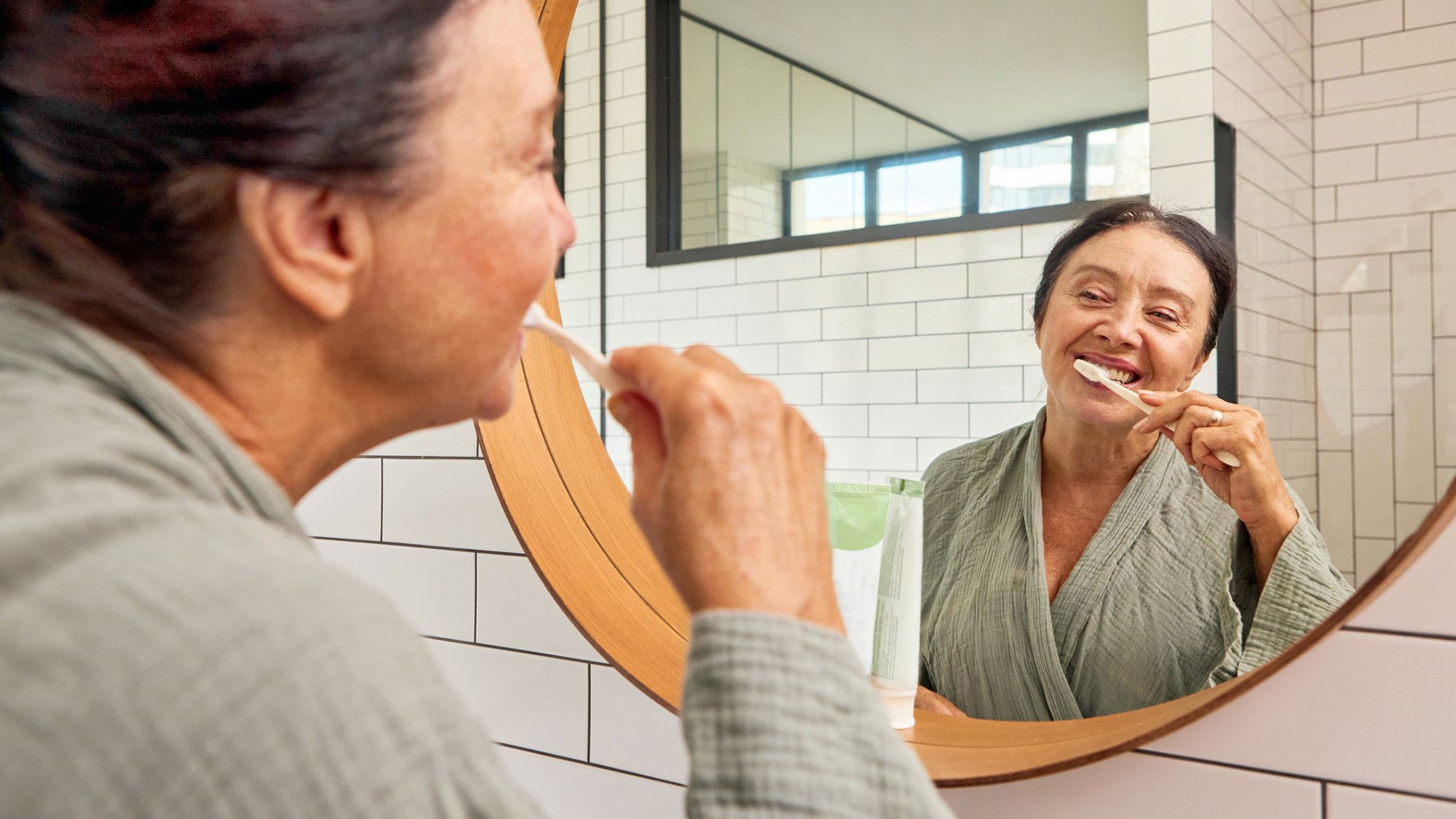
Researchers have developed a toothbrush whose bristles generate electricity as they bend during brushing. In laboratory tests and a small human study, the self-charging brush reduced bacteria linked to tooth decay and gum disease, removed plaque biofilm and improved several measures of oral health compared with conventional nylon-bristle brushes. However, researchers say larger studies and further safety testing are needed.
Traditional toothbrushes remove plaque mainly through physical scrubbing, but some bacteria can remain and begin rebuilding the plaque layer. The new brush is designed to supplement that mechanical action by converting the friction of brushing into an electrical charge that helps produce antibacterial chemicals in saliva and water.
How the self-charging bristles work
The bristles are made from polyvinylidene fluoride (PVDF), a plastic that generates electricity when bent. This kind of energy-generating material is known as piezoelectric. As the bristles flex during brushing, they create an electrical charge that triggers chemical reactions in saliva and water. These reactions produce reactive oxygen species (ROS), highly reactive molecules that can damage bacterial cells.
The bristles also retain a subtle surface charge when the brush is not being used. According to the researchers, this may help prevent bacteria from accumulating on the brush head between uses. The findings were reported in Science Advances.
“It’s great to have a new approach that actually improves the effectiveness of machine cleaning,” said Nicholas Yakubovich, an oral microbiologist at Newcastle University in the UK who was not involved in the study. “The idea that the surface of the toothbrush itself is actively doing something is very interesting.”
Laboratory tests showed antibacterial effects
In laboratory tests using toothbrushes on isolated bacteria, the charged bristles killed more than half of the Streptococcus mutans bacteria present. These microorganisms contribute to tooth decay. By comparison, nylon bristles killed only 9% of the bacteria.
The charged bristles also reduced Porphyromonas gingivalis, a bacterium associated with periodontal disease, by up to 78%. Nylon brushes reduced those bacteria by less than 8%.
When the researchers added antioxidants, which neutralize ROS, the new toothbrush’s antibacterial effects almost disappeared. This result suggests that ROS are central to the brush’s activity.
The researchers also found that exposure to the electrically charged bristles reduced the activity of certain genes in both S. mutans and P. gingivalis. These genes are involved in producing ATP-binding cassette (ABC) transporters, molecular pumps that move essential nutrients across bacterial cell membranes. The researchers think disrupting this mechanism could make the bacteria less able to survive and attach to teeth.
Yakubovich said he was not convinced by that explanation. “ABC transporters transport all sorts of different things,” he said, adding that the study did not clearly show how changes in these genes affect the bacteria.
The team also tested the brush against plaque biofilm, a tough community of bacteria that clings to tooth surfaces. When human plaque was grown on cow tooth enamel, the brush removed more than 99% of the biofilm, outperforming regular nylon brushes.
Results from a human study
The researchers then tested the brush on 115 adults with gingivitis or tooth decay. Participants were randomly assigned to use either the new toothbrush or a traditional nylon-bristle brush twice a day for three months. The study did not report whether participants noticed a difference in sensation while using the electrically active brush.
By the end of the study, people who used the charged bristles had less plaque, gum irritation and bleeding than those who used regular brushes. Their plaque samples also contained lower levels of bacteria associated with oral disease and higher levels of beneficial bacteria. Earlier research has similarly reported that changes in the oral microbiome can suppress harmful bacteria and support oral health; one such study is available through the National Center for Biotechnology Information.
The researchers believe disease-associated bacteria may have relatively fragile cell membranes, making them more vulnerable to free-radical damage than beneficial bacteria. However, it remains unclear how selectively the brush targets plaque-causing bacteria. That explanation is still a theory requiring further research.
Safety and durability remain open questions
In durability tests, the PVDF bristles retained their structure and electrical properties over three months of simulated use. Repeated exposure of lab-grown mouse cells to the brush material showed no signs of damage, and brushing cow tooth enamel did not increase surface roughness.
Those experiments cannot establish whether the brushes are safe for repeated use by humans. “We want to make sure it’s safe to put on tissue for long-term use,” Yakubovich said. He noted that, in the clinical tests, bacteria grow directly on the bristles and are exposed to their electricity for hours, whereas “in reality, in the mouth, the hair only comes into contact with the teeth and oral tissues for a short period of time.”
The human experiments offered some insight into how the brushes function in real-world use, but they were relatively small-scale. Larger studies will be needed to determine whether the toothbrush provides meaningful benefits over traditional brushes. For now, Yakubovich considers the research a proof of concept and said more information and stronger clinical data are needed.
Reference: Lu, Y., Song, J., Chi, X., Li, W., Wu, L., Guo, Y., Cui, Q., Zheng, X., Bai, Y., Heng, B. C., Han, X., Zhang, X., Deng, X. (2026). “Self-charging toothbrushes make it easy to maintain your dental health.” Science Advances, 12, article eaeg5744.
This article is for informational purposes only and does not provide medical advice.
Source: www.livescience.com