


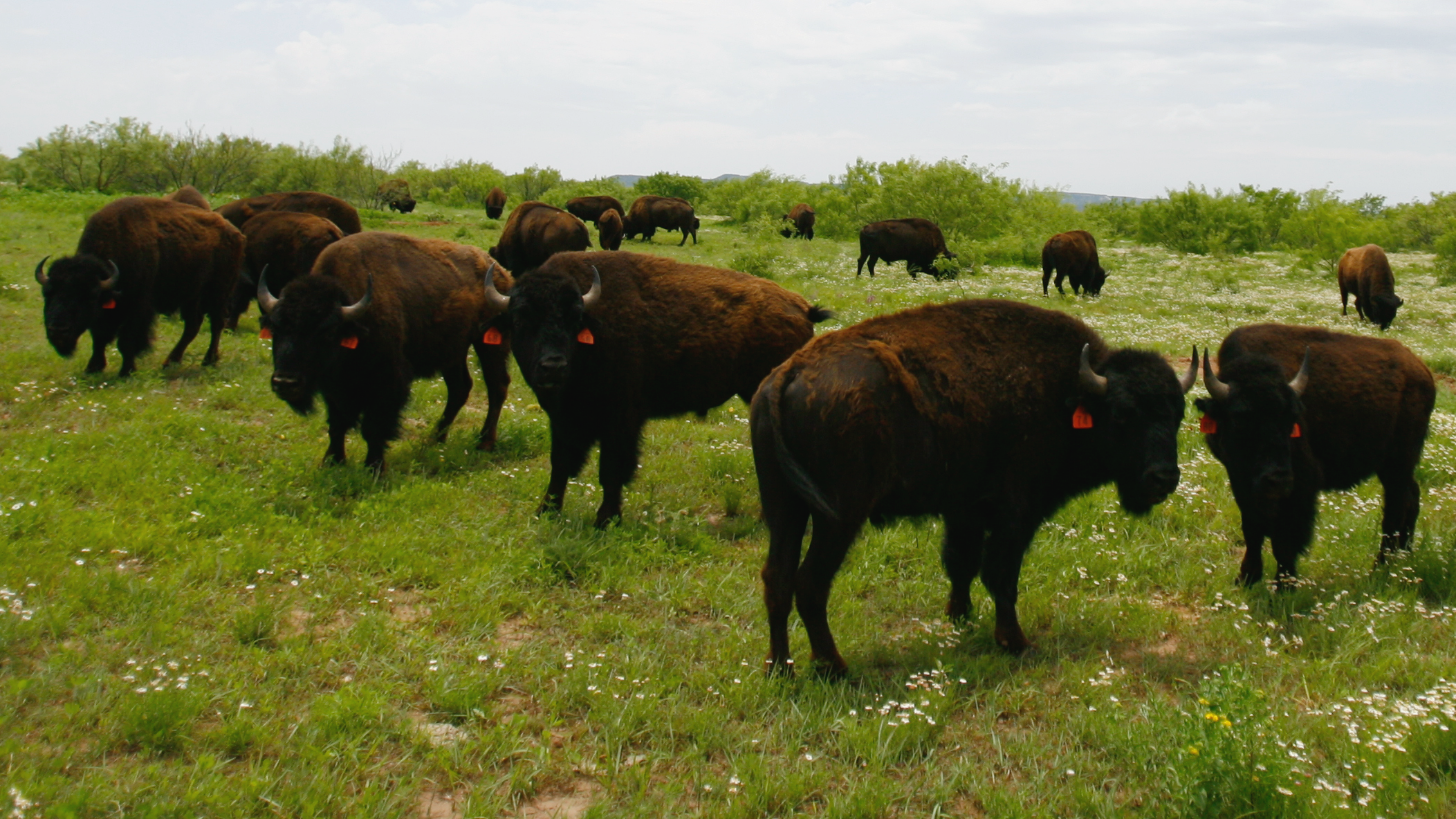
Archaeologists have identified an exceptionally rare “bison jump” in the Texas Panhandle, where natural rock formations enabled Indigenous peoples to hunt North America’s largest living land mammal for about 3,000 years. The discovery of the Nighthawk site at Caprock Canyons State Park indicates that this hunting technique—similar to “walking the plank,” in which herds were driven over a cliff—was not limited to the northern Great Plains, as previously thought.
“Bison jumping is an iconic and unique North American hunting technique that has resulted in the most productive food acquisition event in human hunting history,” researchers wrote in a study published online Nov. 9.
A rare southern Plains hunting site
Bison-jump sites are well documented in the northern Plains, but only one had previously been identified in the southern Plains. Nighthawk is now the second known site in the region, and researchers found evidence that Native American tribes used it repeatedly over thousands of years.
The site was discovered after a bison carcass began eroding from a bone bed beneath a cliff spur about 20 meters high. Archaeologists investigating the area found chipped stone tools and several arrowheads near the bones. Some of the bison bones also bore cut marks made by stone tools, consistent with prehistoric slaughter practices.
Archaeologists have discovered hundreds of bison bones at the Nighthawk Bison Jump Range in Texas. (Image credit: August Costa/Rice University)
“The surface of the site is sandwiched between two cliffs, so the only way the bison could reach the site was by falling from above,” the researchers wrote. Native hunters may have used the natural shape of the cliff spur to funnel the animals toward the drop.
“Rather than charging toward an unexpected fall, Nighthawk could have performed a ‘walking on the plank’ motion,” the researchers said, describing a process in which bison were gradually driven toward the edge.
Evidence of repeated hunts
The researchers were especially surprised by how long the site remained in use. Radiocarbon dating indicates that at least seven mass bison-killing events took place at Nighthawk over a 3,000-year period, from approximately 1550 B.C. to A.D. 1550.
One event, which the researchers called “Kill 3,” involved a large portion of the bison bones. This particularly successful hunt probably occurred between A.D. 300 and 400 and would have required extensive labor and precise coordination.
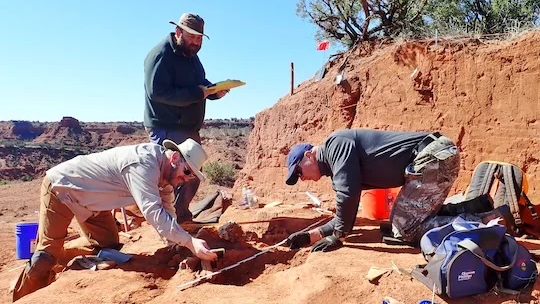
Archaeologists excavate Nighthawk, a bison-jump site at Caprock Canyons State Park in the Texas Panhandle. (Image credit: August Costa/Rice University)
“Bison jump is a complex community effort,” said lead author Gus Costa, an archaeologist at Rice University in Houston. “Large-scale bison harvests like a jump are exciting because they require a lot of people working together to be successful.”
The killing events were separated by at least a century, with an average interval of about 500 years. Although Nighthawk appears to have been used infrequently, its effectiveness and location were apparently remembered across generations.
“The simplest explanation for the longevity of jump facilities is that these technologies have been passed down over time, rather than being revived many times,” the researchers wrote.
Why hunt bison in the southern Plains?
It is not yet clear how Indigenous hunters used the bison killed at Nighthawk. In the northern Plains, archaeologists have long proposed that bison jumps typically took place in the fall to help communities prepare for winter. Northern bison were used to make pemmican, a shelf-stable mixture of dried meat and rendered fat.
However, the researchers noted that Texas may have been too hot for bison fat to remain preserved for more than a few weeks. Hunting in the southern Plains may therefore have served purposes beyond food storage, potentially helping communities display power and build alliances.
“Returning again and again to the same location over 3,000 years indicates that people had important connections to Nighthawk hunting facilities,” Costa said in a statement.
The study was authored by August G. Costa, B. A. Hawk, A. S. Lyle, L. Bement, C. Linz, K. L. Lawrence, C. D. Frederick, and B. J. Culleton. It is titled “Nighthawk bison jumps: New evidence of late Holocene bison repeatedly jumping on the Southern Plains.”
Source: www.livescience.com