


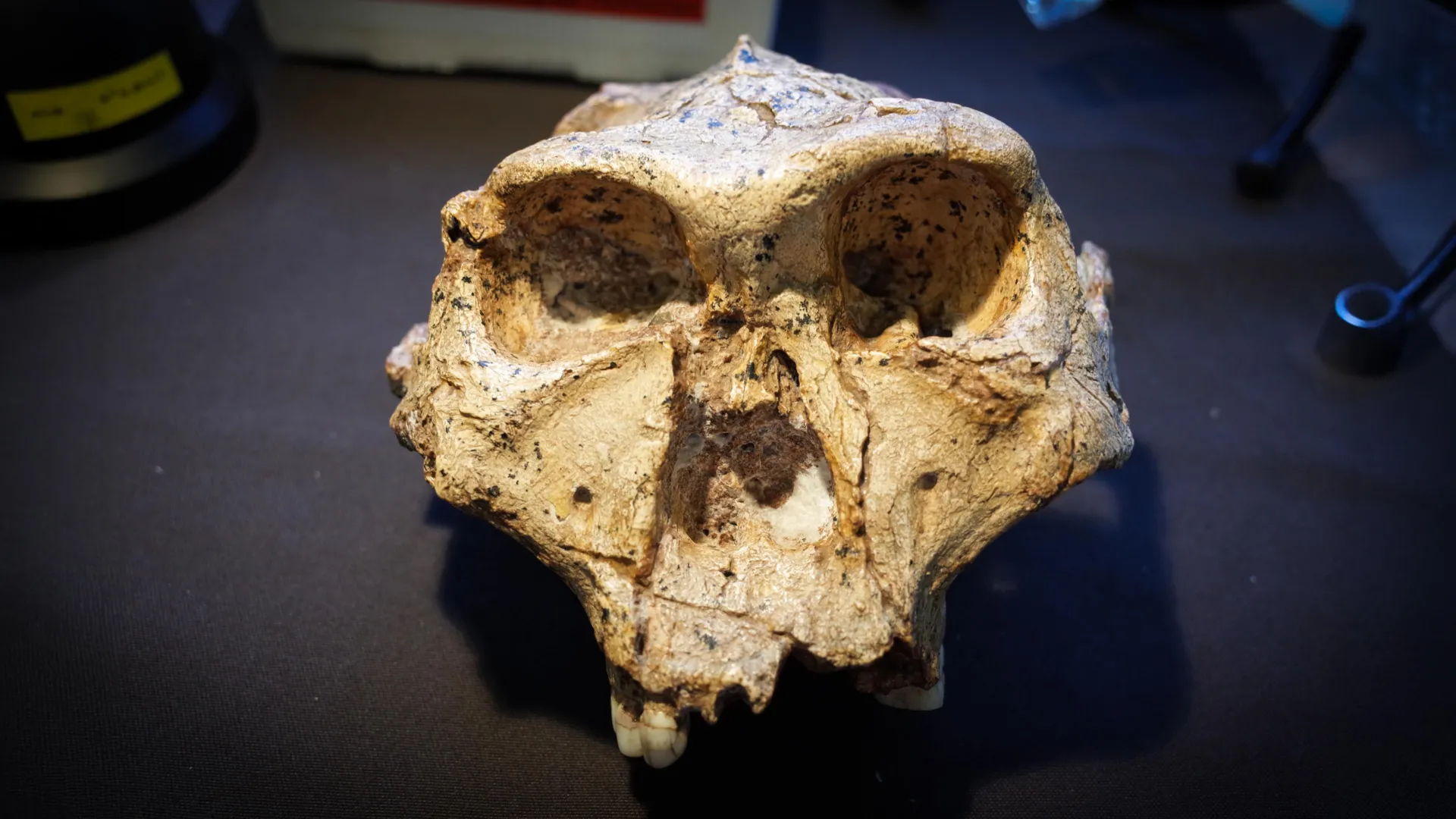
A new study from Monash University argues that the human family tree may need a major revision. The researchers propose that fossil hominid species and their close relatives from the past 4 to 5 million years—including members of Australopithecus and Paranthropus—could be classified within the same genus as modern humans, Homo. The proposal challenges long-standing boundaries in the classification of human evolution, while remaining a matter of scientific debate.
Why scientists may need to redraw the human family tree
The study, published in the American Journal of Biological Anthropology, proposes fundamental changes to the way human evolution is organized. Its central argument is that all fossil hominid species and their relatives from the past 4 to 5 million years should be classified within the genus Homo.
That would include groups such as Australopithecus and Paranthropus, which have traditionally been classified separately from Homo. These ancient relatives differed substantially in appearance, anatomy and behavior, but the researchers argue that it is becoming increasingly difficult to justify the evolutionary boundaries separating them.
Human evolution is often presented as an orderly progression, beginning with ape-like ancestors and moving through species such as Australopithecus and early Homo before reaching modern humans, Homo sapiens.
Fossil evidence, however, shows that evolution did not follow a simple sequence in which one species neatly replaced another. Instead, the human family tree contains numerous branches, overlapping species and evolutionary relationships that scientists are still working to resolve.
Each new fossil can make the picture more complicated. Traits once thought to distinguish one group of ancient human relatives from another are increasingly being found across several groups, making it harder to determine where traditional classifications should begin and end.
Dr Ian Toll, a research fellow at the Monash Institute for Biomedical Discovery and the study’s principal investigator, said these findings expose weaknesses in existing classification systems. The issue applies not only to species already assigned to Homo, but also to members of Australopithecus and Paranthropus, groups that lived within the past 5 million years.
“Recent fossil discoveries and advances in evolutionary and genetic analysis make now an ideal time to reconsider whether our traditional taxonomy still accurately reflects human evolution,” Dr Toll said.
“These groups do not necessarily represent distinct evolutionary branches, or ‘clades,’ and the behavioral and ecological differences that were once used to distinguish the groups are also becoming increasingly difficult to maintain.”
“I propose extending hominins to include these other groups to provide a more accurate and stable way to represent the complex evolutionary relationships revealed by the growing fossil record.”
How scientists classify ancient ancestors
Taxonomy is the system scientists use to name species and classify them into groups based on their characteristics and evolutionary relationships.
The genus is one level of this system, above the species level. Modern humans belong to the species Homo sapiens: Homo is the genus and sapiens identifies the species.
Advances in evolutionary research over the past 50 years have transformed scientific classification. Modern taxonomy increasingly aims to organize species according to their evolutionary ancestry, rather than relying primarily on physical similarities.
A key concept in this approach is the clade, which consists of a common ancestor and all of that ancestor’s descendants. By grouping organisms in this way, scientists seek to create classifications that accurately reflect the branches of the evolutionary tree.
This approach has become increasingly influential in biology, but Toll argues that the classification of human evolutionary relatives has been slow to adopt these principles consistently.
Why brain size and tool use may not define Homo
Scientists have traditionally distinguished members of the genus Homo from other ancient human relatives using a combination of physical and behavioral traits. These include a relatively large brain, sophisticated tool use and anatomical features associated with human evolution.
Discoveries made in recent decades have called the reliability of those distinctions into question. Some species classified within Homo show that a large brain is not necessarily a defining feature of every species in the genus.
At the same time, evidence suggests that species traditionally placed in Australopithecus and Paranthropus may have displayed more complex behavior than researchers previously assumed.
These findings weaken the dividing line between the three groups. Traits once thought to be exclusive to Homo may have been more widely shared among ancient human relatives.
As a result, determining which species belong to the human genus is becoming increasingly difficult. Toll argues that the problem may not be the fossil evidence itself, but the classification system into which scientists are trying to fit it.
A proposal covering 5 million years of human evolution
Toll’s proposal is to expand the genus Homo to include species currently classified as Australopithecus and Paranthropus.
This would not mean that these ancient relatives were identical to modern humans or possessed all the characteristics associated with our species. A broader classification could instead allow scientists to distinguish individual species while also recognizing their evolutionary connections.
Such a change could make human taxonomy more stable. Rather than repeatedly revising the boundaries between major groups as new fossils are discovered, scientists could use broader genera that better reflect the diversity revealed by the fossil record.
The proposal is a significant departure from traditional classification and has not been formally adopted. It remains part of an ongoing scientific debate, but it illustrates how new evidence continues to reshape understanding of human origins.
“The more we learn about our ancestors and our fossil relatives, the more we realize how complex and non-linear our family tree is,” Toll said.
“Extending the genus Homo to include the species Australopithecus and Paranthropus allows us to account for differences without having to constantly reclassify specific groups.”
Ultimately, the study raises fundamental questions about how scientists define the human family. If traits once used to distinguish our ancestors are less unique than previously thought, the names and categories used to describe millions of years of human evolution may need to change as scientific understanding develops.
Source: www.sciencedaily.com